Basics of History of Spices: Spices have been key in global trade for thousands of years. They’ve shaped cultures, economies, and politics. Valued items like pepper, cinnamon, cloves, and nutmeg drove exploration and colonization.
These spices connected distant parts of the world through trade routes. The history of the spice trade goes from ancient times to today. It has influenced food, medicine, and global business.
This article looks at how aromatic plants went from luxury goods to common flavors. It shows their big impact on history and cultural exchange.
Key Takeaways
- Spices have played a significant role in shaping global economies and trade patterns for over 4,000 years.
- The spice trade fueled the growth of European colonial empires and established extensive trading networks.
- Spices were once highly prized as rare and valuable commodities, leading to conflicts and wars among European powers.
- The introduction of new spice trade routes and the discovery of the Americas transformed the global spice market.
- Spices continue to influence modern culinary, medicinal, and cultural practices worldwide.
Ancient Origins and Early Civilizations
The history of spices goes back thousands of years. They were key in the lives of early societies. Spices were used for food, medicine, and in religious rituals.
Egyptian and Roman Use of Spices
The Egyptians valued spices like cinnamon and cumin for embalming and rituals. The Roman Empire brought unfamiliar spices from India and Southeast Asia. The rich enjoyed fancy, spice-filled dishes.
Traditional Medicine and Religious Rituals
In ancient times, spices were vital in medicine and religion. In India, pepper and turmeric were used in Ayurvedic medicine and cooking. Spices were also used in religious ceremonies, showing their deep cultural and spiritual value.
Early Trading Patterns
The history of spices started at least 4,000 years ago. Early trade routes were long and dangerous, connecting far-off places. These ancient civilizations laid the groundwork for how spices are used today in food and medicine.
History of Spices: From Luxury to Global Commodity
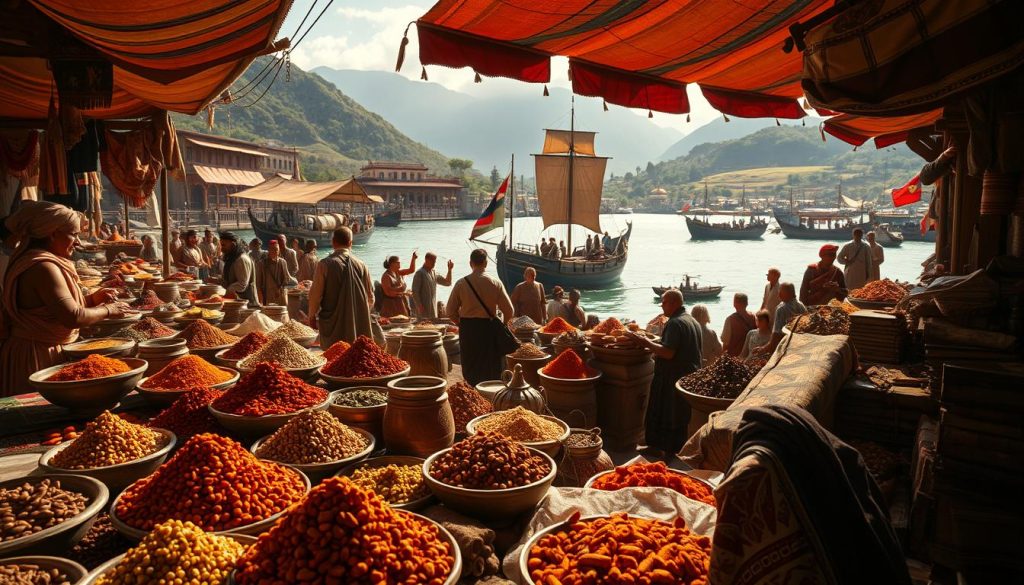
Spices were once rare and expensive, but now they’re everywhere. They come from places like India’s Western Ghats and Kerala. Spices like cardamom and black pepper were so valuable, they were worth gold.
The spice trade helped cultures share flavors and cooking methods. This spread new tastes and ways of cooking all over the world.
As trade grew and colonies were set up, spices became easier to get. This change made food around the world more diverse. The story of spices shows how global trade and culture have grown together.
- Evidence of spices like cinnamon and myrrh found in Egyptian tombs as early as 2000 BCE.
- Merchants and explorers risked everything for a taste of pepper, known as “black gold”, with its value rivaling that of precious metals.
- Dutch took extreme measures to monopolize nutmeg trade, including battles, conquests, and forcing entire populations into labor for control.
The Banda Islands, where nutmeg grew, were a hot spot for European powers. Ceylon (modern-day Sri Lanka), the main source of cinnamon, was also fought over. European powers wanted to control spice trade, so they set up bases in Asia, Africa, and the Americas.
“Trading companies like the Dutch East India Company (VOC) and the British East India Company wielded enormous power, often governing entire regions.”
The Dutch East India Company (VOC) was founded in 1602. It, along with the British East India Company, gave European powers a strong grip on the spice trade. Cities like Goa, Batavia (now Jakarta), and Malacca became key in the spice trade. They were hubs for culture and economy.
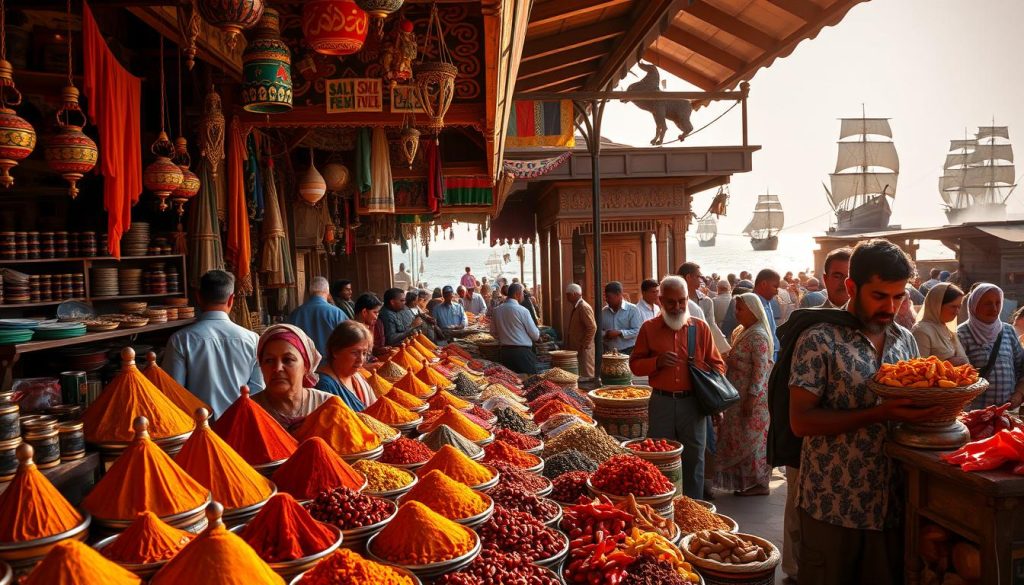
The spice trade’s role changed over time. The British East India Company moved into textiles, but the Dutch stayed focused on spices. This affected their economies. The European quest for spices had a big impact on local societies and economies in Asia, Africa, and the Americas.
The Legendary Silk Road and Maritime Routes in History of Spices
For over 1,500 years, the Silk Road was a key trade network. It stretched from China to the Mediterranean. This route, about 6,437 kilometers long, carried goods like silk, jade, and spices from Asia to Europe.
Goods from Europe, like horses and glassware, also traveled to Asia. This exchange helped spread ideas and cultures across the world.
Overland Trade Networks
The Silk Road had two main paths. The northern route went through Gansu province and split into several sub-routes. The southern route, or Karakoram route, went through Pakistan and Iran before reaching the Mediterranean.
These routes did more than just move goods. They also helped share ideas, technologies, and beliefs between continents.
Maritime Spice Routes Development
As the Roman Empire fell, sea trade with India and Arabia grew. Sea routes connected India to Southeast Asia, China, and the Mediterranean. Goods like silk, dates, and spices were traded through these routes.
Key Trading Posts and Ports
Important trading centers like Alexandria, Constantinople, and Venice emerged. These places were key for spice commerce. They also spread culinary traditions and knowledge worldwide.
The rise of the Ottoman Empire from 1453 on led to more competition. This competition played a big role in the Age of Exploration and European colonialism.
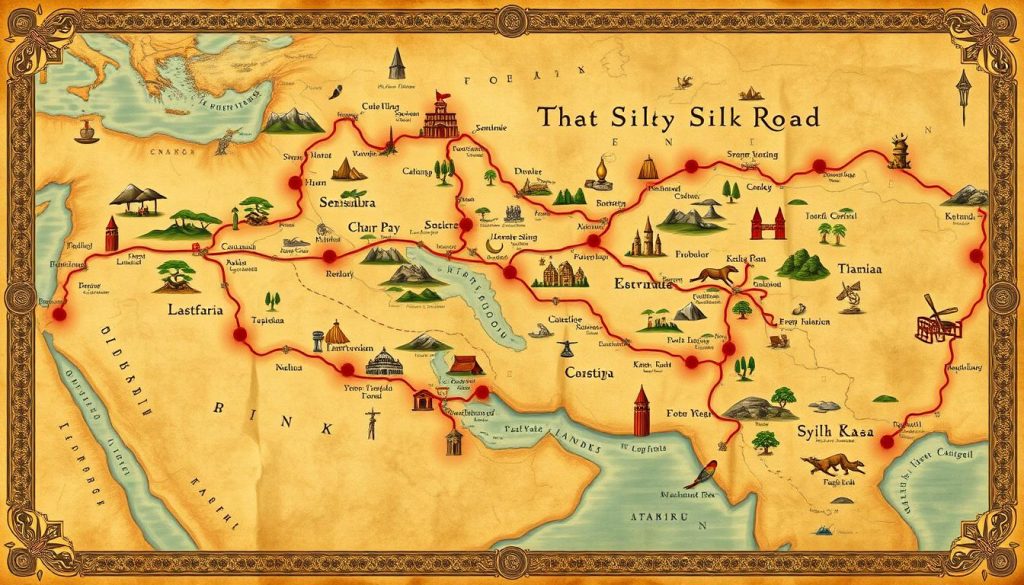
“The Silk Road was not just a series of routes for commercial trade, but a vibrant network of cultural exchange that shaped the world for over a millennium.”
European Quest for Spice Dominance in History of Spices
In the 15th century, European powers wanted to find new trade routes. They aimed to bypass the Arab-controlled paths and reach Asia’s spice markets directly. This drive for spice exploration sparked the Age of Exploration. Countries like Venice, Portugal, Spain, the Netherlands, and England fought hard to control spice-producing areas.
The search for influential spice traders and sea routes to Asia led to big discoveries. European ships, like the 1519 Spanish voyage with 415 men, faced huge risks. Only 18 returned, showing the dangers of seeking global impact of spices.
The spice trade saw prices soar up to 1000% in Europe, making spices more valuable than gold. The fight for the Moluccas spice trade sparked a long war between Spain and Portugal.
Exploring the Spice Islands led to Spanish expeditions from Mexico. These efforts showed the huge resources spent on spice dominance. The Manila galleons connected Mexico to the Orient, carrying goods like Ming pottery and silk.
For half a millennium, European empires ruled the world after exploring the Spice Islands. This shows the lasting effect of the quest for spice exploration and global impact of spices.
“The race for the Moluccas spice trade led to intense rivalry between Spanish and Portuguese powers, resulting in a bitter micro war lasting several decades.”
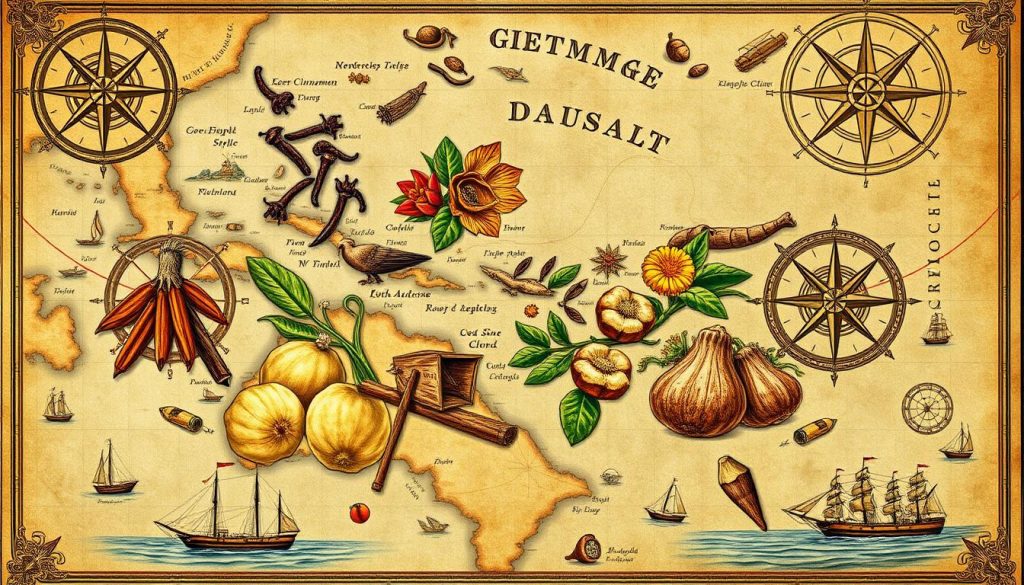
Today, influential spice traders still shape the global spice market. India leads as the largest producer, growing spices like black pepper and turmeric. China, the second-largest, offers unique spices like star anise and cinnamon.
Indonesia, the historic Spice Islands, is a major producer of nutmeg, cloves, and pepper. Madagascar is famous for its vanilla, prized for its quality and aroma.
History of Spices: The Age of Exploration and Discovery
The 15th and 16th centuries were a time of big change in global trade. This era, known as the Age of Exploration, was all about finding spices. European countries wanted to control the spice trade and the routes to get there.
Portuguese Maritime Expeditions
Portuguese explorers were at the forefront of this time. In 1498, Vasco da Gama found a new way to India. This was a big deal because it let them trade directly with India, avoiding old land routes.
This achievement helped Portugal become a major player in the spice trade.
Spanish and Dutch Exploration
While Portugal looked east, Spain went west. Christopher Columbus’s trips to the Americas were a surprise. He found new spices and goods from the New World, even though he was looking for Asia.
The Dutch then took over the spice trade with their Dutch East India Company. They also took control of important spice-making areas.
Discovery of New Trade Routes
These explorations opened up new paths for trade. The Columbian Exchange brought goods like spices and metals between the East and West. This changed the world’s economy a lot.
European colonies and trading companies helped them control the spice trade. This changed the balance of power and how goods moved around the world.
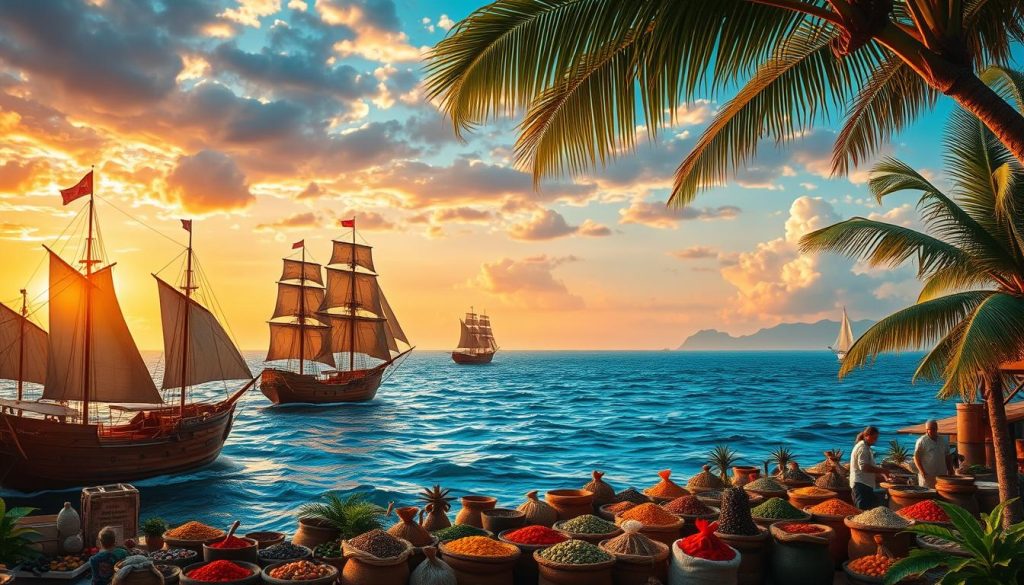
“The search for spices was one of the primary drivers behind the Age of Exploration, as European nations vied for control over these lucrative trade networks.”
Colonial Powers and Trade Monopolies
The spice trade has been a global phenomenon for thousands of years. Ancient civilizations like Egypt, China, and India were early users of aromatic spices. But, the 16th and 17th centuries saw a fierce competition among European colonial powers to control the spice trade routes.
Vasco da Gama’s arrival in Calicut, India, in 1498 marked the start of the Portuguese spice trade with Asia. The Portuguese quickly established their presence in Goa and sought to monopolize the pepper and cinnamon trade. Meanwhile, the Dutch, known for their ship-building skills, increased their role in the spice trade during the 16th century. They eventually gained control over key spice-producing regions like the Banda Islands for nutmeg.
The Dutch and the Portuguese engaged in intense battles for dominance over the spice trade. The Dutch eventually established a monopoly in the early 17th century. They employed brutal tactics to maintain their control, such as the near-extermination of the native population in the Spice Islands by Governor-General Jan Pieterszoon Coen.
The British also sought to assert their control over the spice trade, particularly in India. They seized Portuguese settlements to monopolize the pepper trade. The colonial powers’ exploitation of Africa for the spice trade also had a lasting impact. The Portuguese engaged in slavery in Angola to support their commercial interests.
| Country | Spices Controlled | Key Locations |
|---|---|---|
| Portugal | Pepper, Cinnamon | Goa, India |
| Netherlands | Nutmeg | Banda Islands |
| Britain | Pepper | India |
The colonial powers’ quest for spice dominance profoundly impacted the economies, societies, and political landscapes of the spice-producing regions. It shaped the global spice trade routes, cultural significance, and global influence for centuries to come.
Cultural Impact and Culinary Revolution in History of Spices
The spice trade has changed global cuisine, bringing new flavors and cooking methods. Spices like cumin, coriander, and cardamom are key in kitchens everywhere. They shape the taste of different cuisines.
Spices also play a big role in traditional medicine, especially in Ayurvedic practices. Herbs and spices like turmeric, ginger, and cinnamon are valued for their health benefits. They help keep people healthy and well.
Influence on Global Cuisine
Spices have mixed into many cultures, creating new cuisines and fusions. The Silk Road helped spread spices and other foods, changing food cultures around the world.
Medicinal Applications Through History
For centuries, spices have been used for healing. They help keep food fresh and improve health. In Europe, nutmeg, cloves, and mace were seen as medicines. In Ayurveda and traditional Chinese medicine, turmeric, ginger, and cinnamon are highly valued.
Religious and Cultural Significance
Spices have deep religious and cultural meanings. They were used in rituals and showed wealth. Spices like pepper and cinnamon were so valuable, people traveled far to get them.
The spice trade has enriched global food culture. Spices carry cultural heritage and inspire new dishes.
Modern Spice Trade and Production
The global spice industry has grown a lot. India is still a big player, along with Turkey, Bangladesh, China, and Indonesia. Now, spices from all over the world are easy to find everywhere.
India is a top spice producer, making turmeric, pepper, cardamom, and cumin. The Moluccas in Indonesia are famous for nutmeg and cloves. But, the industry faces issues like climate change and needs to be more sustainable.
In the 13th century, nutmeg was worth more than gold. A ransom for Rome in 410 BCE included 3,000 pounds of peppercorns. This shows how valuable spices have always been.
Today, companies are always coming up with new spice blends. This has changed how we enjoy spice cultivation, global cuisine, and culinary traditions.
| Spice | Top Producing Countries | Historical Significance |
|---|---|---|
| Nutmeg | Indonesia | More expensive than gold in the 13th century |
| Black Pepper | India, Vietnam, Indonesia | Ransom during the Visigoths’ conquest of Rome in 410 BCE |
| Turmeric | India | Originated in the Western Ghats and Kerala, India |
| Cinnamon | Sri Lanka, China | Traded over 2,500 years ago by Arab traders |
The spice industry keeps changing, meeting global tastes and dealing with sustainability. As we all want more flavors, spices are key to our food and culture.
Conclusion
Spices have had a big impact on human history. They drove global exploration and shaped how we cook. Today, they are key to our food and culture.
Spices have always connected people and places. They went from being rare to something we all use. This shows how trade and culture have changed over time.
Spices are still important in our food and culture. They make our dishes special and tell our stories. As the world grows, spices help keep our food safe and healthy.
Spices have always been about more than just taste. They bring people together and show our shared history. The spice trade keeps growing, showing spices’ lasting impact on us.