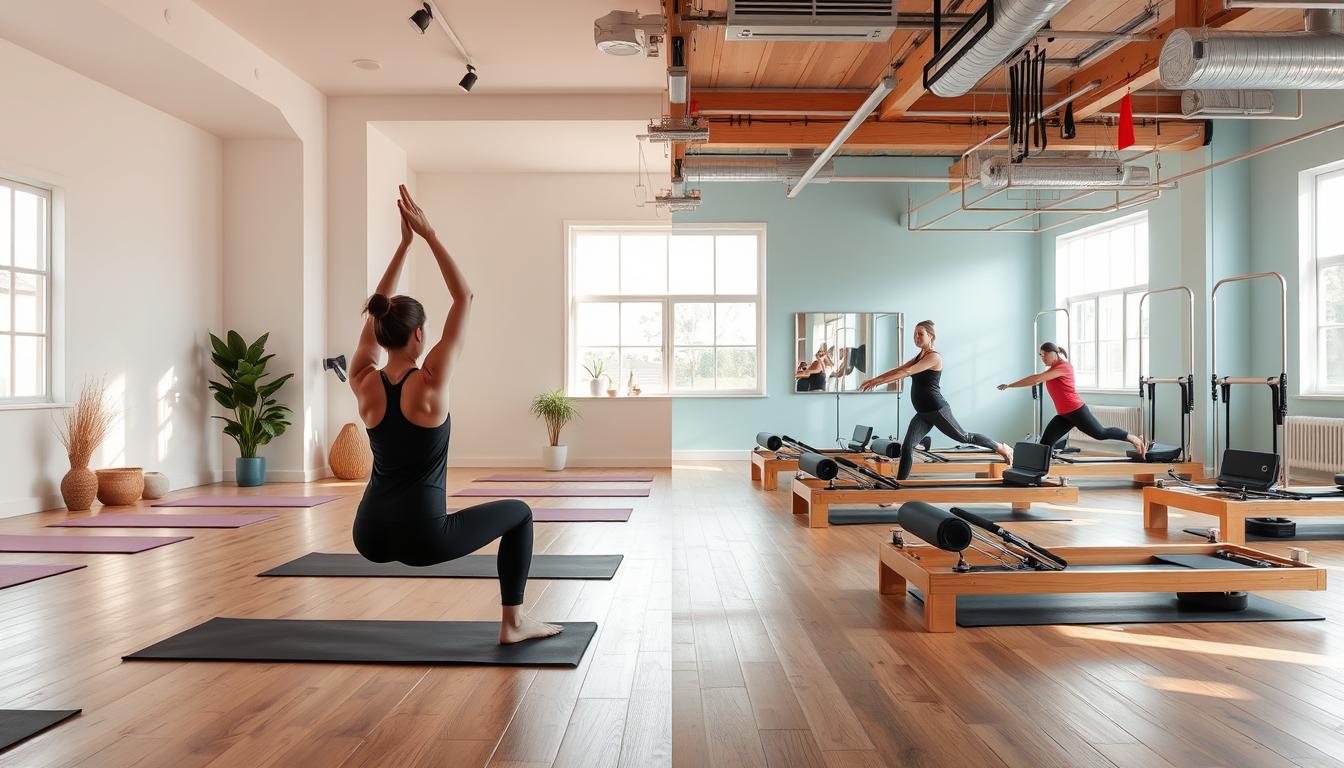
In the world of fitness, Yoga vs. Pilates stand out. They help people feel better in body and mind. Each has its own way of improving strength, flexibility, and mental health.
Pilates was created by Joseph Pilates in the 1900s. It focuses on controlled movements to strengthen the core. It’s great for building strength and improving posture.
Yoga, on the other hand, comes from ancient India. It connects the body, mind, and spirit. It uses poses, breathing, and meditation to achieve this connection.
Both Yoga and Pilates work on core strength and body awareness. But they differ in their approach. They offer various benefits, from injury prevention to stress relief. Knowing the differences can help you choose the right one for you.
Key Takeaways
- Pilates focuses on core strength and controlled movements. Yoga emphasizes holistic well-being through poses, breathing, and mindfulness.
- Both improve flexibility, muscle tone, and posture. But they have different approaches.
- Pilates is good for injury prevention or rehabilitation. Yoga adds a spiritual aspect, teaching mindfulness and life philosophy.
- Yoga usually needs no props, while Pilates uses special equipment like reformer machines.
- Choosing between Yoga and Pilates depends on your fitness goals, preferences, and the benefits you want to achieve.
Understanding the Origins and Philosophy
Pilates and Yoga have their own beginnings and beliefs, yet they both highlight the mind-body link. Pilates was started by Joseph Pilates in the early 1900s as a way to help World War I veterans. It focuses on building core strength, controlling muscles, and doing precise movements.
The Birth of Pilates
Joseph Pilates, a German-born trainer, made Contrology during World War I to aid injured soldiers. He aimed to strengthen the core to boost overall health. He believed that focusing the mind and moving with control was key for health.
Ancient Roots of Yoga
Yoga comes from ancient Indian spiritual practices, over 5,000 years old. It’s a holistic approach to wellness, aiming for a deep mind-body connection and enlightenment. It includes physical poses, breathing, and meditation, all tied to philosophy and ethics.
Core Philosophies Compared
Pilates is about physical conditioning and strength, while Yoga adds spiritual and philosophical aspects for wellness. Both focus on breathing, mindful movement, and uniting the mind and body. This unity is crucial for both practices, making them great for improving wellness programs and mind-body connection.
| Pilates | Yoga |
|---|---|
| Developed by Joseph Pilates in the early 20th century | Originated in ancient India over 5,000 years ago |
| Emphasizes core strength, muscle control, and precise movements | Focuses on physical postures, breathing techniques, and meditation |
| Rooted in physical conditioning and rehabilitation | Embraces a holistic approach to wellness and spiritual enlightenment |
| Promotes a mind-body connection through physical control | Cultivates a profound mind-body connection and union with the divine |
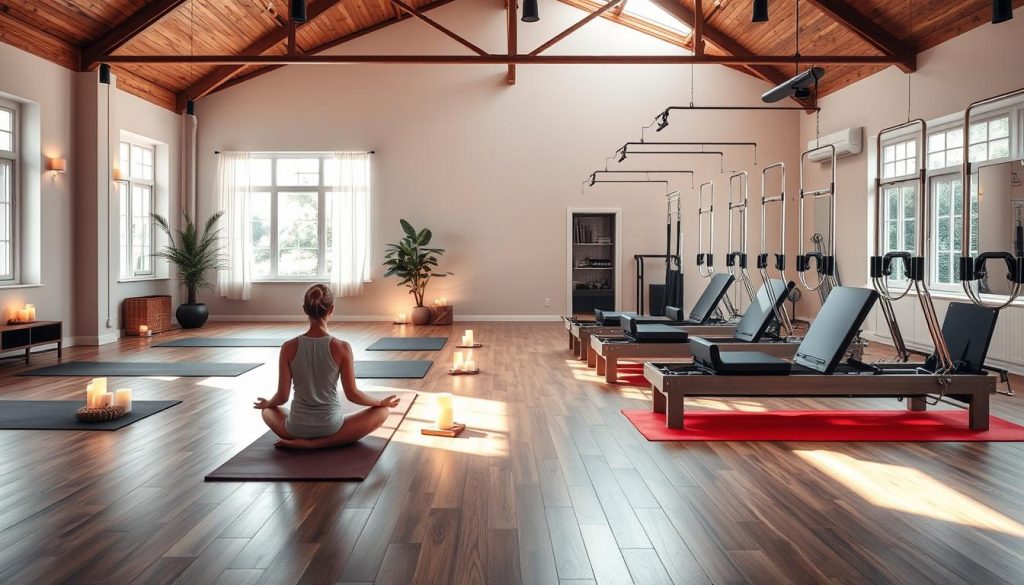
“Yoga and Pilates both emphasize the importance of the mind-body connection, but their approaches differ in their focus on physical conditioning versus spiritual enlightenment.”
Yoga vs. Pilates: Key Differences and Similarities
Pilates and yoga share some similarities but have key differences. Pilates focuses on core strength through precise movements and special equipment. Yoga, on the other hand, combines physical postures, breathwork, and meditation for a holistic experience.
Both practices help improve flexibility, balance, and body awareness. Pilates is structured with a set sequence of exercises. Yoga offers a variety of styles and experiences. They both cater to different fitness levels and goals, appealing to many.
| Pilates | Yoga |
|---|---|
| Focuses on core strength and precise movements | Combines physical postures, breathwork, and meditation |
| Utilizes specialized equipment | Offers a more holistic approach to flexibility training and physical disciplines |
| More structured with a specific sequence of exercises | Provides a wider variety of styles and experiences |
| Ideal for physical rehabilitation and functional fitness goals | Suitable for flexibility enhancement, stress reduction, and spiritual balance |
Both Pilates and yoga can enhance your fitness routine. They cater to different preferences and goals. Your choice may depend on your needs, preferences, and desired benefits.
Core Strength and Body Conditioning
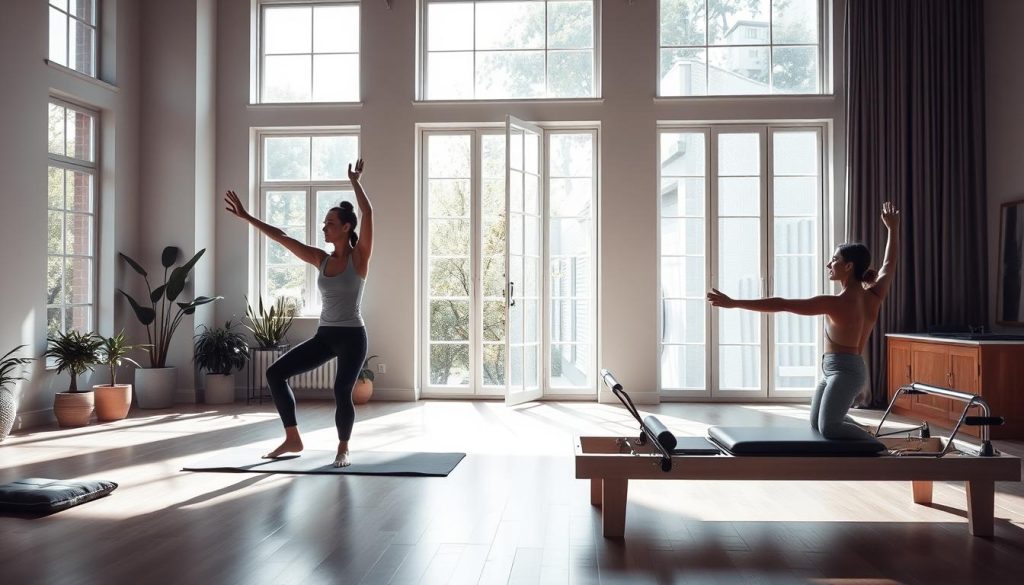
Pilates and yoga are great for building core strength and body conditioning. Pilates focuses on the “Power House” – muscles like the abs, lower back, hips, and glutes. It aims to build strength from the inside out, making movements more stable and functional.
Pilates Power House Focus
Pilates exercises work the core through precise movements. This helps improve posture, balance, and daily activities. People often notice a more toned body after doing Pilates regularly.
Yoga’s Full-Body Approach
Yoga, on the other hand, focuses on the whole body. It uses various poses to build strength, flexibility, and balance. This approach helps improve movement and stability in daily life.
Building Functional Strength
Both Pilates and yoga are excellent for building functional strength. This is the strength needed for everyday tasks and activities. They focus on core stability, alignment, and controlled movements to prevent injuries and boost fitness.
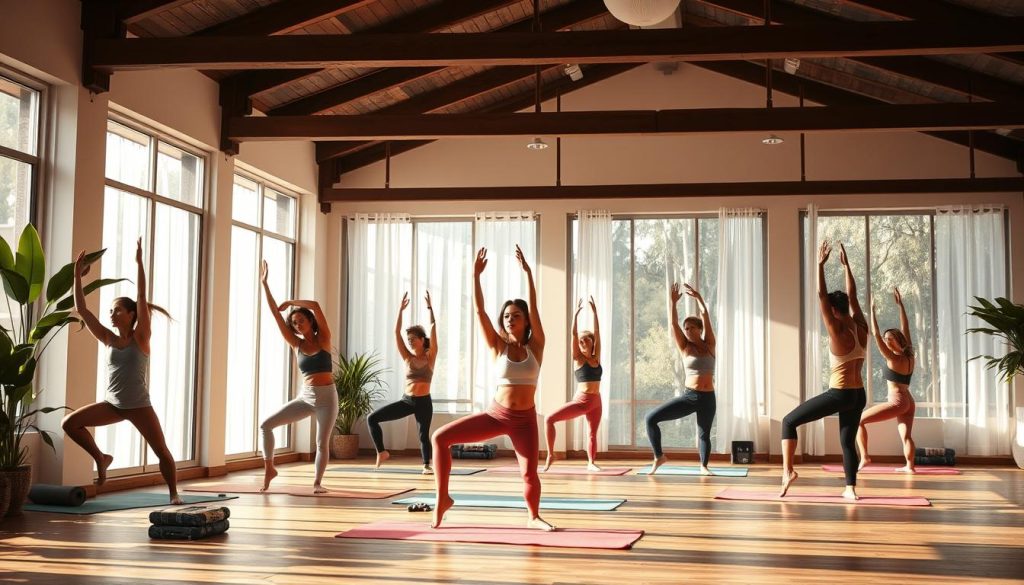
“Pilates is all about the powerhouse, the core. It’s about using your center to move your limbs, rather than just moving your limbs.”
– Joseph Pilates
Mind-Body Connection in Both Practices
Pilates and yoga are known for their mind-body connection. They are more than just exercises. They help you focus your mind and feel your emotions while moving your body.
Pilates encourages concentration and control, improving your body awareness and mental focus. It uses precise movements and controlled breathing. This helps you stay present and aware, reducing stress and improving mental clarity.
Yoga combines physical poses (asanas), breathwork (pranayama), and meditation. It’s a complete approach that promotes mindfulness and self-awareness. Yoga’s breathing and meditation can relax you, balance your emotions, and boost your mental health.
Both Pilates and yoga can help your mental health and reduce stress. The connection between mind and body in these practices can improve your life every day.
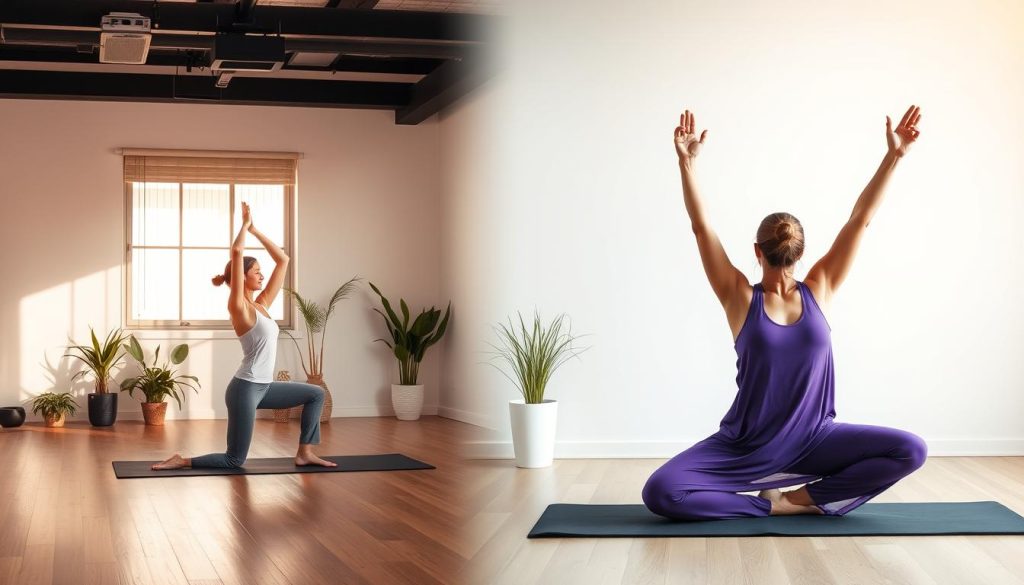
“The practice of yoga brings us face-to-face with the unfathomable mystery that is our own body, mind, and soul.” – B.K.S. Iyengar
Whether you prefer Pilates’ focus or yoga’s holistic approach, both offer a chance to unite your body, mind, and spirit. Exploring these practices can lead to greater mindfulness practices, mental well-being, and stress relief techniques.
Yoga vs. Pilates: Different Styles and Variations
The world of yoga and Pilates has many styles and variations. They cater to different fitness levels and preferences. Whether you’re new or experienced, knowing each style can help you find what suits you best.
Popular Yoga Styles
Yoga has been around for over 5,000 years in northern India. It includes many styles, from Ashtanga and Power yoga to Hatha and Restorative yoga. Each style offers something unique, whether you’re looking for a challenge or a calm practice.
Iyengar yoga focuses on precise alignment, while Kundalini yoga emphasizes breath work and spiritual awakening. Yoga’s versatility lets you explore different practices and find what fits your goals and preferences.
Types of Pilates Training
Pilates has been around since the 1920s. It offers various training methods, including the classical method by Joseph Pilates. This method uses special equipment like reformers for resistance training.
Contemporary Pilates, however, uses modern approaches and equipment for a more dynamic workout. Whether you like mat exercises or equipment-based training, Pilates can be customized to your needs.
Choosing the Right Style
Choosing the right yoga or Pilates style depends on your preferences, physical condition, and goals. Power yoga or Reformer Pilates might be good for a full-body workout. Hatha yoga or Restorative Pilates could be better for a gentler practice.
The most important thing is to try different styles, listen to your body, and find what works best for you. This way, you can align your fitness goals with your personal well-being.
| Yoga Styles | Pilates Styles |
|---|---|
| Ashtanga | Classical Pilates |
| Hatha | Contemporary Pilates |
| Vinyasa | Equipment-based Pilates |
| Restorative | Mat-based Pilates |
| Iyengar | Reformer Pilates |
Equipment and Props Used
Yoga and Pilates both use special tools to help improve your workout. These tools help you get better at your exercises, improve how you stand, and connect your mind and body better.
Yoga Props: Enhancing the Practice
Yoga starts with a simple thing: a yoga mat. But, people often use more to help them. Blocks, straps, and blankets are common tools. They help with standing right, support you, and let you stretch deeper.
Yoga blocks help change poses. Straps help you get the pose right and stretch more.
Pilates Equipment: Specialized Resistance
Pilates uses special tools to make your workout better. The Pilates Reformer is a big part of Pilates. It has a moving part and springs to give you resistance and work on muscles.
Other tools like the Cadillac, Wunda Chair, and Ladder Barrel also help. Each one does something special for your workout.
Small props like resistance bands, foam rollers, and stability balls are also used. They make your workout even harder and help you get fit.
Using the right tools in yoga and Pilates makes your workout better. It helps you stand right, stretch more, and get the most out of your exercises. Knowing how to use these tools helps you meet your goals.
Yoga vs. Pilates: Physical Benefits and Body Transformations
Pilates and yoga are great for your body. They make muscles stronger, more flexible, and help you feel more aware of your body. Pilates is known for strengthening the core, which is essential for a stable body.
It uses precise movements and controlled breathing. This can greatly improve your posture, boosting your confidence and how well you move.
Yoga stretches and lengthens muscles all over the body. It’s good for preventing and healing injuries. It’s perfect for people of all ages and fitness levels.
Both Pilates and yoga change your body in amazing ways. They can make muscles more defined and your body more toned and aligned.
Muscle Toning and Flexibility
Pilates focuses on strengthening the core muscles. This leads to better muscle tone and definition. Yoga, on the other hand, uses breathing and meditation to improve flexibility.
Posture Improvement
Pilates helps improve posture by focusing on correct alignment and breathing. Yoga also enhances posture through mindfulness and focused movements.
Injury Prevention and Recovery
Pilates and yoga are great for those recovering from injuries or wanting to prevent them. Pilates can be customized for rehabilitation. Yoga’s gentle stretches and strengthening help with healing.
Whether you want to get fit, recover from an injury, or do low-impact exercises, Pilates or yoga can transform your body. They improve your overall health and well-being.
Mental Health and Stress Relief Benefits
Yoga and Pilates are more than just exercises. They are powerful tools for mental health. They help with stress relief, anxiety, and emotional balance.
Yoga’s meditative and breathwork parts lead to deep relaxation. It lowers cortisol, the stress hormone, and boosts calmness. Yoga also improves daily life by teaching mindfulness.
Pilates builds a strong connection between mind and body. It reduces stress and boosts emotional strength. The focus on precise movements helps release physical and mental tension.
Pilates also strengthens the core and improves posture. This leads to better mood and mental health. It makes movement more efficient and reduces muscle tension.
Choosing yoga, Pilates, or both can greatly benefit your mental health. Adding these practices to your routine can lead to more stress relief, mental well-being, and mindfulness in your life.
Yoga vs. Pilates: Breathing Techniques and Mindfulness Practices
Yoga and Pilates both focus on the power of breath. They come from different backgrounds but agree on the mind and body benefits of conscious breathing.
Pranayama in Yoga
Yoga highlights pranayama, or breath control, as crucial. It uses various breathing techniques to boost energy, focus, and calm. Techniques like Ujjayi and Nadi Shodhana help yogis connect their minds and bodies more deeply.
Pilates Breathing Methods
Pilates also focuses on specific breathing patterns with its movements. This helps engage the core and makes exercises more effective. The Pilates Breathing Method involves inhaling through the nose and exhaling through the mouth, keeping a steady rhythm.
Both yoga and Pilates use breath awareness for mindfulness and better mind-body connection. Proper breathing techniques aid in stress management and overall health. These practices help people live more balanced and centered lives.
Which Practice Best Suits Your Fitness Goals
Choosing between yoga and Pilates depends on your fitness goals and what you like. Both offer special benefits. It’s key to see how they match your exercise selection and personal wellness goals.
If you want to work on core strength, posture improvement, and precise muscle toning, Pilates might be for you. It focuses on the core, improving stability and alignment. The controlled movements and focus on breathing in Pilates also help with fitness goals.
For those looking for flexibility, stress relief, and a spiritual practice, yoga could be the better choice. It comes from ancient India and combines physical poses, breathing, and meditation. This offers a complete way to improve personal wellness.
Both yoga and Pilates can help with weight loss, injury recovery, and overall fitness. The important thing is to try both and see which one you enjoy more.
| Yoga | Pilates |
|---|---|
|
|
Whether you pick yoga or Pilates, both can help with your fitness goals and personal wellness. The main thing is to find what feels right for you and fits your exercise selection and preferences.
Yoga vs. Pilates: Getting Started: Tips for Beginners
If you’re new to fitness instruction and exercise basics, finding a good beginner’s guide is key. Whether you’re into yoga or Pilates, starting right can change your life. It leads to a healthier, more balanced lifestyle.
Finding the Right Instructor
Finding a qualified instructor is crucial when starting your fitness journey. Look for those with experience teaching beginner’s classes. They can help you learn the right techniques and avoid injuries.
Essential First Steps
- Start with beginner-level classes or private sessions to master the fundamentals.
- In Pilates, focus on mastering the core exercises before progressing to more advanced movements.
- For yoga, begin with gentler styles like Hatha or beginner’s Vinyasa to build a strong foundation.
- Aim for 2-3 sessions per week initially to develop consistency and see progress.
- Listen to your body and progress at your own pace, honoring your individual needs and abilities.
Remember, being consistent is key when starting any new fitness routine. By following these tips and working with a qualified instructor, you’ll be well on your way. You’ll enjoy the benefits of yoga or Pilates as a beginner’s guide to a healthier, more balanced life.
Conclusion
Yoga and Pilates each bring special benefits for your body and mind. The right choice depends on what you want to achieve, what you like, and your current health. Many people enjoy both, seeing them as a complete way to improve their health.
Choosing yoga, Pilates, or both can make you stronger, more flexible, and mentally clear. Both help increase your physical and mental strength. They are great for anyone looking to improve their health.
Deciding between yoga and Pilates, or mixing them, should match your personal goals. With the help of good teachers, you can discover the best fit for you. This will help you on your path to a healthier, more balanced life.