
Wireless charging technology is becoming more popular as we move towards electric vehicles (EVs) and green energy. The International Energy Agency predicts 130 million EVs by 2030. The market for wireless EV charging is set to hit $825 million by 2027. This article will look into how efficient cordless charging is, its benefits, and its challenges. We’ll also discuss its role in the future of EVs and green transport.
Key Takeaways
- The demand for electric vehicles is expected to grow significantly, with 130 million EVs on the road by 2030.
- The contactless electric vehicle charging market is projected to reach $825 million by 2027, indicating a growing interest in this technology.
- Wireless charging technology offers several advantages, including convenience and reduced infrastructure costs.
- Efficiency and range are key factors that determine the widespread adoption of cordless charging for electric vehicles.
- Advancements in wireless charging protocols and standards are crucial for improving the technology’s performance and safety.
Introduction to Wireless Charging Technology
Wireless charging lets us charge our devices without cables. It uses an electromagnetic field to transfer energy. This makes charging our gadgets easy and convenient.
What is Wireless Charging?
Wireless charge works by electromagnetic induction. A magnetic field changes and creates an electric current in the device. This means no more tangled cables.
The Growing Demand for Wireless Charging
More people want wireless charging because of its convenience. It’s perfect for busy lives and makes charging easy. Cordless charging is now used in many areas, like phones and cars.
| Wireless Charge Standard | Adoption |
|---|---|
| Qi Standard | Over 200 companies support the Qi contactless charging standard, including major brands like Apple and Samsung. |
| Tightly-Coupled Inductive Charging | This is the most common method used in consumer electronics like smartphones and smartwatches. |
| Loosely-Coupled Resonant Charging | This charging method allows for greater flexibility in positioning and can charge multiple devices simultaneously. |
Wireless charging in electric vehicles is a big step forward. It makes charging easier and helps the environment.

The Rise of Electric Vehicles and Wireless Charging
The electric vehicle (EV) market is growing fast. This growth has made people look for better and easier ways to charge their cars. Cordless charging is changing how we power our vehicles, making it more convenient.
Advantages of Wireless Charging for EVs
Cordless charging means no more plugging in your car. It charges automatically. This makes EV drivers less worried about finding charging spots.
Also, contactless charging can make EVs go farther without needing to stop at charging stations. This could make driving electric even more appealing.
Wireless charge could also make EVs lighter and cheaper to make. This could help the environment and save money. The cordless EV charging market is expected to grow a lot, reaching $3,433.07 million by 2034.
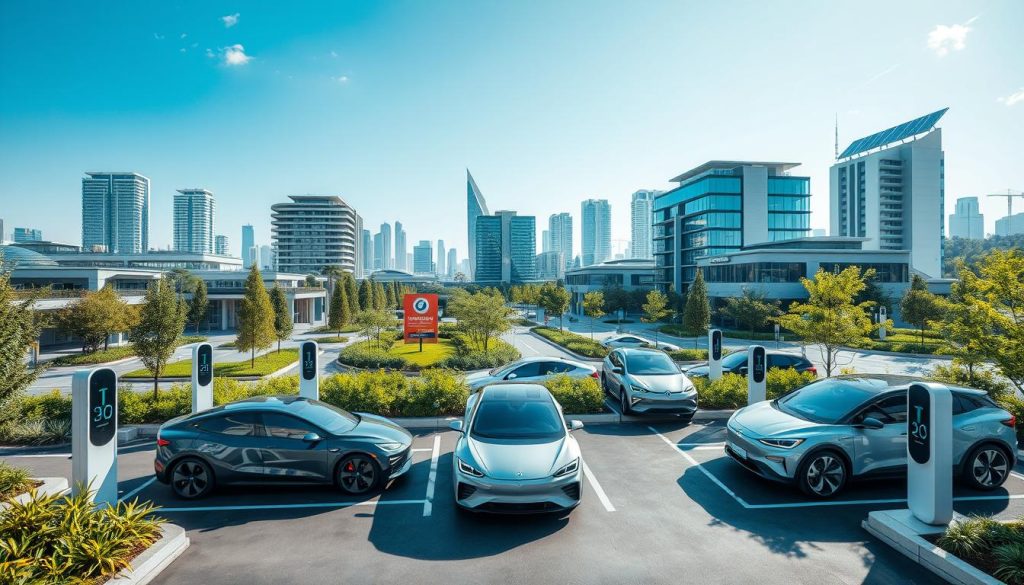
Electric vehicles and wireless charging are changing how we travel. As we move towards cleaner cars, wireless charging is a big step forward. It brings convenience, efficiency, and helps the planet.
Wireless Charging Standards and Protocols
The world of contactless charging has grown a lot. Many standards and protocols have come up to make sure devices and chargers work together well. The Qi standard, made by the Wireless Power Consortium, is the most popular. It’s used in over 600 types of devices, like phones, electric cars, and public charging spots.
Other standards like Power Matters Alliance (PMA) and Alliance for Wireless Power (A4WP) also exist. They meet different needs and power levels. It’s important for these standards to work together well. This will help cordless charging become more common and easy to use in many areas.
| Wireless Charging Standard | Developed By | Key Features |
|---|---|---|
| Qi Standard | Wireless Power Consortium |
|
| Qi2 Standard | Wireless Power Consortium |
|
The world of contactless charging is always getting better. The Qi2 standard is the latest step forward. As technology keeps improving, making sure all standards work together will be key. This will help wireless charging become more common and easy to use in many areas.
Inductive Charging: The Most Common Wireless Charging Method
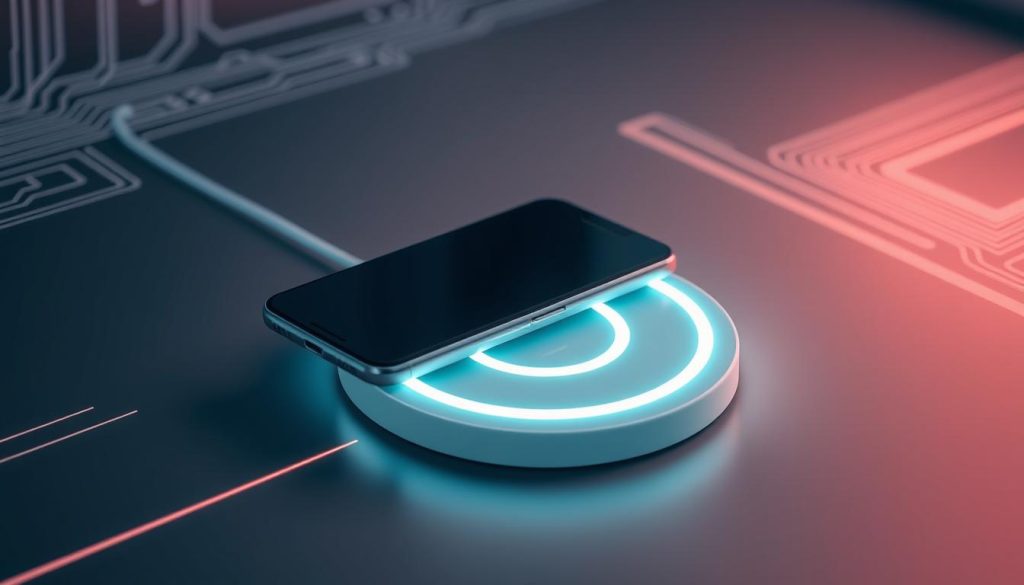
Cordless is getting more popular, and inductive charging is leading the way. It uses electromagnetic induction to send energy from a charging pad to a device. This method doesn’t need cables or cords.
How Inductive Charging Works
The charging pad has a transmitter coil that makes a magnetic field. This field creates an electric current in the device’s receiver coil. This lets power move wirelessly, making charging easy and convenient.
Inductive charging works best over short distances, usually under 10 mm. It can send power at levels from 5 to 15 watts.
Advantages and Limitations of Inductive Charging
- Efficiency: Inductive charging is almost as efficient as DC fast chargers. It’s a top choice for contactless charging.
- Convenience: It’s easy to charge devices without cables. Just place them on a charging pad.
- Durability: It reduces damage to charging ports and cables. This makes devices last longer.
- Flexibility: Charging pads can be built into furniture and cars. They make charging look good.
- Limitations: It only works over short distances. Devices must be aligned perfectly for efficient charging.
Despite its limits, inductive charging is still the most used contactless tech. It’s in many devices, from phones to electric cars and medical implants.
Magnetic Resonance Charging: Extending the Range
Wireless charging has made big strides, especially with magnetic resonance charging. It uses special magnetic fields to send power over 32 to 50 mm. This tech, or resonant inductive coupling, lets coils work together better, even if they’re not perfectly aligned.
This method is great for tables and desktops, keeping electromagnetic field exposure safe. It’s a big step forward for contactless power transfer and contactless power transfer. As electric vehicles become more popular, magnetic resonance charging makes charging them easier and faster.
| Technology | Frequency Range | Power Transfer Capability |
|---|---|---|
| Inductive Charging | 80-300 kHz | 3.3 kW (domestic) to 20+ kW (commercial/public) |
| Resonant Charging | 6.78 MHz to 13.56 MHz | Up to 90% efficiency under ideal conditions |
| Dynamic Wireless Charging | 20 kHz to 100 kHz | 20 kW to 200 kW, depending on vehicle speed and infrastructure |
Cordless charging is getting even better, with plans for faster power transfer and better system compatibility. It could also work with smart grids for two-way power flow. With the right tech and infrastructure, magnetic resonance charging could change how we charge electric vehicles.
Radio Frequency (RF) Charging: The Future of Wireless Charging?
RF charging is different from traditional contactless charging. It uses electromagnetic waves to send power wirelessly. This means devices can be charged from up to 15 feet away. Its ability to charge over long distances makes RF charging a promising future for wireless power.
How RF Charging Works
RF charging systems turn electrical current into radio waves. These waves are sent through an antenna. The device on the other end captures these waves and turns them back into electrical current to charge its battery.
This method doesn’t need devices to touch or be close to each other. It offers more freedom in where and how devices are placed.
Potential Applications of RF Charging
- Gaming controllers: RF charging keeps gamepads and other controllers charged without wired connections or battery swaps.
- Security cameras: RF charging ensures security cameras and other equipment keep running, even in hard spots.
- Medical devices: It powers medical implants, wearables, and sensors without interrupting care.
- In-vehicle and in-office charging: RF charging stations offer cordless power in cars and offices, boosting convenience and mobility.
RF wireless charging is not yet common, but it’s on the rise. It could soon be used in many areas, from gadgets to medical tools. Its long-range and versatile nature makes RF charging an exciting future for contactless power.
Wireless Charging
Wireless charging has changed how we power our devices. It’s a convenient, cord-free way to charge instead of using wires. Now, many devices, like phones and laptops, can charge wirelessly thanks to the Qi standard.
This technology is getting better and more common. It makes charging easy and hassle-free. About 81% of smartphones can charge wirelessly, but it depends on the phone model and brand.
Cordless charging is great because it works through most phone cases. Most chargers can charge through cases that are not too thick. This means you can keep your phone safe while it’s charging.
But, contactless charging is slower than using a cord. Standard speeds are 7.5 watts for iPhones and 10 watts for Android phones. Newer chargers can go up to 15 watts. Even though it’s slower, many people find it’s worth it for the convenience.
There’s no proof that contactless charging harms phone batteries. Manufacturers have set safe limits to protect battery health. Keeping your battery between 50 and 80% charged is best for its life.
As contactless charging gets better, we’ll see even more improvements. This means less need for cords and a better charging experience for everyone.
Energy Efficiency of Wireless Charging Technologies
Cordless charging is getting better, but how does it compare to wired charging? Experts say wireless charging is as efficient as Level 2 plug-in charging. It works well because of its design, using magnetic resonance to cut down on energy loss.
Also, contactless charge keeps devices charged in the best range. This range is between 20-80% state of charge. It’s more efficient than the on-off charging of plug-ins. This way, devices last longer and use less energy overall.
Comparing Wireless Charging Efficiency with Wired Charging
Cordless charging has come a long way, but it’s good to know the differences with wired charging. Wired chargers on walls usually have an efficiency of 80 to 90 percent. This is a bit lower than wireless charging.
| Charging Method | Efficiency Range |
|---|---|
| Wireless Charging | 88% to 93% |
| Wired Charging (Level 2) | 80% to 90% |
Knowing how efficient wireless charging is helps us choose better. It affects our devices and the planet.
Environmental Impact of Wireless Charging and EVs
Electric vehicles (EVs) are known for their green benefits. But, making their rechargeable batteries can still pollute a lot. A mid-sized EV might release 2-3 tonnes of CO2 during its making, more than a gas car.
Yet, EVs are expected to balance out their carbon footprint after 15,000 to 20,000 miles. This is because they run on clean energy.
Battery Manufacturing and Recycling
Scientists are working on new ways to recycle EV batteries. This could cut down production emissions by up to 28%. By reusing battery materials, we can lessen the carbon impact of making EVs.
Renewable Energy Integration
Using contactless charging with solar power can also cut down EVs’ carbon footprint. Studies show that this combo can reduce EV charging emissions by up to 50%. This is compared to using fossil fuels for electricity.
“Wireless charging technology, when combined with renewable energy sources, offers a promising path towards a more sustainable and environmentally-friendly transportation future.”
The impact of wireless charging and EVs on the environment is complex. But, with ongoing innovation and a focus on green, we’re making progress. We’re working towards a cleaner, greener future.
Challenges and Limitations of Wireless Charging
Wireless charging is getting more popular, but it still has big challenges. The cost of contactless charging systems is high, especially for things like electric cars. This makes it hard for more people to use it. Also, setting up a big network of charging pads and transmitters costs a lot of money.
There are also safety worries. Wireless charging can make things hot, which might hurt battery health over time. People are also worried about how electromagnetic fields might affect our health. So, we need strict rules to make sure contactless charging is safe.
Cost and Infrastructure Requirements
Wireless chargers are pricier than wired ones, making them less affordable. Building a big network of charging pads and transmitters is also expensive. Governments and companies will have to spend a lot to make it happen.
Safety Concerns and Regulations
Safety is a big deal with contactless charging. It can get hot, which might harm battery health. There are also worries about how electromagnetic fields might affect us. To fix these problems, we have strict rules and standards for safe use.
| Wireless Charging Challenges | Wireless Charging Limitations |
|---|---|
| Cost of wireless charging systems | Slower charging speeds compared to wired methods |
| Infrastructure requirements for widespread adoption | Potential heat generation affecting battery health |
| Safety concerns regarding electromagnetic fields | Compatibility issues with some devices |
| Developing safety regulations and standards | Standby power consumption when not in use |
Fixing these problems is key for wireless charging to grow. As it gets better, we’ll see faster, cheaper, and safer technology. This will help it become more common in things like electric cars, phones, and more.
Future Developments and Innovations in Wireless Charging
Cordless charging tech is getting better, thanks to hard work by researchers and engineers. They’re looking into new ways to make it even better. One exciting idea is dynamic wireless charging. This means cars can charge up while moving, making charging stations less necessary.
Also, putting contactless charging technology into urban infrastructure like roads and parking lots is being explored. This could make charging electric cars easy and automatic. Improvements in how it works and its cost are also on the horizon.
The International Energy Agency says the market for contactless car charging will grow a lot. It’s expected to hit over $825 million by 2027. With big names like Tesla and Hyundai working on it, the future of wireless charging innovation and wireless charging integration is bright.
| Wireless Charging Technology Advancements | Key Achievements |
|---|---|
| J2954 Wireless Charging Standard | Can transfer up to 11 kW of power with 93% efficiency |
| High-Speed Wireless Chargers | Oak Ridge National Laboratory is working on chargers that can deliver up to 300 kW of power |
| Polyphase Charger Technology | Set a power density record of 270 kW in a Porsche Taycan test |
| Current Light-Duty Vehicle Chargers | Usually output 12-20 kW of power |
The contactless charging future is looking good, but there are still hurdles. For example, most electric cars don’t come with contactless charging built-in. But, with more research, we can expect to see dynamic wireless charging and contactless charging integration become more common. This will make our transportation system more efficient and green.
“The integration of wireless charging technology into urban infrastructure, such as roads and parking lots, could enable the seamless and automatic charging of electric vehicles, reducing the reliance on plug-in charging.”
Conclusion
Wireless charging technology is a big step forward for electric vehicles (EVs). It’s more convenient and flexible than wired charging. This could help more people use EVs, making our transportation greener.
Right now, contactless charging is as good as wired charging. But scientists are working hard to make it even better. They want to make it more efficient, cheaper, and useful for more things.
Even with some problems, like slower charging, wireless charging is still a great idea. It makes using electric vehicles easier and more appealing. As we keep improving, we’ll get closer to a future where electric cars are the norm.