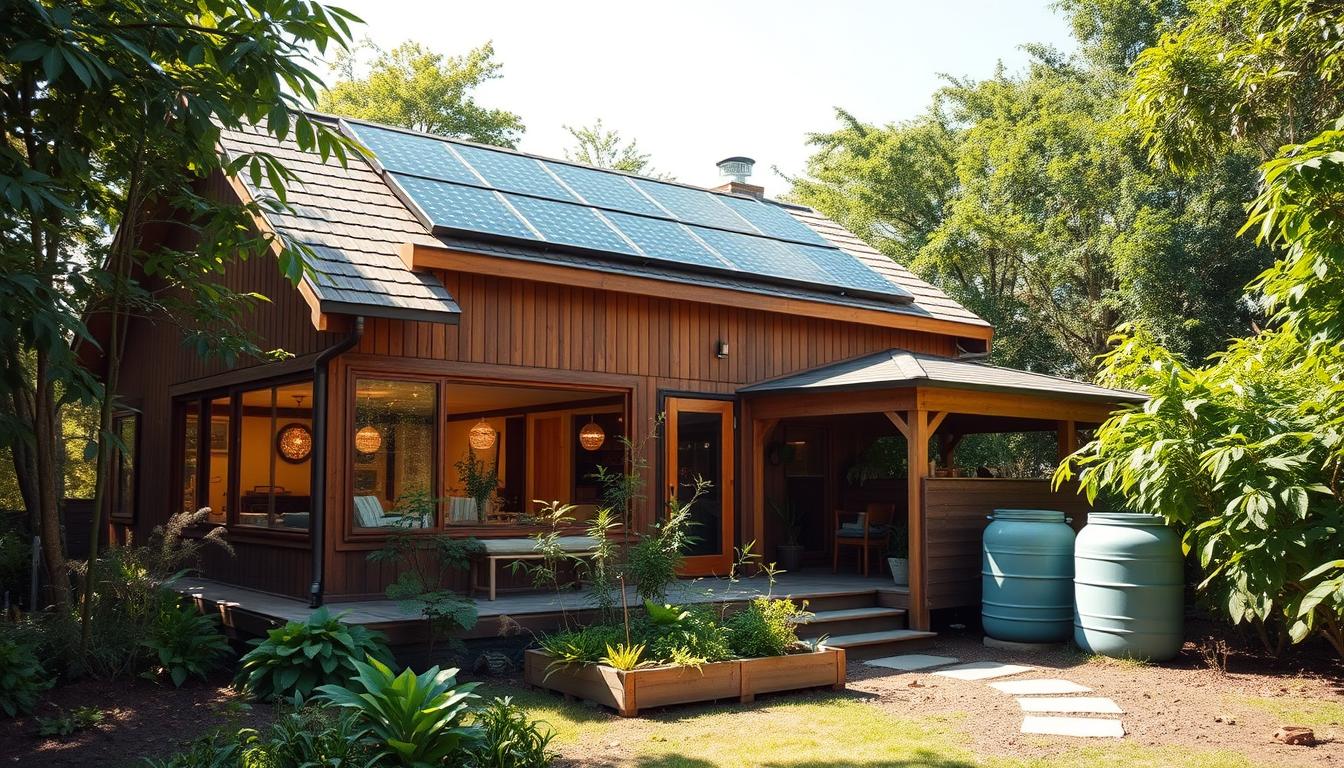
Sustainable living is more than a trend. It’s a lifestyle that aims to lessen our environmental impact. By making conscious choices, we can fight climate change, pollution, and resource depletion. Our goal is to use resources at the same rate they’re replenished.
At the core of sustainable living is net-zero living. This means producing as much renewable energy as we use, with no waste. It’s a holistic approach that focuses on the planet, people, and profits. By aligning our actions with these pillars, we can build a better future for all.
Key Takeaways
- Sustainable living is a lifestyle that aims to reduce environmental impact and achieve a state of environmental equilibrium.
- The three pillars of sustainable living are environmental, social, and economic.
- Net-zero living, where renewable energy production matches consumption and waste is eliminated, is the ultimate goal of sustainable living.
- Adopting sustainable practices can have a positive impact on the planet, people, and the economy.
- Sustainable living is a holistic approach that encompasses various aspects of daily life, from energy use to waste management.
Understanding Sustainable Living and Its Impact
Sustainable living is a way of life that helps the environment and people. It aims to give back more than it takes from the earth. By making eco-friendly choices, we can reduce our carbon footprint and support environmental conservation. This lifestyle also improves our health, strengthens communities, and boosts our finances.
What Makes a Lifestyle Sustainable
A sustainable lifestyle means making choices that are good for the planet. You can do this by:
- Using less energy and water
- Switching to renewable energy
- Choosing green transportation
- Living with zero waste and recycling
- Eating plant-based, seasonal, and local foods
- Supporting businesses that care for the earth
By following these habits, we can greatly reduce our carbon footprint and help save the planet.
The Three Pillars of Sustainability
Sustainable living is based on three key areas: Environment, Society, and Economy. These areas work together to create a sustainable system. This system benefits both today and tomorrow’s generations.
Climate Change and Environmental Impact
Climate change is mainly caused by human actions, like burning fossil fuels. It leads to big changes in weather and temperature. These changes cause droughts, water shortages, fires, rising sea levels, floods, and more. Sustainable living helps fight climate change and lessen these effects.
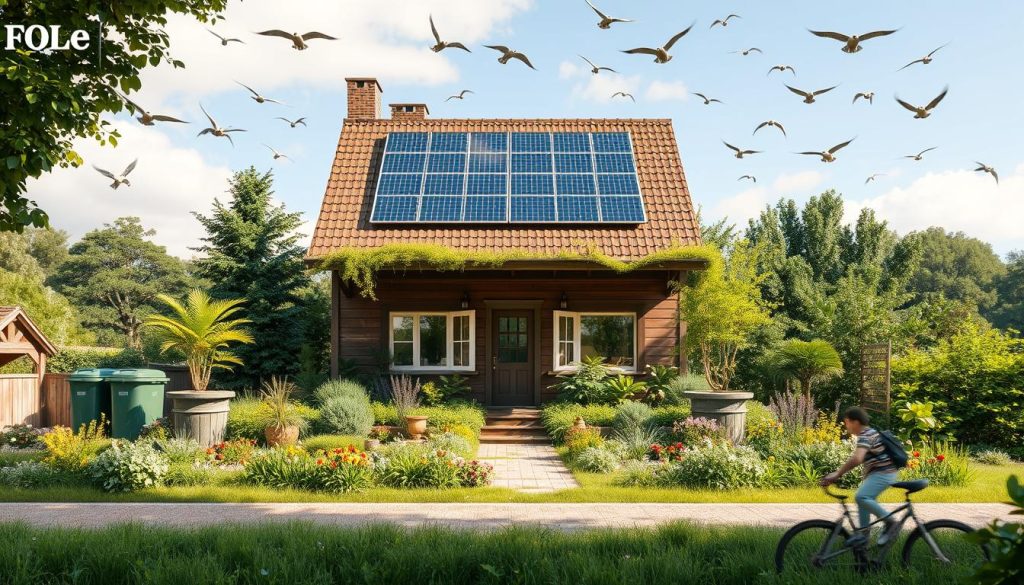
“Sustainable living is not just about protecting the environment; it’s about creating a better future for all.”
Getting Started with Eco-Friendly Home Practices
Starting a green lifestyle doesn’t have to be overwhelming. Begin by looking at your daily habits and finding ways to make them greener. These small changes can greatly reduce your carbon footprint and help the planet.
Try having meatless nights a few times a week. Eating less meat is good for the environment and your health. Also, switch to sustainable low-waste swaps like shampoo bars, bamboo toothbrushes, and reusable bags.
Finding your reason for going green is key. It could be love for nature, wanting better health, or caring about climate change. Remember, doing something is better than doing nothing. Pick eco-friendly habits that you enjoy and can stick to, and slowly move towards a greener life.
| Eco-Friendly Practices | Impact |
|---|---|
| Implementing meatless nights | Reduces greenhouse gas emissions from livestock production |
| Switching to sustainable low-waste swaps | Minimizes plastic waste and promotes a circular economy |
| Reducing water and energy waste | Conserves natural resources and lowers utility bills |
| Choosing green lifestyle, minimalism, and ethical living practices | Contributes to a more sustainable and environmentally-conscious way of life |
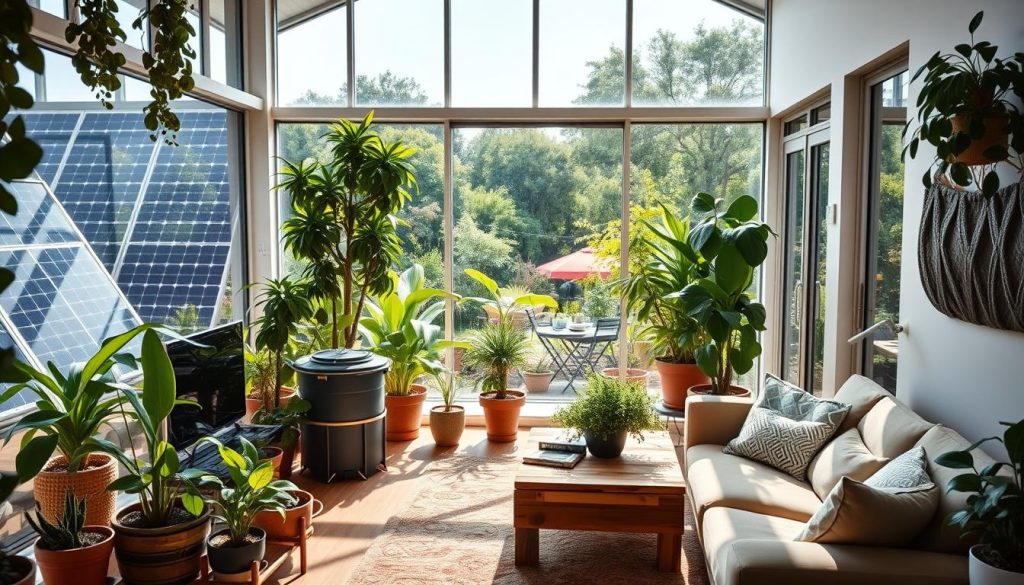
By making small, doable changes and finding your motivation, you can start a journey towards a greener life. Embrace minimalism and ethical living to make a positive impact on the environment and your health.
Energy Conservation and Renewable Resources
Reducing our energy use and moving to renewable energy is key for a sustainable future. Smart energy management and clean energy tech help lower our carbon footprint. This fight against climate change is crucial.
Smart Energy Management Tips
Simple habits can greatly improve your home’s energy use. Turn off lights when not needed, ensure good insulation, and use LED bulbs. Smart home tech can also help manage energy better.
Transitioning to Solar Power
Using solar panels is a big step towards renewable energy. It cuts down on fossil fuel use and saves money on bills. If you can’t install panels, buy green power from your utility.
Heat Pump Installation Benefits
Installing a heat pump can save a lot of energy. They work by moving heat, not making it, which is better for the planet. This upgrade boosts your home’s energy efficiency and supports sustainable living.

The U.S. Department of Energy (DOE) is working on renewable energy projects. They focus on biofuels and offshore wind to make clean energy more reliable and accessible. This helps move us towards a cleaner future.
By saving energy and using renewable sources, we make our living spaces better. It’s not just about saving money; it’s about a healthier planet and a more self-sufficient life.
Sustainable Living Kitchen Practices
As we become more aware of our environmental impact, we’re adopting sustainable kitchen practices. By using eco-friendly cooking methods and making smart choices, we can cut down our carbon footprint. Plus, we get to enjoy tasty, healthy meals. Let’s dive into some key ways to make your kitchen more sustainable.
Choosing a plant-based diet is a big step towards sustainability. Research shows it can lower emissions by up to 75% compared to diets with animal products. Try adding fresh greens, veggies, beans, and legumes to your meals. This way, you’ll make dishes that are both nutritious and inspired by organic farming.
It’s also crucial to reduce food waste. Freeze leftovers, plan meals to avoid waste, and compost organic scraps. This helps create natural fertilizer and cuts down on landfill waste. Use energy-saving appliances like microwaves or air fryers for small meals. They’re better for the environment than big ovens.
- Choose high-quality, durable cookware made of stainless steel 304 for superior heat distribution and long-term use.
- Opt for local and seasonal ingredients to reduce the environmental impact of transportation and support your local economy.
- Invest in eco-friendly cleaning products and biodegradable alternatives to plastic items to create a sustainable kitchen environment.
By following these sustainable kitchen tips, you can lessen your environmental impact. You’ll also enjoy healthy, tasty meals that benefit both you and the planet.
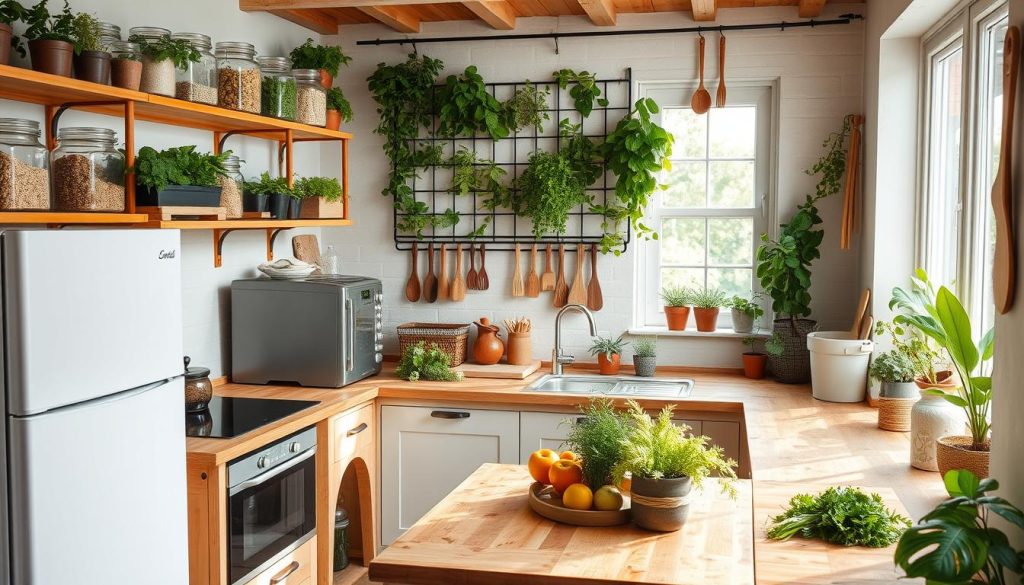
“Sustainable cooking is not just about the food we eat, but the choices we make in our kitchens every day.” – Chef Jamie Oliver
Zero Waste Living and Recycling Strategies
The world faces a big environmental crisis. A zero-waste lifestyle is a strong solution. It means making as little waste as possible by avoiding single-use items and choosing reusable ones. Simple strategies can greatly reduce our carbon footprint and protect the planet.
Composting Basics
Composting is key in zero-waste living. Food scraps in landfills create methane, a harmful gas. A countertop kitchen compost pail helps turn these scraps into soil for your garden or plants.
Reducing Single-Use Plastics
Plastic pollution is a big problem worldwide. Cutting down on single-use plastics is vital. Use reusable bags, bottles, and containers instead of disposable ones. Look for sustainable alternatives like beeswax wrap and bamboo utensils to lessen your plastic use.
Creative Reuse and Upcycling in sustainable living
Don’t throw things away without thinking. Look for ways to reuse and upcycle them. Turn old clothes into cleaning rags or make jars into vases. Seeing potential in everyday items can lead to creative solutions and less waste.
By living zero-waste and recycling, we can all help the environment. Every small action, like reducing waste and finding new uses for things, adds up. Together, we can create a more sustainable future.
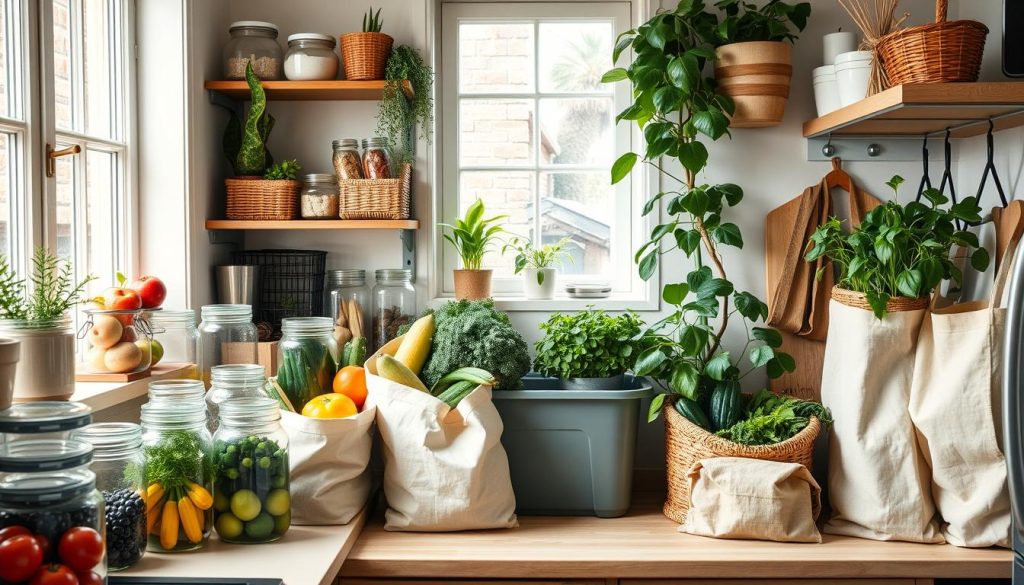
| Zero Waste Practices | Impact |
|---|---|
| Composting food scraps | Reduces methane emissions from landfills |
| Reducing single-use plastics | Decreases plastic pollution in oceans and landfills |
| Creative reuse and upcycling | Conserves natural resources and energy |
Living zero-waste is a powerful way to help our planet. By composting, cutting down on plastics, and upcycling, we can make a big difference. Together, we can create a better future for all.
Sustainable Living: Growing Your Own Food and Garden Management
Adopting permaculture, organic agriculture, and self-sufficiency can turn your backyard into a green haven. Growing your own food cuts down on emissions and waste. It also deepens your bond with nature and your health.
Begin by checking out the space you have, even if it’s just a windowsill. Use items like egg cartons and tin cans to start seeds. For bigger plants, think about using tires, bricks, or old bathtubs. Pick organic and heirloom seeds to avoid harmful chemicals.
If your space is limited, support regenerative farming nearby. This helps the soil and fights climate change. It’s a way to help the food system be more green.
To keep your garden alive, focus on the soil. Add compost and rotate crops to feed your plants naturally. This cuts down on chemical use. Also, save water by collecting rain and using it wisely.
Make your garden diverse with both annuals and perennials. Vegetables like potatoes and leafy greens give you food fast. Fruit trees and berries last longer. Organic gardening makes your garden strong and self-sufficient.
| Sustainable Gardening Practices | Benefits |
|---|---|
| Composting | Recycles waste, makes soil better |
| Crop Rotation | Keeps soil rich, fights pests |
| Rainwater Harvesting | Saves water, cuts down on use |
| Perennial Crops | Provides steady food with little work |
By using permaculture, organic agriculture, and self-sufficiency, you can make your backyard a green paradise. It will feed you and help the planet.
Conscious Consumption and Ethical Shopping
In today’s world, more people are thinking about the planet. They want to buy things that are good for the environment. This shift is making our spending habits more thoughtful and responsible.
Local and Seasonal Shopping Guide
Shopping locally is a great way to help the planet. By supporting local shops and buying from farmers’ markets, you cut down on carbon emissions. Plus, buying seasonal produce saves energy needed for storage and transport.
Sustainable Fashion Choices
The fashion world has a big impact on the environment. Look for clothes made from organic, recycled, or upcycled materials. Choose quality over quantity, and don’t forget thrift stores for second-hand fashion.
Eco-Friendly Product Selection
Think about what you buy and how it’s made. Opt for products from renewable, biodegradable, or recycled materials. Avoid single-use plastics and use your own containers for household items.
| Sustainable Shopping Practices | Percentage of Adoption |
|---|---|
| Bringing own shopping bags | 79% |
| Recycling product waste | 65% |
| Reducing new product purchases | 40% |
| Willingness to pay more for ethical products | 42% |
| Willingness to pay more for recyclable materials | 40% |
By adopting these sustainable shopping habits, we can make a big difference. Together, we can create a better, more ethical world.
“The greatest threat to our planet is the belief that someone else will save it.” – Robert Swan
Sustainable Living: Water Conservation Methods
As water scarcity grows worldwide, saving water at home is key. Simple actions can lead to big changes. They help us live more sustainably and lessen our environmental footprint.
Turn off the faucet while brushing your teeth or shaving. This small change can save up to 4 gallons of water per minute. Also, use water-efficient appliances and fixtures. For example, low-flow showerheads and dual-flush toilets can cut water use by 20% or more.
Collect rainwater for your garden and landscaping. Rainwater harvesting systems save water by storing rain. Use drought-resistant plants that need less water. This makes your outdoor space both beautiful and water-efficient.
| Water Consumption Breakdown | Percentage |
|---|---|
| Agriculture | 70% |
| Industry | 20% |
| Domestic | 10% |
Look into greywater systems. They let you use water from sinks, showers, and washing machines for irrigation. This can greatly reduce your water use and support a greener lifestyle.
By using water-saving methods and technology, you save money and help the planet. Every effort counts in the fight against water scarcity. Together, we can ensure a better future for all.
Green Home Maintenance and Improvements
Keeping your home green is more than just the start. It’s about using eco-friendly habits every day and making green upgrades. Using natural cleaners, better insulation, and eco-friendly fixes can make your home more sustainable.
Natural Cleaning Solutions
Forget harsh chemicals and choose natural cleaners instead. Vinegar, baking soda, and lemon juice are great for cleaning without harming the air inside. These methods are good for the planet and your wallet, making your home shine without harming the environment.
Home Insulation Tips
Good insulation makes your home energy-smart. Sealing doors and windows and using green insulation saves energy. This cuts down on bills and helps the planet by reducing waste and emissions.
Eco-Friendly Repairs
Choose sustainable materials and methods for repairs and updates. Options like recycled wood and low-VOC paints are out there. Adding smart home tech, like energy-saving appliances, can also help your home use less energy and be kinder to the planet.