The kitchen is a fascinating place where chemistry makes cooking and baking magic happen. Every ingredient works together at a molecular level, thanks to chemistry and similar to science of baking. The Maillard reaction, for example, turns bread crusts brown and sugar caramelized, showing how heat changes things.
Knowing the science behind food and baking can make you a better cook. It lets you be more creative in the kitchen.
Baking is an art that needs a perfect mix of ingredients and careful control of temperature and time. The science behind baking shapes the taste, texture, and look of what we make. By learning about baking science, both home cooks and chefs can understand the basics of this art.
Key Takeaways
- Baking is a complex science that involves chemical reactions and transformations at the molecular level.
- Understanding the properties and interactions of key baking ingredients, such as flour, eggs, and fats, is essential for achieving consistent and desirable baking results.
- Precise temperature control, time management, and heat transfer methods play a crucial role in the baking process, impacting the final texture and appearance of baked goods.
- Leavening agents, whether chemical or biological, are responsible for the rise and structure of baked products, and their proper use is crucial.
- The Maillard reaction and caramelization are two important chemical processes that contribute to the unique flavors and colors in baked goods.
Understanding Kitchen Chemistry Fundamentals
Cooking and baking are more than just following recipes. They involve complex chemical reactions that turn simple ingredients into tasty dishes. The Maillard reaction creates rich flavors, while emulsions make sauces smooth. Food science is key in the kitchen.
Chemical Reactions in Everyday Cooking
The Maillard reaction is behind the browning and flavors in seared meats and baked goods. Caramelization, a slow sugar cooking process, adds deep flavors to treats.
Basic Principles of Food Science
Learning food science basics can take your cooking to the next level. Emulsions, which mix oil and water, are crucial for sauces and dressings.
Molecular Transformations During Baking
Baking changes ingredients through heat and chemical reactions. Heat releases gases and changes proteins, affecting texture and taste.
“Knowing the science behind cooking and baking unlocks a new world of creativity and control in the kitchen.”

Understanding chemical reactions and food science can improve your culinary techniques. It helps create baking reactions that please the palate.
Science of Baking: Essential Baking Ingredients and Their Properties
Baking success comes from mixing the right ingredients. Each one adds special qualities to the final treat. Knowing how these ingredients work together is key to making great baked goods.
Flour is the base of most baked items, giving them shape and strength. All-purpose flour, with 10-12% protein, is good for many recipes. Cake flour, with 7-8% protein, makes baked goods soft and tender. Whole wheat flour, with the whole wheat kernel, makes baked items denser and more fiber-rich.
Sugar does many things in baking. Granulated sugar is fine and sweet. Brown sugar, with molasses, adds moisture and flavor. Sugar sweetens, keeps moisture, helps brown, and makes baked goods light.
| Ingredient | Properties |
|---|---|
| Flour |
|
| Sugar |
|
| Fats |
|
| Eggs |
|
Fats like butter and oil make baked goods tender and moist. Butter, with 80% fat, adds flavor and tenderness. Oil, being 100% fat, keeps baked goods moist and tender.
Eggs are key for structure, moisture, and leavening. Egg whites help with structure and leavening. Egg yolks add richness, color, and flavor.
Knowing how these ingredients work together is vital for making delicious and beautiful baked goods.

The Science of Baking: From Ingredients to Reactions
Baking is a mix of science and art. It’s about how ingredients, temperature, and heat work together. This magic turns simple things into tasty treats we all love. Knowing the baking processes helps make your baking better and more consistent.
Temperature Control in Baking
Temperature is key in baking. Getting the oven thermodynamics and temperature control right is crucial. It brings out the best in your ingredients. Whether you’re cooking, braising, or baking, using the right heat is essential for perfect results.
Time and Temperature Relationships
Time and temperature go hand in hand in baking. How long and how hot you cook affects your baked goods a lot. Too much heat can make them tough, while too little can leave them raw. Finding the right balance is the secret to delicious baking.
Heat Transfer Methods
How heat reaches your ingredients matters a lot. Conduction uses direct contact, like the oven’s walls and your pan. Convection cooks with moving hot air, like in convection ovens. Radiation uses electromagnetic waves, found in some ovens. Knowing these methods helps you bake better.

By understanding baking processes, oven thermodynamics, and temperature control, you can make amazing baked goods. Mastering time, temperature, and heat transfer is key to baking like a pro at home.
Science of Baking: Role of Proteins and Gluten Development
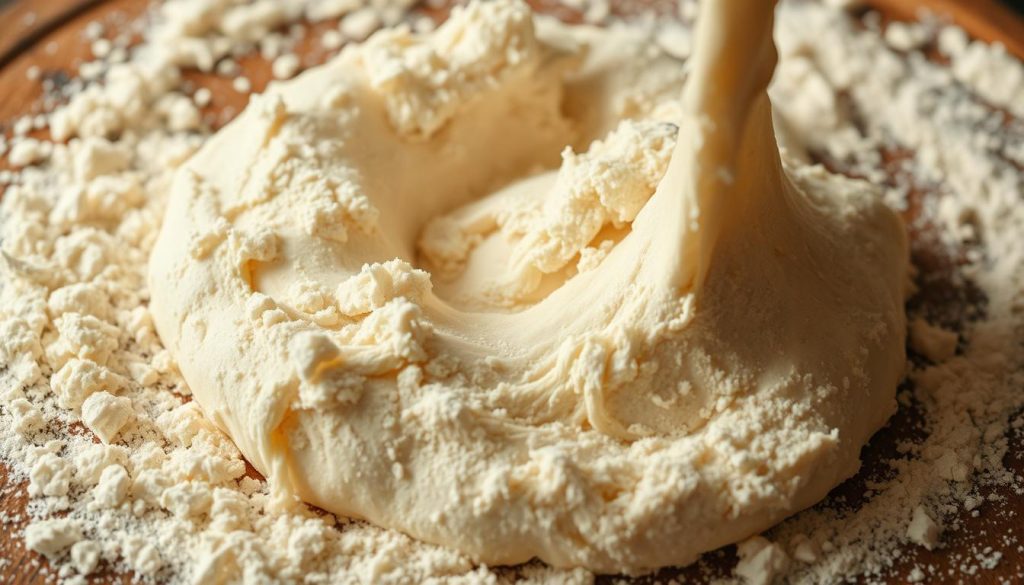
Wheat flour’s proteins, like glutenin and gliadin, are key in baking. They form gluten when mixed with water. This gluten gives baked goods their structure and texture.
The type of flour used affects how much gluten forms. This, in turn, changes the final product’s texture. For example, bread flour makes a chewier bread, while cake flour results in a softer one.
Gluten formation is vital in dough rheology. It’s the study of dough’s behavior under different conditions. The gluten network traps air, making the dough stretchy and elastic.
This elasticity is what allows dough to rise and expand. Achieving the right texture in baked goods depends on proper gluten development.
But, too much mixing can ruin the dough. It can make the dough tough and chewy. Finding the right balance is crucial for bakers.
“The ability of wheat flour proteins to expand and trap gas bubbles is crucial for structure in baked goods.”
Other proteins in flour, like albumins and globulins, also affect dough properties. Enzymes like amylase and protease break down flour components. This influences the baking process.
Understanding protein coagulation and gluten development is essential. It allows bakers to create a variety of textures. From the softness of a cake to the chewiness of bread, it’s all about mastering these skills.
Leavening Agents in Science of Baking: The Chemistry of Rise
Baking is a mix of science and art. Leavening agents are key to getting the right rise and texture. Ingredients like baking soda, baking powder, and yeast make breads, cakes, and pastries light and fluffy.
Chemical Leaveners vs. Biological Leaveners
Chemical leaveners, like baking soda and baking powder, release carbon dioxide gas when mixed with liquid and heat. Baking soda needs an acidic ingredient to react. Baking powder has both the base and acid, making it more flexible. Biological leaveners, like yeast, are living and ferment sugars to produce carbon dioxide, causing dough to rise.
Gas Production and Bubble Formation
The gas from leavening agents creates air pockets in the batter or dough. These pockets expand when heated, making baked goods light and airy. The size and spread of these bubbles affect the final texture and feel of the product.

Effects on Texture and Structure
The type of leavening agent used can change the texture and structure of baked goods. Baking soda makes a coarse, open crumb, while baking powder creates a finer texture. Yeast can make a chewy, bread-like texture. Knowing how each leavening agent works with other ingredients is key to getting the desired result.
Keeping leavening agents fresh and stored properly is also important. Old or poorly stored ingredients can ruin the baking process. By understanding leavening science, bakers can make their creations even better.
Sugar’s Multiple Roles in Science of Baking
Sugar does more than just add sweetness in baking. It plays a key role in caramelization, flavor, and texture. This makes baked goods special.
The type of sugar used matters a lot. Granulated white sugar gives a clean sweetness. Brown sugar adds a richer flavor because of its molasses. Powdered sugar makes icings and glazes smooth, perfect for shortbread.
Sugar also helps keep baked goods moist. It makes them soft and tasty for longer. Sugar also helps make cakes and cookies tender by interfering with gluten.
When baked, sugar caramelizes, giving a rich flavor and color. This is seen in cookie baking. Sugar content affects cookie spread, making them thinner and crisper.
Sugar also helps doughs and batters rise. It does this by reacting with baking soda. In yeast-leavened goods, sugar feeds the yeast, helping them rise.
In short, sugar does more than add sweetness. It affects caramelization, flavor profiles, and texture in many baked goods.
“Sugar is the architect of a baker’s craft, shaping the very foundation of our most cherished baked creations.”
Fats and Emulsions in Science of Baking
In baking, fats and emulsions are key to texture and taste. They make pastries tender and sauces creamy. Knowing their science is vital for baking mastery.
Types of Fats and Their Functions
Fats like butter, oil, and shortening do more than add flavor. They make dough tender by covering flour proteins. This stops too much gluten from forming. Different fats give unique tastes and textures, like butter’s creaminess and olive oil’s lightness.
Creating Stable Emulsions
Emulsions mix oil and water, found in many baked goods. Emulsifiers, like egg yolks’ lecithin, keep these mixtures together. Knowing emulsification is key for textures in mayonnaise, vinaigrettes, and some cakes.
Impact on Texture and Mouthfeel
Fat types and amounts greatly affect texture and feel. Creaming fats create a light crumb in cakes. Rubbing fats into flour makes pastries tender and crumbly.
Understanding fats and emulsions is crucial in the culinary arts. By grasping their roles, bakers and pastry chefs can craft diverse emulsions and textures. This expands the kitchen‘s possibilities.
| Fat Type | Melting Point | Texture | Dietary Considerations |
|---|---|---|---|
| Butter | 32-35°C | Creamy, rich | High in saturated fat |
| Olive Oil | -10 to 15°C | Light, delicate | High in monounsaturated fat |
| Shortening | 35-45°C | Flaky, tender | Typically higher in saturated fat |
“Emulsification is the key to creating many of the most delicious and visually appealing foods we enjoy.”
Science of Baking: Mastering Heat Transfer and Thermodynamics
Baking is a mix of science and art. Knowing about heat transfer and oven thermodynamics is key for great results. The main ways heat moves in baking are conduction, convection, and radiation.
Conduction is when heat moves through touch. It’s important for even heat in baking. This helps the dough or batter cook evenly, creating the right texture.
Preheating the oven is crucial for conduction. It makes sure the oven is ready to cook before you start.
Convection uses moving air to spread heat. It’s common in modern ovens. This method helps cook things evenly and can make crusts crispier.
Radiation is when heat is sent out as waves. It affects the surface of baked goods. This helps create the golden-brown color and rich flavors we love.
Knowing how to control heat transfer and thermodynamics is key for bakers. It lets them make everything from delicate pastries to hearty breads. By mastering these skills, bakers can make their creations even more delicious.
- Conduction: The direct transfer of heat through physical contact, ensuring even heat distribution in baking.
- Convection: The movement of heated air or gases to distribute heat, commonly utilized in modern convection ovens.
- Radiation: The emission of electromagnetic waves that can directly influence the surface of baked goods, contributing to the Maillard reaction and caramelization.
“Mastering the science of heat transfer is the key to unlocking the true potential of your oven and creating baked goods that are both visually stunning and bursting with flavor.”
Understanding heat transfer and oven thermodynamics lets bakers control their baking better. This ensures their results are always top-notch.
The Maillard Reaction and Caramelization in Science of Baking
In the world of baking and cooking, two key processes stand out: the Maillard reaction and caramelization. These processes create the delicious smells and deep colors we love in foods like toasted bread and seared meats. They also bring out a wide range of flavors that make our food taste amazing.
Browning Processes Explained
The Maillard reaction happens when amino acids and sugars meet heat, usually above 280°F. This reaction creates hundreds of new flavors, adding depth to dishes. Caramelization, on the other hand, is the browning of sugars alone, needing even hotter temperatures, around 160°C, to start.
Both reactions are vital for the taste and look of baked goods and seared meats. Knowing how they work lets bakers and chefs control the colors and flavors of their dishes. This knowledge opens up new possibilities in molecular gastronomy.
Flavor Development Chemistry
The Maillard reaction and caramelization happen together, with the Maillard starting at slightly lower temperatures. This combination creates a mix of flavors, from savory to sweet. It’s like a symphony of tastes.
Getting the temperature and time right is key to using these reactions well. The Maillard reaction needs patience and careful heat control. Caramelization is a bit trickier, as sugars can burn easily if not watched closely. By mastering these flavor development techniques, chefs can make their dishes truly exceptional.
“The Maillard reaction is a chemical reaction that occurs between amino acids and reducing sugars, giving browned foods their distinctive flavor.” – Harold McGee, food science writer
Moisture Control and Water Activity in Science of Baking
Keeping the right amount of moisture is key in baking. It helps get the texture right and keeps baked goods fresh longer. Water activity, or the moisture in food, is important. It affects how well food stays good and how it tastes.
How much flour absorbs water matters a lot. It depends on the flour’s moisture, starch, and protein. Too little water makes dough stiff and dense. Too much makes it sticky and hard to handle.
It’s vital to control water activity for food safety and quality. Foods with high water activity can spoil quickly. But, foods with lower water activity stay fresh longer. Drying, freezing, or using preservatives can help keep food fresh by lowering water activity.