
Habit formation is a powerful tool for personal growth and transformation. It helps us create routines and behaviors that support our long-term goals. Understanding the science behind habit development is key to building good habits.
Habits save our brain’s energy by letting us do certain tasks without thinking. Research shows it takes about 66 days to form a new habit. This proves that building habits needs patience and consistency.
Studies show that accountability and environmental cues are crucial for sticking to habits. Visual reminders like sticky notes or app notifications can be very helpful. Techniques like “habit stacking” can also make new habits easier to follow.
Key Takeaways
- Habit formation is a well-studied process that takes time and consistency, often around 66 days on average.
- Accountability and environmental cues can greatly influence the success of habit building.
- Techniques like “habit stacking” can help make new habits more automatic and sustainable.
- Adjusting goals and expectations when faced with challenges can prevent discouragement and maintain progress.
- The science of habit formation provides a roadmap for cultivating positive behaviors and achieving long-term transformation.
Understanding the Psychology of Habits
Habits form in a complex way, mixing neuroplasticity, behavioral economics, and our mind’s workings. To really get how good habits are built, we need to explore the science behind them.
The Role of Neuroplasticity in Behavior Change
Neuroplasticity lets our brains adapt and change, key to forming habits. Repeated actions make neural pathways stronger, making behaviors automatic. This process, known as habit formation, is driven by the basal ganglia, a region responsible for learning and motor control.
Why Our Brains Create Habits
Our brains aim for efficiency, and habits are a result. They automate routine tasks, freeing up our minds for more complex ones. Research shows it can take 18 to 254 days to form a new habit, with an average of 66 days. Consistent effort and repetition are vital in changing our habits.
The Impact of Habits on Daily Life
Habits deeply shape our daily lives, influencing our choices, actions, and well-being. Good habits, like exercise or reading, boost our health, while bad ones, like unhealthy eating or procrastination, harm our productivity and cause stress. Knowing how habits work is key, especially for those with ADHD or autism, who face special challenges.

“Habits are the compound interest of self-improvement. The more you invest in them, the better you’ll become.” – James Clear, author of Atomic Habits
The Fundamental Components of Habit Formation
Habit formation is a complex process with several key components. At its core is the habit loop. This loop has three essential elements: the cue, the routine, and the reward.
The cue is what starts the habit. It can be something inside you or outside, like a certain time or place. It tells your brain to start the habit.
The routine is what you do when you see the cue. It can be anything from moving your body to thinking a certain way. Over time, it becomes automatic.
The reward is what you get after doing the routine. It’s the good feeling that makes you want to do it again. This reward makes the habit stronger, making it more likely to happen again.
Knowing about the cue-routine-reward cycle helps you control habits. By figuring out these parts, you can change or start new habits.
| Component | Description |
|---|---|
| Cue | The trigger that initiates the habit, such as a specific time, location, or emotional state. |
| Routine | The actual behavior or action that is performed in response to the cue. |
| Reward | The benefit or satisfaction experienced after completing the routine, which reinforces the habit. |
Understanding the habit loops gives you insight into how habits form. This knowledge lets you control your behaviors and make lasting changes.
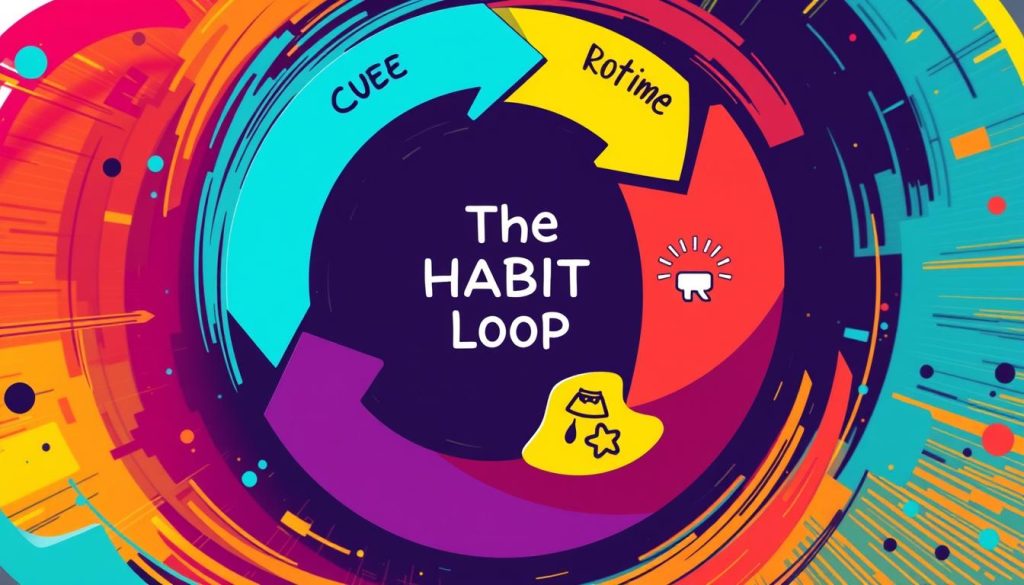
Breaking Down the Habit Loop: Cue, Routine, Reward
The secret to lasting habits is knowing the habit loop. It’s a three-step process that shapes our actions. Charles Duhigg found this loop in 2012, with a cue, a routine, and a reward. By tweaking these parts, we can set up good habits, keep routines, and get rewards that make us want to do more.
Identifying Triggers and Cues
The first part is the cue – what starts the habit. It might be a certain time, place, or feeling. For instance, Gina Cleo, PhD, says wearing workout clothes in the car can start your exercise habit. Knowing these cues is key to lasting habits.
Establishing Effective Routines
After spotting the cue, you need a routine – the action you want to make a habit. Chelsea Wooding, PhD, says it’s about making progress, not being perfect. Start with small, consistent actions, like “At 7 AM, I will do a 30-minute workout.”
Creating Meaningful Rewards
The last part is the reward – the good feeling you get after doing the routine. Rewards can be things you like, like treats, or feelings, like pride or happiness. Finding rewards that mean something to you is crucial for keeping the habit.
By getting to know and adjust the cue, routine, and reward parts of the habit loop, you can lay a solid base for good habits. These habits will improve your life.

“The secret sauce to changing our habits is consistency, not intensity.”
– Gina Cleo, PhD
The Science of Building New Habits
Habit formation is a field that explores how we build new behaviors. It can take about 66 days for a new habit to become automatic. But, the time needed can vary based on the habit’s complexity and individual factors. It’s more important to focus on being consistent than on how fast you can build a habit.
The “habit loop” is a key part of habit formation. It includes a cue, a routine, and a reward. By understanding and designing this loop, you can set yourself up for success in building lasting habits.
Simple habits like drinking water or flossing can start in just one to two weeks. But, more complex habits like going to the gym or changing your diet may take months. This shows the need for patience and perseverance when starting new habits.
In the workplace, supporting employees in building new habits can improve engagement and retention. Companies like Wellbeing offer templates to help employees achieve their new year goals. They recognize the value of positive habits.
The science of habit formation is a powerful tool for changing behavior and staying consistent. By understanding the principles and using practical strategies, both individuals and organizations can harness the power of habit formation.

| Habit Formation Timeline | Habit Complexity | Success Rate |
|---|---|---|
| 1-2 weeks | Simple habits (e.g., drinking water, flossing) | High |
| Months | Intricate habits (e.g., gym routine, dietary changes) | Moderate |
| 66 days (average) | Varies based on habit complexity and individual factors | Depends on consistency and patience |
“Start Tiny and celebrate small wins to build lasting habits.”
The “Start Tiny” philosophy by BJ Fogg suggests breaking down big habits into small actions. Examples include stretching after morning coffee, taking a deep breath after texts, and pausing to reflect during meals. Celebrating these small wins can help build success and resilience in all areas of life.
Habit Stacking: Leveraging Existing Behaviors in Habit Formation
Starting new habits can be tough, but habit stacking makes it easier. This method links a new habit to one you already do. It uses your current habits to add more good behaviors. By combining habits, you boost your chances of making lasting changes.
Implementing the Habit Stacking Formula
The habit stacking formula is simple: “After I [CURRENT HABIT], I will [NEW HABIT].” It helps you add new habits to your daily life. For instance, “After I brush my teeth, I will meditate for 5 minutes.” This way, you make the new habit stick by linking it to something you already do.
Creating Powerful Habit Chains
Habit stacking can also help you create habit chains. These are when you link several new habits together. This method is great for improving productivity, self-care, and personal growth. Small actions can add up to big changes over time.
Choosing Anchor Habits
When using habit stacking, picking anchor habits is key. These are habits you already do well and often. Linking new habits to these makes them more likely to stick in your routine.
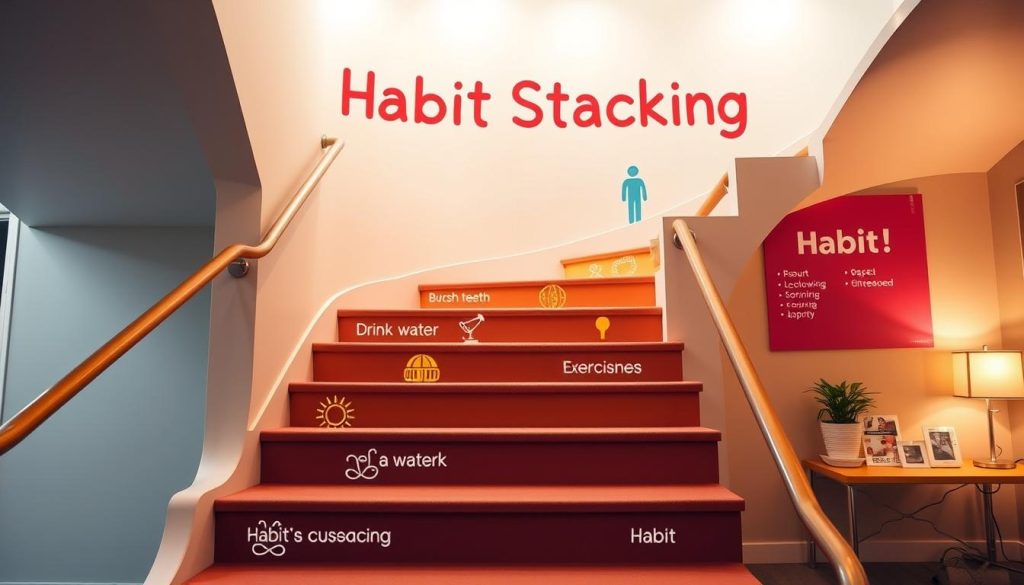
Habit stacking is a smart way to build good habits and better your life. It uses your current habits to add new ones, making lasting changes. Start small and use the habit stacking formula to see big improvements in your life.
The Role of Environment in Habit Development and Habit Formation
The environment is key in forming habits. Visual cues like sticky notes or app alerts can remind and trigger habits. Tools like Habitica or HabitBull help track and remind of goals, boosting habit formation.
Changing the physical space to support habits can greatly help. For example, a tech startup improved communication and ideas by redesigning its office. A workspace with open areas can foster accountability and openness.
Social cues and peer behaviors in the workplace drive habit formation. New employees often follow their colleagues’ habits, like being on time or dressing well. Leaders also set habits by modeling practices, like work-life balance or continuous learning.
Creating an environment that supports habits is vital for lasting change. Regular checks, reducing choices, and celebrating wins can make the environment more habit-friendly.
| Strategies for Habit-Friendly Environments |
|---|
| Consistency Reinforcement: Daily practice of new habits helps reinforce neural pathways, making actions more automatic over time. |
| Regular Assessments: Assess the environment every few months to determine areas that contribute to distractions or impede progress. |
| Decision Fatigue Reduction: Minimizing the number of choices faced daily can help in preserving mental energy for important tasks. |
| Goal Realignment: Regularly reassessing the environment is crucial to ensure that it aligns with the evolving goals and habits over time. |
| Celebrating Achievements: Recognizing and celebrating small victories along the habit-building journey can reinforce positive behaviors and motivation. |
Understanding the environment’s role in shaping habits helps create a supportive ecosystem. This ecosystem fosters the development and upkeep of healthy behaviors.
Overcoming Common Obstacles in Habit Formation
Building good habits can be tough, but knowing how to tackle common obstacles helps a lot. Procrastination and lack of motivation are big challenges. Yet, with the right willpower development strategies, you can beat these hurdles and make lasting changes.
Managing Resistance and Procrastination
It’s normal to resist change, and procrastination can be tough to fight. Try the “two-minute rule” – start a new habit for just two minutes a day. This makes it feel less overwhelming and helps you get moving. Using habit tracking apps or journals can also help you stay on track.
Dealing with Setbacks
Setbacks happen, but they shouldn’t stop you. When you slip up, focus on your progress, not perfection. Celebrate small victories and be gentle with yourself. Keep pushing forward, and you’ll build lasting habits.
Maintaining Motivation
Keeping motivation up is key to forming habits. Try different motivation strategies, like setting clear goals or finding accountability partners. Treat yourself when you hit milestones, and always think about the good things your new habits bring. Remember, changing habits is a long-term effort, not a quick fix.
By knowing the common obstacles and using the right strategies, you can beat procrastination, stay motivated, and build strong willpower. Embrace the journey, celebrate your achievements, and watch as your new habits become a powerful part of your life.
Tracking and Measuring Habit Progress in Habit Formation
Tracking your habit progress is key to staying motivated and finding areas to improve. Keeping a consistent log of your habits shows your commitment. It helps you see how far you’ve come and what changes you need to make.
Research shows that tracking habits often leads to better understanding and change. Writing down your habits can boost productivity and help you reach your goals. Many people see a big jump in achieving their habits.
Habit tracking apps are a popular choice for logging habits. They offer features like reminders, detailed tracking, and statistics. Apps like Streaks, HabitNow, and Habitica help you track and analyze your habits.
| App | Key Features | Pricing |
|---|---|---|
| Streaks | Daily, weekly, and monthly habit tracking; Apple Health Kit integration; Home Screen widgets; Shortcut integrations; Detailed habit streak statistics; Note-taking | Free with in-app purchases |
| HabitNow | Customizable habit tracking; Progress charts; Habit reminders; Streak tracking; Habit history | Free with in-app purchases |
| Way of Life | Flexible habit tracking; Detailed reports; Habit insights; Habit calendar; Goal setting | Free with in-app purchases |
| Habitify | Intuitive interface; Habit categorization; Habit timeline; Habit streaks; Habit analysis | Free with in-app purchases |
| Habitica | Gamified habit tracking; Tasks and challenges; Avatars and virtual rewards; Social features | Free with in-app purchases |
Tracking habits boosts self-awareness, research finds. People who track their habits often understand their behaviors better. They are more likely to make changes. Reflecting on habits also makes people more flexible and self-compassionate.
In summary, habit tracking offers valuable insights and boosts motivation. By regularly checking your progress, you can stay focused on your habit tracking, goal setting, and self-discipline. This leads to lasting positive changes in your life.
The Power of Small Changes: Atomic Habits Approach
The Atomic Habits method by James Clear is popular for personal growth. It shows how small changes can lead to big results over time. The idea is to make habits obvious, attractive, easy, and satisfying for lasting changes.
Making Habits Obvious and Attractive
The first step is to make habits obvious and attractive. You can do this by setting up visual cues, like having your workout gear ready. Or, make the habit more appealing, like listening to a fun podcast while exercising. This makes it easier to stick to the habit.
Creating Easy and Satisfying Routines
Next, make the habit easy and satisfying to do. Start with tiny habits, like reading one page or doing one push-up a day. These small achievements build momentum and make the habit feel easy. This leads to a sense of mindfulness and personal growth.
Building Sustainable Changes
The goal is to make these changes last. By improving just 1% each day, you can see big changes over time. As “Atomic Habits” says, getting 1% better every day makes you 37 times better in a year.
“Habits are the compound interest of self-improvement. The same way that money multiplies through compound interest, the effects of your habits multiply as you repeat them.” – James Clear, author of “Atomic Habits”
By using the Atomic Habits approach, you can make small changes that add up to a big difference. Whether it’s starting a mindfulness practice or a new personal growth habit, start small and stay consistent. The effects of these small habits can be amazing.
Conclusion
Building better habits is a science that can change your life every day. Understanding the habit loop and using strategies like habit stacking and Atomic Habits can guide you. These methods help you make lasting changes in your behavior.
Consistency, patience, and forgiving yourself are crucial on this journey. They help you form good habits and grow as a person.
Studies show it takes about 66 days for a new habit to become second nature. This highlights the need to keep up with your habits over time. Setting clear goals and celebrating small wins can help you stick to your habits.
By learning about habit formation, you can start a journey of personal growth. This journey can help you reach your dreams, whether it’s better health, more productivity, or a positive mindset.
Use the knowledge from this article to guide you on your path to lasting change. Dedicate yourself and keep growing. The possibilities for personal growth and happiness are endless.