In today’s world, many people are turning to minimalism. This lifestyle choice values quality over quantity and experiences over stuff. It’s become popular, thanks to authors like Joshua Fields Millburn, Ryan Nicodemus, and Marie Kondo.
Minimalism offers a fresh view, showing the beauty in simplicity. It teaches us that happiness isn’t just about having more stuff. It’s about focusing on what truly matters. This idea has caught on with millennials and Gen Z, who see it as a way to find fulfillment and sustainability.
Key Takeaways
- Minimalism is a growing movement that prioritizes simplicity, quality, and experiences over material possessions.
- The modern minimalist movement gained traction in the early 2000s, influenced by authors like Joshua Fields Millburn, Ryan Nicodemus, and Marie Kondo.
- Millennials and Gen Z are increasingly embracing minimalism as a response to economic challenges and a desire for intentional living.
- Minimalism offers a counter-narrative to consumerist culture, appealing to those overwhelmed by the pressure to acquire more.
- Minimalism challenges the conventional definition of wealth and success, emphasizing personal growth and fulfillment over material possessions.
Understanding the Philosophy of Minimalism
Minimalism is a lifestyle that values intentional living, conscious consumption, and less is more. It draws from Zen Buddhism, focusing on simplicity and mindfulness. This way of life makes us think deeply about what truly makes us happy.
The Core Principles of Minimalist Living
Minimalism is built on a few key ideas:
- Intentionality: We think carefully about what we own and do, keeping only what matters to us.
- Value-based decision-making: We make choices that add value to our lives, not just for fleeting joy.
- Focusing on what matters: We spend our time and energy on meaningful people, experiences, and activities.
Historical Origins and Modern Evolution
Minimalist ideas have been around for centuries. But the modern movement has grown a lot in recent years. Frugal living and intentional living appeal to many, from young adults to golden agers. They want to live simpler, more fulfilling lives.
The Psychology Behind Less is More
Minimalism works because it’s based on psychology. By getting rid of clutter, we feel less stressed and more focused. Choosing experiences over things also makes us happier, as memories and relationships last longer than possessions.
“Minimalism is not just about getting rid of stuff. It’s also about getting rid of the urge to buy more stuff. Goodbye, impulse buys. Hello, financial freedom!”
The Cultural Shift Against Consumerism
A growing dissatisfaction with consumerism is leading to a cultural shift towards minimalism. The average American home now holds over 300,000 items. Yet, studies show that too many possessions don’t make us happier. Instead, clutter can make us stressed and anxious.
Social media has a double role. It fuels consumer desires but also lets minimalists share their stories.
Younger generations, especially millennials and Gen Z, are questioning old values. They’re embracing ethical living and sustainable living. A ThredUp report found 65% of Gen Z wants to shop sustainably. Meanwhile, a Sheffield Hallam University study showed 90% of university students bought fast fashion in 2022.
This move towards anti-consumerism and slow living isn’t just about clothes. Young people are also into minimalist interior design. They prefer simple, neutral colors. This shows a trend towards being more mindful and intentional with what we buy and own.
“Young individuals can project an image of thoughtfulness, responsibility, and uniqueness by consuming less mindfully.”
The rise of minimalism is a reaction to the harm caused by unchecked consumerism. As we face climate change and social inequality, a more conscious lifestyle is becoming more appealing. This shift could change how we consume and view material goods.
The Impact of Digital Age on Minimalist Movement
In today’s digital world, minimalism now includes our online lives. People spend over three hours daily on their phones. This shows the need for digital minimalism and digital detox. It’s about using technology wisely and having a better digital life.
Social Media’s Role in Promoting Minimalism
Social media has made minimalism popular, but it also causes digital overwhelm. Many feel anxious and uncomfortable from too much screen time. Some try social media detoxes, which help them focus on real-life activities.
Digital Decluttering Strategies
- Deleting unused apps and unsubscribing from unnecessary newsletters
- Organizing digital files and emails to maintain a tidy virtual workspace
- Setting boundaries around screen time and implementing usage limits
Managing Online Consumption
Minimalism in the digital world means using technology wisely. It’s about choosing better activities over scrolling. It helps us stay focused and avoid distractions.
| Metric | Value |
|---|---|
| Average daily screen time | 9 hours |
| Participants reporting discomfort with slower pace of life | Yes |
| Participants experiencing anxiety and anger due to social media | Yes |
| Participants implementing digital decluttering strategies | Yes |
| Participants reporting positive outcomes after social media detox | Yes |
By adopting digital minimalism, we can control our tech use. It reduces stress and makes our digital lives more meaningful.

“The ability to focus is becoming increasingly valuable in our distracted world.”
– Cal Newport, author of “Digital Minimalism”
Benefits of Embracing a Minimalist Lifestyle
The minimalism movement has changed how we live and feel. By choosing simple living, mindful, and sustainable intentional living, we gain many benefits. These go beyond just material things.
A study in the Journal of Applied Positive Psychology shows minimalism’s impact. It improves happiness, life satisfaction, and relationships. The study found that minimalism boosts autonomy, competence, mental space, awareness, and positive emotions.
People in the study felt more autonomy and liberation, control and order. They also had more mental space for clearer thinking. They became more aware of their values and felt more positive emotions. Minimalist living is a journey to better well-being and more meaningful life.
- 90% of people who adopted minimalism felt less stressed.
- 75% said they saved money by buying less.
- 80% had more time for important activities and relationships.
- 60% had a smaller environmental impact by using less.
- 85% experienced personal growth and self-awareness.
- 70% felt less need for more stuff by practicing gratitude.
Minimalism helps us focus on what’s important. It leads to more productivity, mental clarity, and a greener future. It’s a path to a simpler, more mindful, and intentional life.
Creating a Minimalist Living Space
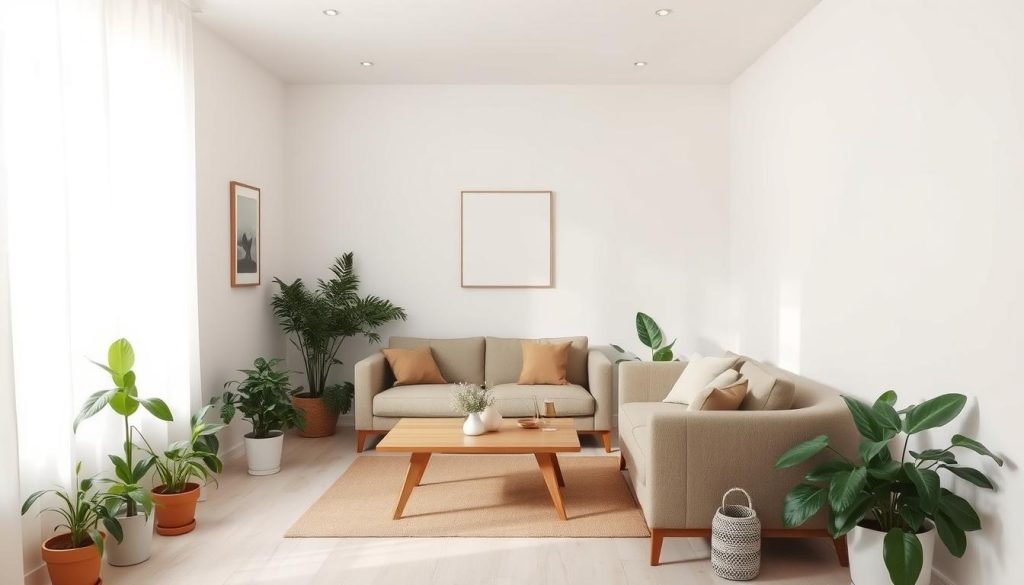
Embracing minimalist design can turn your living space into a peaceful oasis. The key is to declutter, choose quality over quantity, and organize well.
Essential Design Principles
Minimalist interiors have clean lines, neutral colors, and are free from clutter. These elements help create a calm and focused space. Choose simple, timeless pieces that have a purpose, avoiding too much decoration.
Decluttering Strategies of Minimalism
Decluttering is the first step to a minimalist space. Sort through your belongings, keeping only what’s useful or brings joy. Try the capsule wardrobe idea for clothes, with a few high-quality, versatile pieces. This makes your life easier and helps the planet by cutting down on fast fashion.
Organizing Systems
- Use furniture and storage that does double duty, like ottomans with storage or under-bed drawers, to hide clutter.
- Organize by category, not room, with the KonMari method for a tidy and cohesive space.
- Stick to a simple color scheme and avoid busy patterns to keep your space calm and visually pleasing.
By following minimalist design, capsule wardrobe, and tiny living principles, you can make your space a peaceful retreat. It’s a great way to live a minimalist lifestyle and thrive.
Minimalism in Personal Finance
Adopting a minimalist view on money can greatly help in being frugal, debt-free, and achieving financial freedom. It teaches us to value quality over quantity. It also helps us cut down on unnecessary spending and make choices that reflect our values and goals.
Financial minimalism is about paying off debts, spending wisely, and growing wealth through saving and investing. By getting rid of financial burdens and focusing on what’s important, we can lower stress, save more, and feel financially better.
| Key Benefits of Financial Minimalism | Strategies for Minimalist Budgeting |
|---|---|
|
|
By following financial minimalism, we can become more frugal, debt-free, and reach the financial freedom we dream of. This way of thinking helps us focus on what’s truly important. It simplifies our financial life and encourages us to spend mindfully and build wealth.
“Minimalism in personal finance is not about deprivation, but about intentionality. It’s about aligning your spending with your values and goals to create a more fulfilling and financially secure life.”
Sustainable Living Through Minimalism
At the heart of the minimalist movement is a deep commitment to the environment. By choosing quality over quantity, minimalists cut down their carbon footprint. This helps create a greener future. The tiny home movement shows how minimalism can greatly reduce our impact on the planet.
Environmental Impact
Minimalism goes hand in hand with caring for the environment. It teaches us to think before we buy and to reduce waste. Research shows minimalists have a 23% smaller carbon footprint than others.
This is because they buy things that last and avoid disposable items. It’s all about making smart choices.
Conscious Consumption
Minimalism changes how we shop, focusing on what’s truly needed. It’s about choosing items that are made well and ethically. This way, minimalists help reduce waste and support green practices.
Waste Reduction Strategies
Reducing waste is key to minimalist living. They fix things instead of throwing them away. They also choose products made with care for the planet.
By doing this, they help create a world where resources are used wisely. It’s a big part of living simply and sustainably.
The minimalist movement is all about living better for the planet. It’s about embracing a simple life and making choices that help our world. By living this way, we can make a big difference, one choice at a time.
“Underconsumption is a growing trend, especially among younger generations who value a minimal lifestyle.”
Challenges and Criticisms of Minimalist Living
Minimalist living has many benefits, but it also faces challenges and criticisms. Some say it’s only for those who are financially secure. Starting to own fewer things can be expensive and time-consuming.
Others argue that minimalism can become too focused on what’s missing. It might overlook the importance of meaningful experiences. This can lead to an imbalance in life.
Switching to a minimalist lifestyle can also upset friends and family. Gift-giving becomes tricky for minimalists who prefer fewer presents. Some people find it exhausting to keep their lives organized and clutter-free.
Yet, many believe the good things about minimalism are worth it. It can help the environment, save money, and clear the mind. By living more intentionally, people can build a life that truly reflects their values and goals.