Staying hydrated is key for our health and well-being. Hydration helps our heart, muscles, and prevents issues like dizziness and headaches. The amount of water we need changes based on climate, what we wear, how active we are, and our health.
Thirst isn’t always a good sign of when we need water. A better way is to check the color of our urine. If it’s dark, we might need more water.
While water is best, some foods can also help us stay hydrated. Foods like watermelon, strawberries, cucumbers, and leafy greens are full of water. They can help us stay hydrated.
Keeping a healthy balance of fluids is important. It helps us perform better physically and mentally. It can even improve our mood and focus.
Key Takeaways
- Proper hydration is crucial for overall health and well-being.
- The amount of water needed varies based on factors like climate, activity, and individual health.
- Monitoring urine color is a reliable way to gauge hydration status.
- Water-rich foods can contribute to fluid intake in addition to plain water.
- Maintaining a healthy fluid balance supports physical and cognitive performance.
Understanding the Fundamentals of Proper Hydration
Keeping your body hydrated is key to your health. Knowing how water balance and electrolytes work helps you drink the right amount. Let’s explore the basics of staying hydrated.
What Happens When Your Body Lacks Water
Dehydration happens when you lose more water than you drink. It can mess with your memory, mood, and focus. For example, a high school football player can lose up to 5 pounds of sweat in practice. They need to drink a pint of water for every pound lost.
The Science Behind Water Balance
Your body keeps water balance through the kidneys, hormones, and thirst. People of all ages have different water needs. The Food and Nutrition Board suggests adults drink about 1.5 liters of water daily.
Role of Electrolytes in Hydration
Electrolytes are important for fluid balance, nerve signals, and muscle function. People with conditions like cystic fibrosis need to watch their electrolyte levels. It’s important to replenish electrolytes to stay hydrated and quench thirst.
| Hydration Indicator | Interpretation |
|---|---|
| Dark urine | Indicates dehydration |
| Pale, clear urine | Indicates proper hydration |
| Thirst | Not a reliable indicator of dehydration |
It’s important to check if you’re hydrated. By understanding water balance and electrolytes, you can drink the right amount. This keeps your body hydrated.
“Dehydration-related body mass losses of more than 2% are often linked to increased tiredness and decreased attention.”
Why Your Body Needs Water for Optimal Health
Drinking enough water is key for many body functions. It’s a big part of our blood, helping keep our heart and body fluids balanced. Water also helps us stay cool, moves our joints smoothly, and helps get rid of waste.
Water helps our body get rid of toxins and prevents kidney stones. It also supports our heart health. Drinking water can help us feel full and eat fewer calories, which aids in weight control.
Water is also important for our physical performance. Without enough, we might feel tired, get headaches, and have trouble thinking clearly. Drinking enough water helps us stay strong and perform better in sports.
“Proper hydration is not just about drinking water – it’s about maintaining the delicate balance of fluids and electrolytes in the body, which is crucial for optimal health and functioning.”
Drinking enough water every day is a simple way to keep our bodies healthy. It helps our body work well and supports our natural processes. By focusing on hydration, we can enjoy many health benefits.

How much water we need can change based on our age, gender, how active we are, and where we live. Talking to a doctor can help us figure out how much water is right for us.
Signs and Symptoms of Dehydration
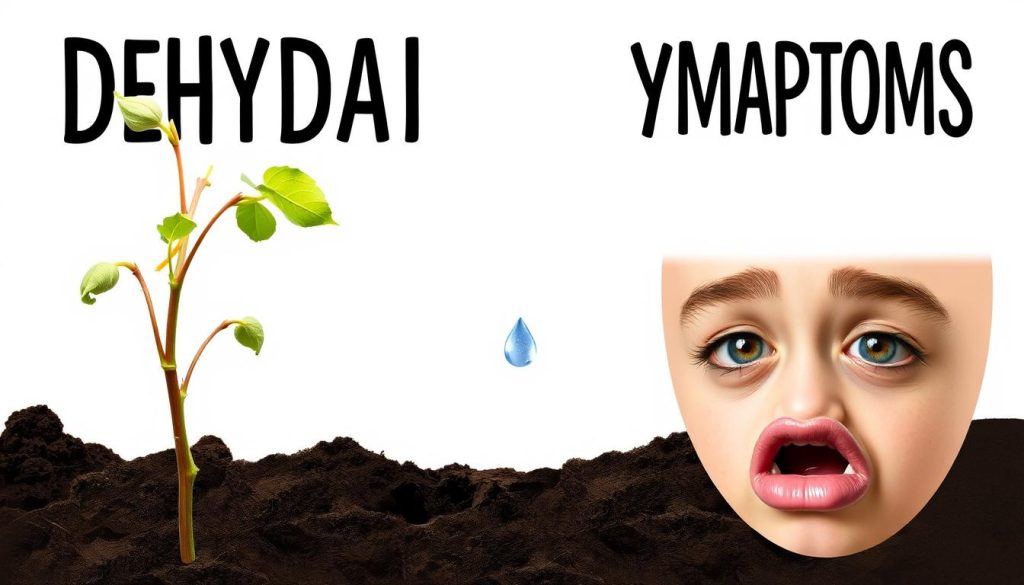
Dehydration shows up in different ways. It’s key to spot the early signs to act fast. Dark-colored urine or not peeing often are common signs. As dehydration gets worse, you might feel a dry mouth, muscle cramps, and get really tired.
Physical Indicators of Fluid Loss
- Dark yellow or amber-colored urine
- Decreased urination frequency (less than 3-4 times a day)
- Dry mouth and lips
- Muscle cramps
- Fatigue and weakness
Mental and Cognitive Effects
Dehydration also affects your mind and how well you think. When you don’t have enough fluids, you might feel irritable, confused, and have trouble focusing. Severe dehydration can cause dizziness and even fainting.
Emergency Warning Signs
In serious cases, dehydration is a medical emergency. Look out for a fast heartbeat, quick breathing, and cold, clammy skin. If not treated, it can lead to heat exhaustion or heatstroke, which are very dangerous.
It’s vital to catch dehydration early and drink water right away. Older adults, young kids, and people with ongoing health issues are more at risk. They need extra care and special hydration plans.
Calculating Your Daily Water Requirements
Drinking enough water is key for good health. But the “eight glasses a day” rule isn’t set in stone. Your daily water requirements change based on your age, gender, how active you are, and where you live. A good way to figure out how much water you need is to drink one-third of your body weight in ounces.
If you weigh 150 pounds, you should drink about 50 ounces of water each day. Checking your urine color is another way to keep track of your hydration monitoring. If your urine is pale yellow or clear, you’re drinking enough water. But if it’s dark yellow, you need to drink more.
| Gender | Recommended Daily Water Intake |
|---|---|
| Men | 100 ounces (3.1 liters) |
| Women | 73 ounces (2.1 liters) |
Remember, these are just general guidelines. Your water requirements might be different based on your life and body. Pay attention to how thirsty you feel and adjust your daily water intake to keep your body hydrated.
“Proper hydration is essential for overall health and well-being. By understanding your personal water needs and making hydration a priority, you can support your body’s functions and feel your best.”
The Connection Between Hydration and Brain Function
Drinking enough water is key for a healthy brain. Even a little dehydration can hurt memory, focus, and mood. Research shows that drinking water helps keep emotions stable and fights anxiety.
It also makes sure the brain gets enough oxygen and nutrients. This is important for it to work at its best.
Impact on Memory and Concentration
The brain is mostly water, about 75%. Not having enough water can mess with short-term memory and long-term recall. Dehydration can even make the brain shrink and age faster.
A 2013 study found that dehydration hurts brain performance. But drinking water helps with quick tasks. Without water for 4-8 hours, you can get mildly dehydrated. Without it for 24 hours, dehydration gets severe, affecting your brain more.
Mood Regulation and Mental Clarity
Dehydration can make you feel anxious, tense, and tired. It might even lead to diseases like Alzheimer’s and Parkinson’s. But drinking water helps keep your mood steady and your mind clear.
Drinking 8 cups (2 liters) of water a day is a good rule. But it depends on how active you are and where you live. Eating foods high in water, like cucumbers and watermelons, also helps stay hydrated.
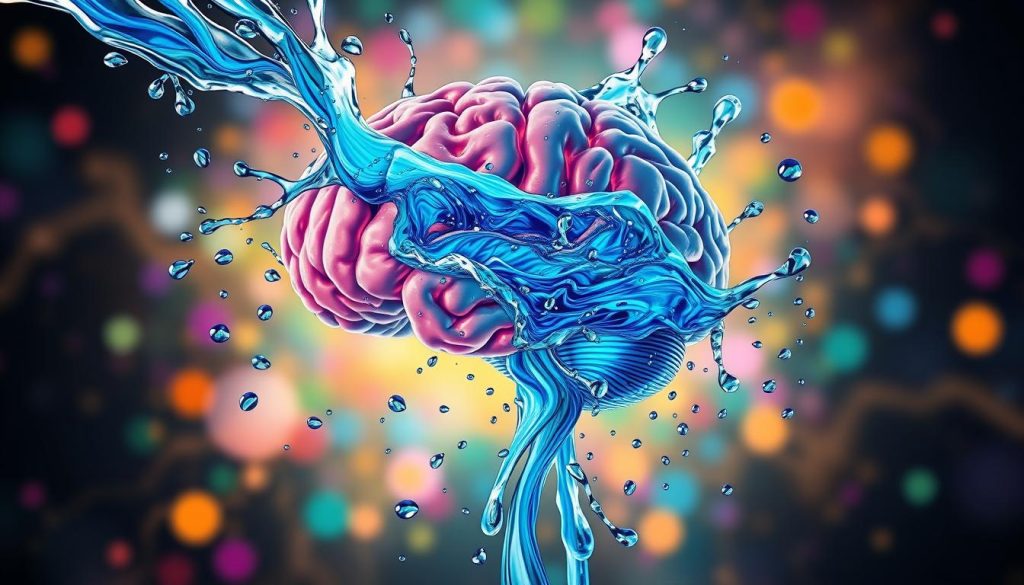
“Lack of water to the brain can impair short-term memory function and the recall of long-term memory.”
Hydration Strategies for Physical Activity
Staying hydrated is key for athletes and anyone who’s active. Weighing yourself before and after exercise shows how much sweat you’ve lost. For every pound lost, drink about a pint of water to get it back.
It’s crucial to drink water before, during, and after your workout. Sports drinks with electrolytes can help during intense or hot workouts. But, watch out for their sugar and calorie content.
- Drink 16-20 ounces of water 2-3 hours before you start exercising.
- Drink 7-10 ounces of water every 10-20 minutes while you’re active.
- If you’re doing something intense or in the heat for over an hour, think about using sports drinks with electrolytes.
- Drink 24 ounces of water for every pound you lost after your workout.
Check your urine color to see if you’re drinking enough water. If it’s pale yellow, you’re good. Darker colors mean you need more water.
| Environmental Factor | Impact on Fluid Needs |
|---|---|
| Temperature | Increased fluid loss through sweating |
| Humidity | Decreased sweat evaporation, leading to greater fluid loss |
Every athlete is different, and so are their hydration needs. A personalized plan from a sports medicine expert can help you stay hydrated during exercise.
“Dehydration, even at mild levels, can lead to decreased performance and increased risk of injury.”
Best Sources of Hydration Beyond Plain Water
While plain water is the best for staying hydrated, other sources can also help. Foods and drinks rich in water can add to your fluid intake. Exploring these options can keep you hydrated all day.
Water-Rich Foods
Fruits and veggies with lots of water are great for hydration. Watermelon, cucumbers, strawberries, cantaloupe, and leafy greens like romaine lettuce and spinach are top picks. They not only hydrate but also give you important nutrients and fiber.
Beneficial Beverages
Other drinks can also help you stay hydrated. Herbal teas, low-fat milk, and coconut water are good choices. Coconut water is especially good because it has potassium, which helps replace lost electrolytes. Just remember, too much caffeine can make you lose water.
Sports Drinks and Electrolyte Solutions
For those who are very active, sports drinks and electrolyte drinks are helpful. They have carbs, electrolytes, and fluids to replace what’s lost in sweat. But, use them in small amounts because they have a lot of sugar. Making your own electrolyte drinks can save money.
Adding different hydration sources to your day can keep your body hydrated. This supports your health and well-being. Just listen to your body and pick what works best for you.
Special Considerations for Different Age Groups
Keeping the body hydrated is key for everyone, but some groups need special care. Knowing these differences helps ensure the best hydration therapy for everyone’s health.
Children and Older Adults
Children and older adults face a higher risk of dehydration. Kids have more water in their bodies and might not feel thirsty. This makes them more prone to moisture retention problems. Older adults often don’t feel thirsty as much and might forget to drink, leading to hydration issues.
Pregnant and Breastfeeding Individuals
Pregnant and breastfeeding individuals need more water. Pregnancy requires more water for the growing fetus and to keep hydration levels up. Breastfeeding moms should drink 16 cups of water a day to replace lost fluids.
Individuals with Medical Conditions
Some medical conditions or medications can change hydration needs. People with thyroid, kidney, liver, or heart problems, or those on certain meds, might need special hydration therapy plans. This helps keep moisture retention at a healthy level.
| Age Group | Recommended Daily Fluid Intake |
|---|---|
| Infants (0-6 months) | 4-8 ounces of water per day |
| Children (1-3 years) | 4 cups of fluids per day |
| Children (4-8 years) | 5 cups of fluids per day |
| Children (9-13 years) | 7-8 cups of fluids per day |
| Adolescents (14-18 years) | 7-8 cups of fluids per day |
| Adults (19-50 years) | 11.5 cups (women), 15.5 cups (men) |
| Older Adults (51+ years) | 9 cups (women), 13 cups (men) |
| Pregnant Individuals | 8-12 cups of fluids per day |
| Breastfeeding Individuals | 16 cups of fluids per day |
By understanding the unique hydration needs of different age groups and individuals, we can develop targeted hydration therapy strategies. This promotes optimal moisture retention and overall health.
The Role of Temperature and Climate in Hydration
Hydration changes a lot with temperature and climate. When it gets hotter, our bodies need more water. In hot and humid weather, we lose more water through sweat. So, we must drink more water to stay hydrated.
Hot Weather Hydration Tips
In heatwaves and summer, drink more water and stay cool. Wear light, loose clothes and stay indoors with air conditioning. Pregnant women, kids, and people with health issues need extra care to avoid heat sickness.
- Drink plenty of fluids, monitoring urine color to ensure proper hydration
- Avoid strenuous outdoor activities during the hottest parts of the day
- Wear lightweight, breathable clothing to facilitate cooling
- Seek air-conditioned spaces to minimize heat exposure
- Check on family, friends, and neighbors to ensure their well-being
Seasonal Hydration Adjustments
Our hydration needs change with the seasons. In summer, we need to drink more water. We can also eat foods and drinks with lots of water to stay hydrated.
Knowing how temperature and climate affect hydration helps us stay healthy all year. We can keep our bodies hydrated and feel our best.
Monitoring Your Hydration Status
Keeping your body hydrated is key for good health. It’s important to check how well you’re hydrated regularly. A good way to do this is by looking at the color of your urine. If it’s pale and clear, you’re drinking enough water. But if it’s dark, you need to drink more.
It’s also good to keep track of how much water you drink each day. Listen to your body’s thirst signals. The weather can affect how much water you need, so adjust your drinking accordingly.
Hydration Monitoring Methods
- Urine Color: A simple way to assess hydration is to observe the color of your urine. Pale, clear urine is a sign of good hydration, while dark yellow or amber-colored urine indicates dehydration.
- Urine Specific Gravity: This metric measures the concentration of solutes in your urine, providing a more precise indication of your hydration status. Dehydration is typically indicated by a urine specific gravity of 1.020 or above.
- Body Weight Changes: Monitoring your body weight before and after exercise or throughout the day can help you track fluid losses and maintain proper hydration.
- Thirst Cues: Paying attention to your thirst signals can be a useful way to gauge your hydration needs, although this method is not always reliable, especially during prolonged physical activity.
Just look on it:
| Hydration Monitoring Technique | Description | Advantages | Limitations |
|---|---|---|---|
| Urine Color | Assessing the color of your urine to determine hydration status | Simple, easy to do, and can provide a quick indication of hydration level | May not be as accurate as other methods, and can be influenced by factors like medications and supplements |
| Urine Specific Gravity | Measuring the concentration of solutes in the urine to determine hydration status | Provides a more precise measure of hydration compared to urine color | Requires access to specialized equipment or testing facilities |
| Body Weight Changes | Tracking changes in body weight before and after exercise or throughout the day | Can provide a direct measure of fluid losses and gains | May be influenced by factors other than hydration, such as changes in glycogen stores and muscle mass |
| Thirst Cues | Paying attention to feelings of thirst and the need to drink | Simple and can be done anywhere | Not always a reliable indicator, especially during prolonged physical activity or in certain medical conditions |
By regularly checking your hydration using these methods, you can keep your body balanced. Remember, staying hydrated is key for your body and mind to work best. Make it a habit to drink enough water every day.
Conclusion
Keeping your body hydrated is key for good health. Knowing how much water you need and spotting dehydration signs helps. It ensures your body gets enough water to work well.
Eating foods with lots of water and drinking water regularly boosts your health. Your hydration needs can change due to age, how active you are, and where you live. So, always pay attention and adjust your water intake as needed.
Focus on staying hydrated to keep your body and mind in top shape. Taking steps to prevent dehydration can greatly improve your health and well-being.