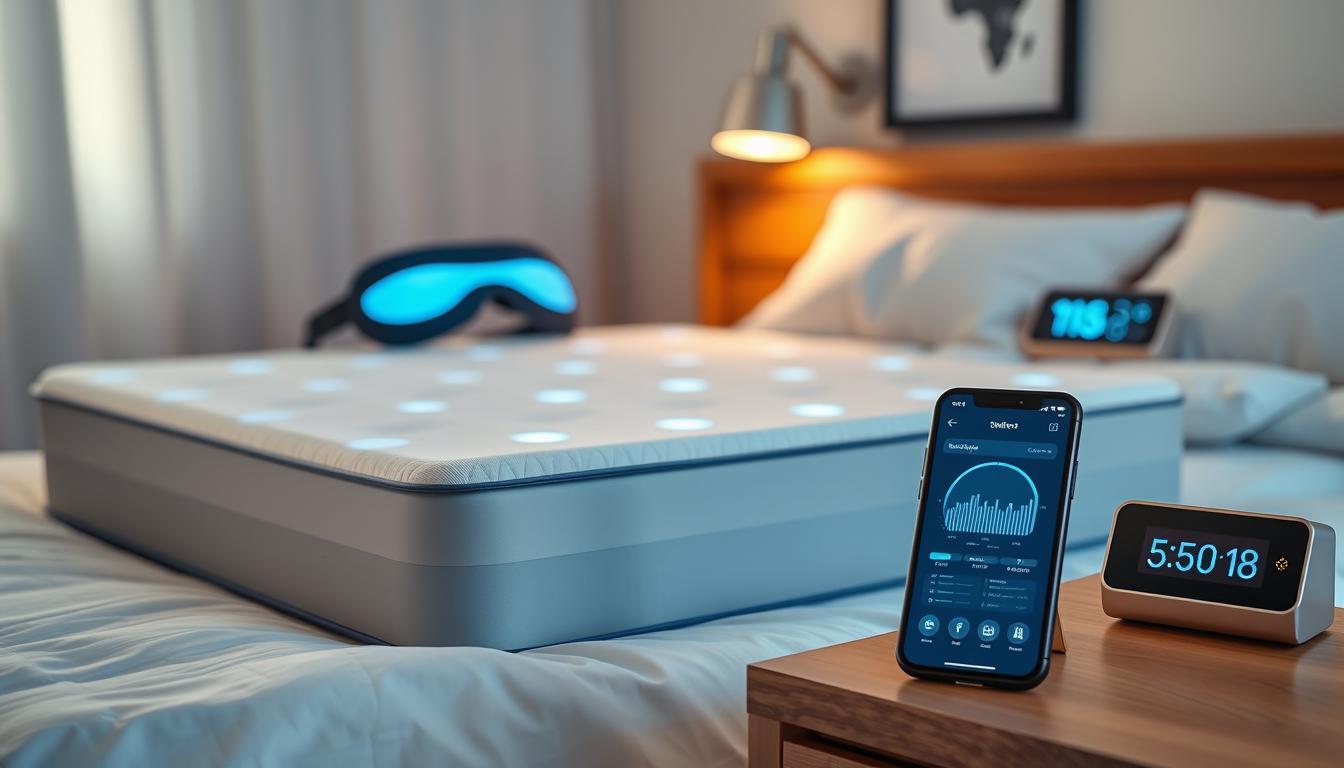
In today’s fast-paced world, getting a good night’s sleep is tough. But sleep tech offers new ways to improve our rest. There are wearable trackers, smart mattresses, white noise machines, and light therapy devices. These tools aim to boost our sleep health and well-being.
This guide will show you the latest sleep tech gadgets and apps. They can help with insomnia, improve your sleep schedule, or make your sleep space more relaxing. You’ll find many advanced tools to help you sleep better.
Key Takeaways
- The sleep tech industry offers a diverse range of innovative solutions to address sleep-related issues and improve overall sleep quality.
- Wearable sleep trackers, smart mattresses, and non-wearable sleep monitors provide valuable insights into your sleep patterns and habits.
- Light therapy devices, white noise machines, and smart alarms can help create a more conducive sleep environment and optimize your circadian rhythms.
- Sleep tracking apps and coaching programs offer personalized guidance and support to help you develop healthier sleep habits.
- Emerging technologies such as anti-snoring devices, temperature-regulating bedding, and insomnia treatment solutions are transforming the way we approach sleep optimization.
The Importance of Quality Sleep
Quality sleep is key for our health and happiness. A good night’s sleep refreshes us and boosts our energy. It also affects our physical and mental health deeply.
Not getting enough sleep quality and sleep duration causes many issues. These include poor thinking, weakened immune systems, and higher risks of obesity, heart disease, and diabetes.
Impact on Physical and Mental Health of Sleep Tech
Not enough sleep harms our bodies. It makes it hard to focus, remember, and decide. It also weakens our immune system, making us more likely to get sick.
Lack of sleep also raises the risk of serious health problems. These include heart disease, stroke, and type 2 diabetes.
Poor sleep affects our minds too. It can lead to depression and anxiety. In fact, people who don’t sleep well are five times more likely to get mood disorders.
Benefits of Adequate Rest
But, enough sleep has many benefits. It improves memory, mood, and athletic performance. It also lowers stress levels.
Circadian rhythms, our natural sleep-wake cycles, are vital. They help our bodies work right. But, disrupting them can harm us.
In today’s busy world, we must focus on sleep health. We need to make sure we get the quality sleep our bodies and minds need to do well.
Sleep Tracking Devices
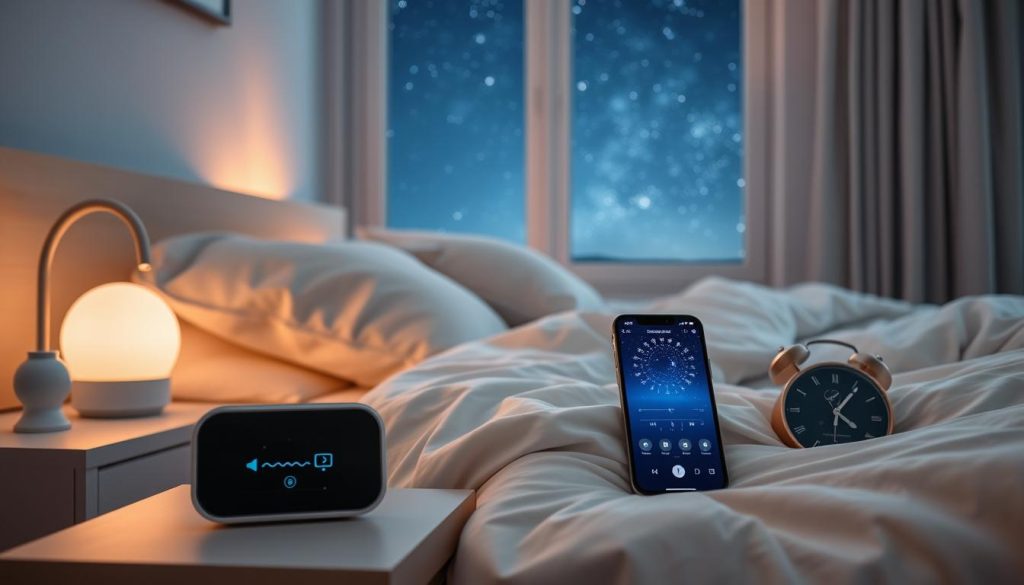
The world of sleep technology has seen big changes lately. Now, you can choose from wearable sleep trackers to non-invasive bedside monitors. These devices give you insights into your sleep patterns, quality, and efficiency. They help you make better choices about how you rest.
Wearable Sleep Trackers
Wearable sleep trackers, like fitness trackers and smartwatches, are getting more popular. They can track different aspects of your sleep. For example, the Oura Ring Generation 3 costs $299 and tracks meditation and heart rate during the day.
The Google Pixel Watch 2 is $349.99 and lasts 24 hours. It has features like sleep tracking and a Daily Readiness Score. The Samsung Galaxy Watch 6 series, priced around $300, also tracks sleep well.
Non-Wearable Sleep Monitors for Sleep Tech
If you don’t want to wear anything, there are other options. The Withings ScanWatch 2 is $350 and tracks sleep stages. The Google Nest Hub 2nd Gen is $79 and tracks sleep, but might not always get it right.
The Muse S Gen 2 Headband ($400) tracks brain activity. The Kokoon Nightbuds ($285) track sleep phases and efficiency. For more detailed tracking, the Biostrap Kairos ($900) is a good choice.
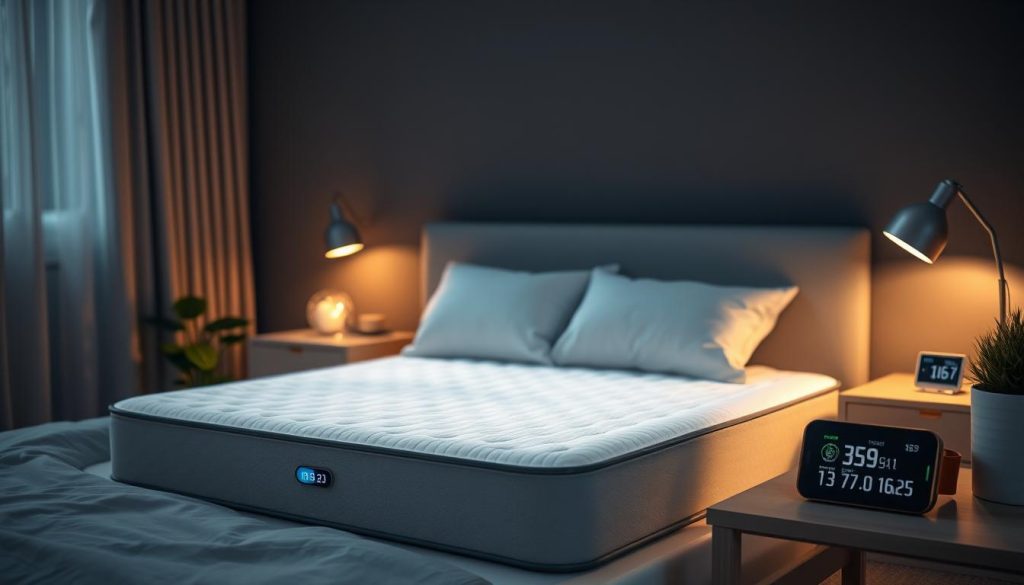
When looking at sleep tracking devices, think about what you need. Whether you choose wearable or non-wearable options, these tools can help you sleep better. They offer valuable data for improving your well-being.
Smart Mattresses and Bedding
Smart mattresses and bedding are changing how we sleep. They make our sleep better by adding cool features and tech. This tech helps us sleep more comfortably and wake up feeling refreshed.
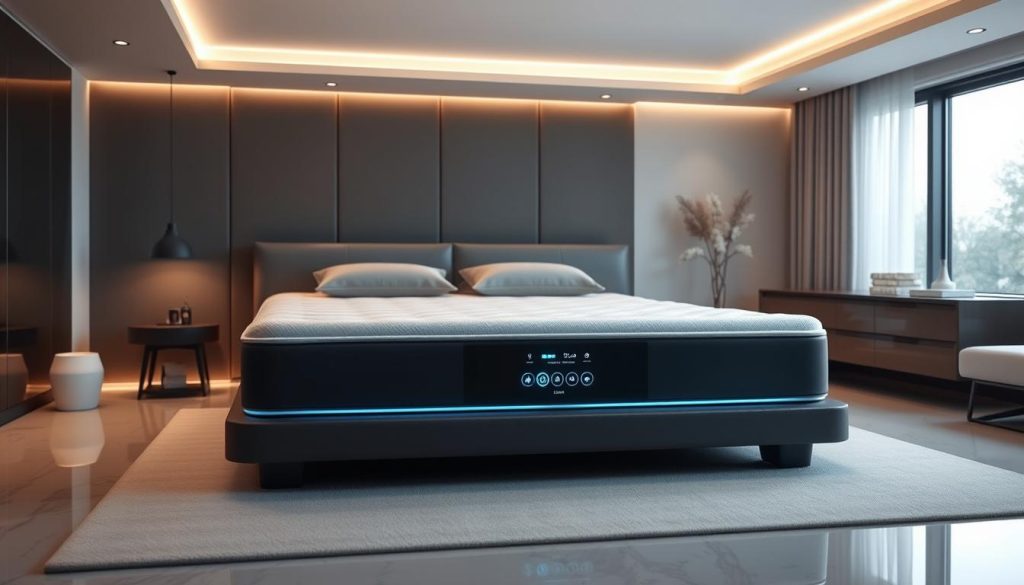
Smart mattresses are a big deal. They can adjust firmness and temperature, and even track your sleep. Brands like Sleep Number, Saatva, and Eight Sleep lead the way. They offer smart beds that fit your sleep needs.
Smart bedding like cooling toppers and adjustable beds are also popular. They use new materials and sensors to make sleep better. These products help keep you cool and find the right support all night.
| Product | Price | Features | Sizes Available |
|---|---|---|---|
| Sleep Number 360 p6 Smart Bed | $2,699 | Adjustable firmness, temperature control | Twin XL, Queen, King, California King, Split King, FlexTop King, Split California King, FlexTop California King |
| Saatva Solaire Adjustable Firmness Mattress | $3,821 | Adjustable firmness, pressure relief | Twin XL, Full, Queen, King, California King, Split King, Split California King, Upper-Flex options |
| Tempur-Pedic Tempur-Ergo ProSmart Base | $2,499 | Adjustable height, massage functions | Twin Long, Full, Queen, King, Split King, California King, Split California King |
| Eight Sleep Pod 4 Ultra | $4,599 | Advanced temperature control, sleep tracking | Full, Queen, King, California King |
As sleep tech grows, smart mattresses and bedding are key. They use AI to make sleep better. They focus on comfort, personalization, and helping us get great rest.
Sleep Tech
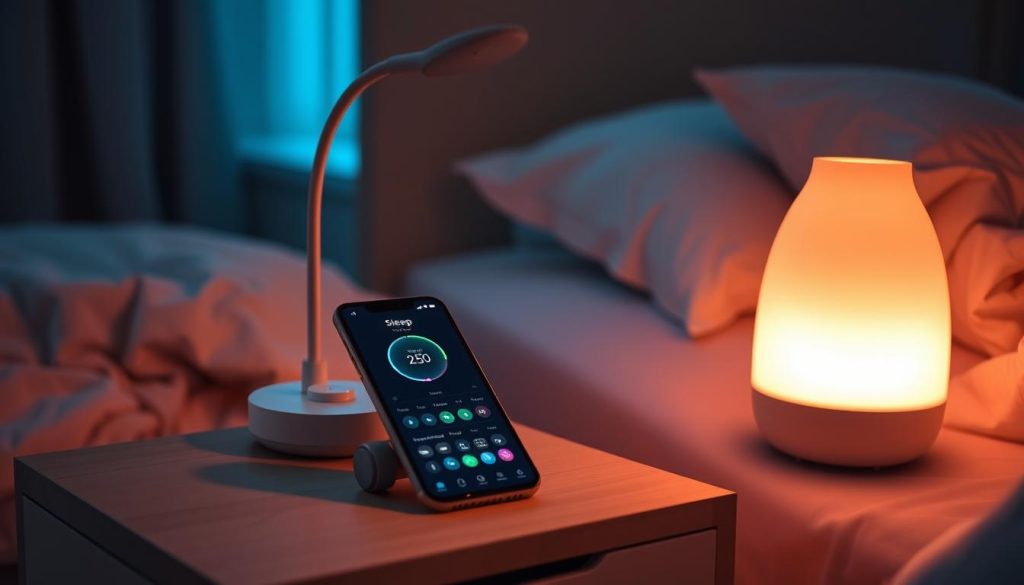
Sleep tracking apps and white noise machines are changing how we sleep. They help us understand and improve our sleep. These tools offer insights and help us create the best sleep environment.
Sleep Tracking Apps
Sleep tracking apps have changed how we manage our sleep. They use smart tech to analyze our sleep patterns. This gives us detailed info on our sleep stages and quality.
These apps track our movements and heart rate. They help us see our sleep habits clearly. This way, we can find out what’s disrupting our sleep and make it better.
White Noise and Sound Machines
White noise machines and sound machines are also key for better sleep. They create calming sounds to block out noise. This helps us relax and sleep without interruptions.
These machines are great for those who live in noisy places. They help us fall asleep faster and sleep more soundly. This technology is a big help for anyone who has trouble sleeping because of noise.
| Sleep Tracking Apps | White Noise Machines |
|---|---|
|
|
Using both sleep tracking apps and white noise machines can greatly improve our sleep. They help us take a complete approach to better sleep and health.
“The quality of your sleep directly impacts the quality of your waking life.” – Dr. Matthew Walker, author of “Why We Sleep”.
Light Therapy and Smart Lighting
Getting quality sleep is key for our health. But, modern life makes it hard. Blue light from screens can mess with our sleep. It stops our body from making melatonin, making it tough to sleep.
Children are especially affected. They can have trouble sleeping because of light from screens.
Blue Light Blocking Glasses
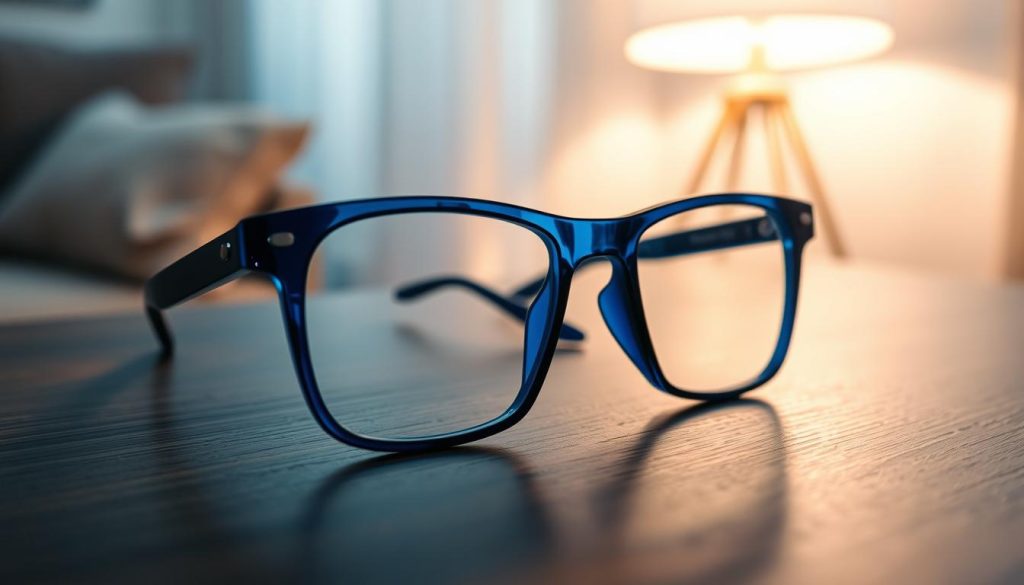
Blue light blocking glasses help a lot. They block the bad light from screens. This helps keep melatonin levels right and improves sleep.
Studies show these glasses help a lot. They’re especially good for people who use screens a lot before bed.
Light therapy lamps and smart lighting also help. They give the right light at the right time. This helps our body’s clock stay in sync with day and night.
The Lumos sleep mask is a cool example. It uses light to adjust our body’s clock. It gives light through our eyelids while we sleep.
Smart lighting systems, like Philips Hue, are also great. They let you set your lights to help you sleep better. They get dimmer and warmer at night, helping you sleep.
Using blue light blocking glasses, light therapy lamps, and smart lighting can really help. They make our sleep better. This is good for our health and mind.
Sleep Optimization and Coaching
Quality sleep is key, and sleep coaching is getting more attention. Special apps are now helping people sleep better. These apps give personalized advice and tools to improve sleep habits.
Sleep Coaching Apps
These apps use tech to understand sleep patterns and offer solutions. They track sleep data from devices or phones. This helps users get better sleep by adjusting routines and managing light.
Users see big improvements in sleep. One person’s sleep efficiency went up from 71% to 89%. Another’s sleep time increased from 5.5 hours to 6.5 hours. They also feel better overall, losing weight and having a higher heart rate.
Circadian Rhythm Optimization
Aligning sleep with the body’s clock is also important. This improves alertness and health. Sleep tracking and AI help find the best sleep schedule for each person.
Shift workers benefit a lot from these tools. They help manage light, relax, and use sleep aids. This improves sleep quality and reduces health risks.
More people want personalized sleep help. Sleep apps and rhythm optimization are great solutions. They use tech and advice to improve sleep and well-being.
Anti-Snoring Devices and Solutions of Sleep Tech
Snoring can disrupt sleep and hurt sleep quality. Luckily, many anti-snoring devices and solutions exist. These include nasal devices and oral appliances. They aim to reduce or stop snoring, making sleep better for everyone.
The Hush Strips Mouth Tape for Snoring costs $17.99. The CPAPology Sleep Noodle is $39.99. For a stickier option, the NozeSeal™ Adhesive Strips 30-DAY SUPPLY is $36.00, and the CPAPtape Mouth Tape is $14.99.
Smart technology has also joined the fight against snoring. The Smart Nora Contact-Free Hassle-Free Snoring Solution is $499.00. The Saatva Cloud Memory Foam Pillow, at $135, can also improve sleep and reduce snoring.
| Product | Price |
|---|---|
| Hush Strips Mouth Tape for Snoring | $17.99 |
| CPAPology Sleep Noodle | $39.99 |
| NozeSeal™ Adhesive Strips 30-DAY SUPPLY | $36.00 |
| CPAPtape Mouth Tape | $14.99 |
| Smart Nora Contact-Free Hassle-Free Snoring Solution | $499.00 |
| Saatva Cloud Memory Foam Pillow | $135.00 |
These devices and solutions offer many ways to fight snoring. They help people and their partners sleep better and stay healthy.
Wearable Sleep Gadgets
The sleep industry is getting a tech boost. Wearable sleep gadgets are now popular. They help you sleep better by blocking out distractions.
These gadgets include sleep headphones and earbuds. They play calming sounds to help you fall asleep.
Sleep Headphones and Earbuds: Immersive Audio for Better Rest
Sleep headphones and earbuds fit into your sleep routine. They play soothing sounds to block out noise. This lets you sleep better.
They’re made for side sleepers too. This ensures you get a good night’s sleep without any interruptions.
The global sleep tech market was worth $17 billion in 2023. It’s growing fast, with a 17.31% CAGR from 2024 to 2030. It’s expected to hit $44 billion by 2030.
Big names like Koninklijke Philips N.V, Huawei Device Co Ltd., and ResMed are leading. New companies like Dreem and Oura are also making waves.
These gadgets offer cool features. They include white noise and ambient sounds and sleep tracking and biometric monitoring. They help you sleep better and feel better overall.
“Investing in the right sleep technology can be a game-changer for those struggling with sleep disturbances or seeking to optimize their sleep quality.”
Smart Alarms and Wake-Up Lights
Waking up can be hard, especially for those who have trouble with sleep cycles and circadian rhythms. But, smart alarm clocks and wake-up lights are changing this. They help wake you up feeling refreshed and ready to go.
These devices work with your sleep cycles and rhythms. They slowly get brighter and louder over 20-30 minutes. This helps you wake up naturally, improving your sleep and morning energy.
Studies show that 92% of users found it easier to wake up with the SmartSleep Sleep and Wake-Up Light HF3650/60 by Philips. It has a rating of {{ratingValue}} out of 5 from {{{sitetextsObj.totalReview}}} reviews. It also won 1 award, showing it’s great for sleep and morning routines.
The best wake-up lights, like the Philips SmartSleep, Dekala Sunrise Alarm Clock, and Hatch Restore 2 Sunrise Alarm Clock, have cool features. They let you adjust the light and sounds. You can even control them through apps for a personalized wake-up.
As technology gets better, smart alarms and wake-up lights are getting smarter too. They meet each person’s sleep needs and preferences. By working with your body’s rhythms, they’re changing how we start our days. They help us sleep better, think clearer, and feel more energized.
Sleep Tech Environment Monitoring and Automation
The quality of our sleep depends a lot on our sleep environment. Things like temperature, humidity, and air quality play big roles. Luckily, new sleep tech offers ways to monitor and automate our sleep space for better rest.
Temperature and Humidity Control
Keeping the bedroom at the right temperature and humidity is key for sleep. Over one-third of adults get less than 7 hours of sleep per night, says the Sleep Foundation. Many sleep problems come from a bad sleep space. Smart thermostats and humidifiers, linked to sleep trackers, can adjust these factors for you.
Also, 57% of people who use tech before bed have sleep problems. Smart systems can spot these habits and adjust the sleep space for better sleep.
| Feature | Benefit |
|---|---|
| Temperature Control | Maintains an ideal bedroom temperature, typically between 65°F and 70°F, for quality sleep |
| Humidity Control | Regulates moisture levels, preventing dry air that can disrupt sleep |
| Integration with Sleep Tracking | Automatically adjusts the environment based on individual sleep patterns and preferences |
3.8 million premature deaths happen each year from indoor air pollution, says the WHO. Indoor air can be up to 5 times worse than outside air. Smart home systems can check air quality and adjust it for a healthier sleep space.
“The integration of sleep environment monitoring and automation technologies has the potential to revolutionize the way we approach sleep quality and overall health.”
Insomnia Treatment Technology of Sleep Tech
New technologies are changing how we fight insomnia and sleep disorders. Digital therapeutics and personalized sleep tracking are leading the way. These tools are making sleep health easier to manage.
Mobile apps and online platforms are now offering cognitive-behavioral therapy for insomnia (CBT-I). These digital therapeutics give people strategies to fix their sleep problems. They make top-notch treatment easy and convenient for those with insomnia and sleep disorders.
Sleep tracking data is key in creating personalized treatments. Wearable devices and nearable technologies track sleep patterns. This info helps tailor sleep education and optimization plans. It lets people improve their sleep quality and sleep efficiency.
The future of sleep technology looks bright. New tools like neurofeedback and ultra-low radio frequency energy are coming. These digital therapeutics aim to solve sleep problems at their source. They promise a better night’s sleep for everyone.
| Technology | Description | Examples |
|---|---|---|
| Digital Therapeutics | Evidence-based interventions delivered through mobile apps and online platforms, such as cognitive-behavioral therapy for insomnia (CBT-I) | Somryst, SleepioRx |
| Sleep Tracking Devices | Wearable and non-wearable (nearable) technologies that monitor sleep patterns, stages, and disturbances | Apple Watch, Fitbit, Owlet Smart Sock, ActiGraph LEAP |
| Innovative Sleep Technologies | Emerging solutions incorporating features like neurofeedback, ultra-low radio frequency energy, and auditory stimulation to promote better sleep | 2breathe-Sleep Inducer, Sleeprate |
These new tools in insomnia treatment technology bring hope to those with sleep problems. They use data, personalization, and proven methods. The future of sleep health looks very promising.
Sleep Tech Conclusion
This article has shown how sleep technology is changing our lives for the better. It covers everything from wearable trackers and smart mattresses to light therapy and sound machines. These innovations help us take better care of our sleep.
Good sleep is key to staying healthy and feeling good. Sleep tech is making big strides in helping us get the rest we need. As technology advances, we’ll see more people using these tools to improve their sleep and health.
The sleep tech world is full of chances to make our sleep better. By using these new technologies, we can live healthier lives. Embracing these innovations is a big step towards making quality sleep a part of our everyday lives.