Outdoor lovers and campers need a reliable power source on their adventures. Portable solar chargers are key, letting you charge devices without batteries or outlets. With many options, picking the right solar charger for camping can be tough. This guide will help you find the best solar charger for your next trip.
Key Takeaways
- Portable solar chargers are a must-have for camping to power devices without access to electricity.
- Top-rated models include the BigBlue SolarPowa 28, X-Dragon 20W, and FlexSolar 40W, offering varying power output, portability, and weather resistance.
- Consider factors like charging speed, portability, functionality, and weight when choosing the best solar charger for your camping needs.
- Prices for portable solar chargers range from $30 to $649, with options to fit different budgets and feature requirements.
- Proper care and usage of solar chargers can maximize their efficiency and durability during outdoor adventures.
Understanding Solar Charging Technology
Solar charging technology uses the sun’s power to make electricity. At its core are photovoltaic cells, which turn sunlight into electricity. Solar chargers use these cells to power devices, making them great for outdoor lovers and those who care about the environment.
How Solar Chargers Work
Solar chargers capture sunlight with their solar panels, made from silicon. These panels have photovoltaic cells that make DC electricity when hit by sunlight. Then, an inverter changes this DC power to AC, so devices can be powered or batteries can be charged.
Types of Solar Panels for Camping
- Monocrystalline Solar Panels: These panels are very efficient and look sleek. They’re the top choice for portable chargers for camping and outdoor fun.
- Polycrystalline Solar Panels: A bit less efficient than monocrystalline, but cheaper. They still offer reliable power for camping and hiking.
- Thin-Film Solar Panels: These panels are light and flexible. They’re perfect for portable chargers, offering a compact way to get off-grid power.
Efficiency Ratings Explained
Efficiency in solar panels is how much sunlight they turn into electricity. Panels can go from 15% to 25% efficient, with newer ones often being at the top. Knowing this helps pick the right solar charger for camping and outdoor adventures.

“Solar energy is a renewable source of power derived from the sun, harnessed using photovoltaic cells.”
| Solar Panel Type | Efficiency Range | Key Characteristics |
|---|---|---|
| Monocrystalline | 15-22% | High efficiency, sleek design, ideal for portable chargers |
| Polycrystalline | 13-16% | Slightly less efficient than monocrystalline, but more affordable |
| Thin-Film | 8-13% | Lightweight and flexible, suitable for portable chargers |
Key Features to Consider When Choosing a Solar Charger of Portable Solar Chargers
When picking a solar charger for camping, look at a few important things. The power output, how fast it charges, and how many USB ports it has matter a lot. Also, how weatherproof and portable it is can make a big difference.
The BigBlue SolarPowa 28 solar charger is a good mix of power and ease to carry, with 28W of solar cell output. The X-Dragon 20W is a great deal for those watching their budget. When choosing, think about the size, weight, and how it folds. This makes it easy to carry and store while camping.
| Feature | Importance | Considerations |
|---|---|---|
| Power Output | High | Look for solar chargers with higher wattage (20W or more) for faster charging speeds |
| Charging Speed | High | Check the maximum power output (e.g., USB 5V/2A) to ensure your devices charge quickly |
| Number of USB Ports | Medium | More ports allow you to charge multiple devices simultaneously |
| Weatherproofing | High | Look for IPX4 or higher water-resistance ratings to protect against rain and splashes |
| Portability | High | Consider the weight, folding design, and included storage solutions for easy transport |
By looking at these key features, you can pick the best solar charger. It will power your devices and keep you connected on your next camping trip.

Portable Solar Chargers: Top Performers for 2024
In 2024, three solar chargers stand out for camping and outdoor adventures. The BigBlue SolarPowa 28, X-Dragon 20W, and FlexSolar 40W offer power, efficiency, and portability. They meet the needs of campers and adventurers.
BigBlue SolarPowa 28
The BigBlue SolarPowa 28 is efficient in various conditions. It weighs 20.9 ounces and has a 28-watt panel. This charger can quickly recharge devices, even on cloudy days. Its durable, water-resistant design makes it perfect for tough outdoor adventures.
X-Dragon 20W
The X-Dragon 20W is a good mix of performance and value. It’s compact and lightweight, offering fast charging. This makes it a reliable choice for outdoor device charging. Its design and price are great for those watching their budget.
FlexSolar 40W
The FlexSolar 40W is ideal for those needing more power. It has a six-panel design for a 40-watt output. This is perfect for charging multiple devices or big batteries. Its setup is easy, and it’s very efficient, making it a top choice for campers.
These solar chargers are perfect for any outdoor trip. They offer power, portability, and durability. They keep your devices charged, making your outdoor experiences better.

| Solar Charger | Wattage | Weight | Weather Resistance | Charging Ports |
|---|---|---|---|---|
| BigBlue SolarPowa 28 | 28W | 20.9 oz | Water-resistant | 2 USB |
| X-Dragon 20W | 20W | 17.3 oz | Water-resistant | 2 USB |
| FlexSolar 40W | 40W | 26.8 oz | Water-resistant | 2 USB |
Portable Solar Chargers: Power Output and Charging Capabilities
When choosing a portable solar charger, the power output is key. This is measured in watts and affects how fast your devices charge. A higher wattage means quicker charging for your phones, tablets, and more.
The BigBlue SolarPowa 28 shines with its 28-watt output for fast charging. Meanwhile, the FlexSolar 40W leads with 40 watts, perfect for charging many devices at once on camping trips.
| Solar Charger | Power Output (Watts) | USB Ports | Charging Speed |
|---|---|---|---|
| BigBlue SolarPowa 28 | 28W | 3 USB-A, 1 USB-C | Up to 5V/4.8A per port |
| FlexSolar 40W | 40W | 2 USB-A, 1 USB-C | Up to 5V/2A per port |
| LOVELEDI Portable Charger | N/A | 2 USB-A | 15,000mAh battery capacity |
The number of USB ports matters too. It shows how many devices can charge at once. The BigBlue SolarPowa 28, for example, has many ports for efficient charging on the go.
“The FlexSolar 40W Foldable Solar Panel Charger is ideal for fast charging various devices and going off the grid.”
When picking a solar charger, think about what you need to charge. Make sure the charger can handle your devices’ power needs for a great camping experience.

Size, Weight, and Portability Factors
When choosing portable solar chargers for camping, size, weight, and portability matter a lot. The best solar charger balances power and ease of carrying. For example, the Goal Zero Nomad 5 is light at 12.35 ounces, making it easy to carry. On the other hand, the FlexSolar 40W is heavier at 47.25 ounces.
Compact vs. Foldable Designs
Foldable solar panels are a great choice. They offer more power without being too big. These panels can fold up for easy storage and then unfold to catch the sun’s rays. The Renogy 72-cell flexible panel is a good example, weighing 10.8 pounds and measuring 5 feet by 2 feet when open.
Weight Considerations for Different Activities
Think about what you’ll be doing outdoors when picking a solar charger. Hikers and backpackers want the lightest option. Car campers can carry something heavier but more powerful. The goal is to find the right mix of weight, size, and power for your needs.
Storage Solutions
Many portable solar chargers come with storage for cables and accessories. Look for ones with pockets or pouches to keep things organized. Some solar backpacks even have built-in panels, making them a complete power solution for the outdoors.
| Portable Solar Charger Specifications | Small Portable Charger | Foldable Portable Charger | Backpack Solar Charger |
|---|---|---|---|
| Weight | 12.35 oz | 10.8 lbs | 2.5 lbs |
| Dimensions (Unfolded) | 5″ x 7″ | 5 ft x 2 ft | 18″ x 12″ x 5″ |
| Power Output | 5W | 72W | 20W |
| Battery Capacity | 10,000 mAh | 20,000 mAh | 12,000 mAh |
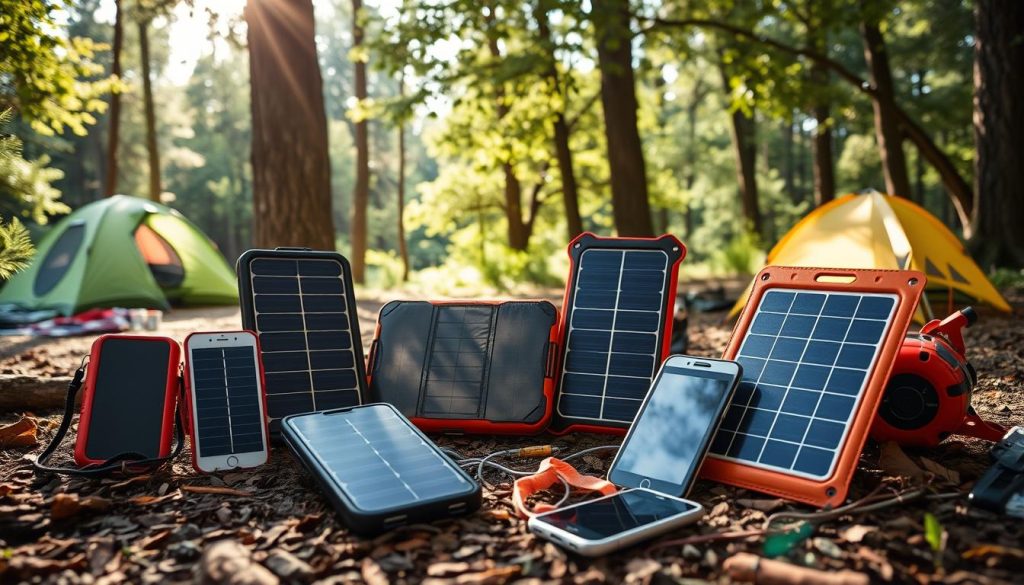
Portable Solar Chargers: Weather Resistance and Durability
For outdoor lovers, weatherproof solar chargers and durable solar panels are key. They make sure your solar chargers can handle camping, hiking, and more. This means your gear stays ready for adventure.
Choose waterproof solar chargers with high IP ratings. The EcoFlow 220W Bifacial Portable Solar Panel has an IP68 rating. It can handle being fully underwater for 30 minutes without harm. This keeps your charger working, even when it rains or gets splashed.
Durability is also vital. Look for panels with strong corners and surfaces that resist scratches. These durable solar panels last for years. You can count on them for all your outdoor trips.
“Portable solar chargers are a game-changer for outdoor enthusiasts, offering reliable power without the need for electrical outlets. Weather-resistant and durable designs ensure they can handle the elements, making them an essential gear for any camping or hiking trip.”
As the market grows, so do the features of portable solar chargers. By picking weatherproof solar chargers and durable solar panels, you know your devices will keep going. Even in the wild, they’ll keep you powered up.
Price Range and Value Comparison
Portable solar chargers come in a wide price range. You can find them for under $50 or over $600. It’s important to find a balance between cost and quality to get the best deal.
Budget-Friendly Options
The X-Dragon 20W solar charger is a great choice for those on a budget. It costs around $75. It may not have all the features of more expensive models. But, it can still charge up to 1,193 mAh in direct sunlight, perfect for casual camping or emergencies.
Premium Features Worth the Investment
For those willing to spend more, the EcoFlow 220W Bifacial ($599) is a top choice. It has a 220-watt power output and a bifacial design. This design captures energy from both sides of the panel, making it very efficient.
Cost per Watt Analysis
| Solar Charger Model | Price | Power Output (Watts) | Cost per Watt |
|---|---|---|---|
| Jackery SolarSaga 100 | $299 | 100 | $2.99/W |
| BigBlue SolarPowa 28 | $75 | 28 | $2.68/W |
| BigBlue SolarPowa 100 ETFE | $190 | 100 | $1.90/W |
| X-Dragon 20W | N/A | 20 | N/A |
| FlexSolar 40W | $80 | 40 | $2.00/W |
Looking at the cost per watt helps you see the real value of a solar charger. The BigBlue SolarPowa 100 ETFE is the best value at $1.90 per watt. It’s a great choice for those who want high performance without breaking the bank.
When picking a solar charger for camping, balance your budget with your needs. This way, you’ll find the best affordable solar chargers, premium solar panels, and solar charger value for you.
Portable Solar Chargers: Best Practices for Solar Charging While Camping
When camping in remote areas, making your solar chargers work best is key. Here are some tips to help you get the most out of your portable solar power:
- Position panels in direct sunlight: Make sure your solar panels face the sun all day. Move them as the sun moves to keep them charged well.
- Use kickstands or hanging options: Many solar chargers come with kickstands or ways to hang them. This helps them get the most sun.
- Charge during peak sunlight hours: Charge your devices when the sun is at its strongest, usually between 10 AM and 2 PM. This is when your panels work best.
- Leverage power banks: Use a power bank with your solar charger. It stores extra energy for when it’s dark or the sun is weak.
- Keep panels clean: Clean your solar panels often to remove dirt and dust. A clean panel catches more sunlight, making more electricity.
- Protect from extreme weather: Keep your solar chargers safe from heavy rain, strong winds, and other harsh weather. This prevents damage and keeps them working well.
By following these tips, you can make your solar charging setup more efficient. This way, your devices will stay charged during your camping trips.
Conclusion
Choosing the right portable solar charger for camping is important. You need to think about your power needs, how portable it is, and your budget. The BigBlue SolarPowa 28, X-Dragon 20W, and FlexSolar 40W are top picks for different camping styles.
When picking a portable solar charger, look at its power output, size, weight, and weather resistance. This ensures you have a reliable power source outdoors. Portable solar power is also eco-friendly, making it a great choice for camping.
Knowing what different solar charging technologies can do helps you choose wisely. This way, you can make the most of your portable solar charger on camping trips. With the right charger, you can enjoy the outdoors while keeping your devices charged.