Creating a fitness plan that fits your goals and lifestyle is key to success. Whether you want to build muscle, lose weight, or boost your health, a tailored plan is crucial. This guide will show you how to make a fitness routine that you can follow and enjoy.
Start by checking your current fitness level and what you can do. Look at your body, how you move, and your starting performance. This helps you see where you need to get better and set achievable goals. Knowing where you start lets you set clear, reachable fitness goals.
Key Takeaways
- Personalize your fitness plan to match your unique goals and lifestyle
- Assess your current fitness level and abilities to establish a baseline
- Set SMART goals to stay motivated and track your progress
- Incorporate a balanced mix of strength training and cardiovascular exercises
- Focus on quality over quantity and gradually increase intensity and duration
Understanding Your Current Fitness Level
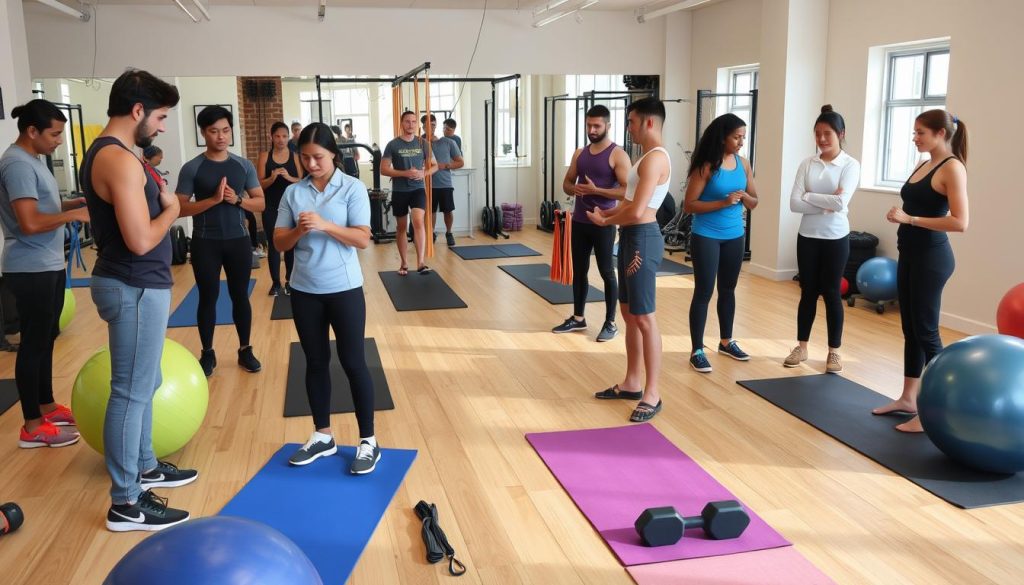
Knowing your current fitness level is the first step to a good fitness plan. By checking key areas, you can set a baseline and see how you improve. Let’s look at the different parts of fitness to see where you are.
Assessing Your Body Composition
Body composition is about the fat, muscle, and bone in your body. Checking this can tell you a lot about your health and fitness. You can use body mass index (BMI), waist circumference, and body fat percentage to understand your body better.
Evaluating Physical Abilities
Your physical abilities include strength, flexibility, and cardiovascular fitness. To check these, try tests like pushups, sit-and-reach, and a mile walk or run. This will show you what you’re good at and what you need to work on.
Measuring Baseline Performance
Setting a baseline performance is key to tracking your progress. Check your resting heart rate, pulse rate before and after exercise, and how fast you can run certain distances. These will be your starting points as you start your fitness journey.
Understanding your current fitness level helps you make smart choices for your goals. Remember, being consistent and patient is important for improving your fitness and health.
| Fitness Indicator | Recommended Ranges |
|---|---|
| Resting Heart Rate | 60-100 bpm |
| Target Heart Rate Zone | 50-85% of Maximum Heart Rate |
| Aerobic Activity | 150 mins of moderate or 75 mins of vigorous activity per week |
| Strength Training | 2+ times per week, targeting all major muscle groups |
| Body Mass Index (BMI) | 18.5-24.9 (Normal Weight) |
| Waist Circumference | Women: |
Setting SMART Fitness Goals
Setting SMART goals is key to reaching your fitness goals. SMART means Specific, Measurable, Achievable, Relevant, and Time-bound. Goals that follow these rules help you stay motivated and see real progress.
For example, a SMART goal could be “I want to gain 2 pounds of lean muscle mass in two months.” This goal is clear, measurable, and has a deadline. A weight loss goal might be “I aim to lose 3 pounds of body fat in two months.”
If you’re new to fitness, start with goals like “I will exercise for 30 minutes, 3 days a week for a month.” This builds a strong habit of regular exercise.
Understanding why you want to reach your fitness goals is crucial. Setting SMART goals that match your interests and dreams helps you stay committed. This way, you’re more likely to reach your desired results.
“Clarity about your goals is the first step in turning the invisible into the visible.” – Tony Robbins
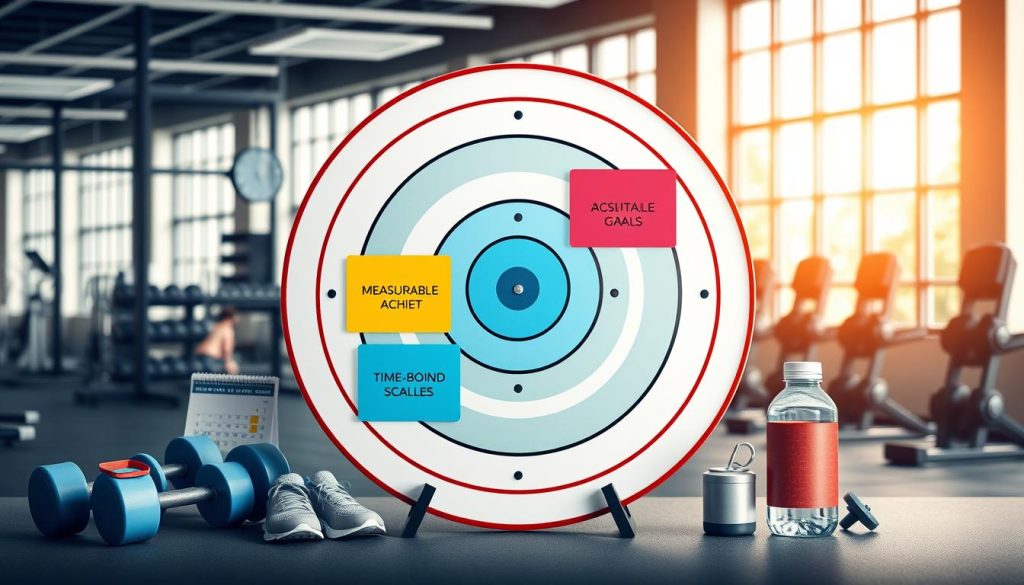
The key to success is setting SMART goals that push you but are still doable. By doing this, you’ll be on the path to reaching your fitness goals.
Designing Your Fitness Plan Framework
Making a fitness plan that fits you is key to reaching your health goals. A good workout schedule balances different exercises for a full fitness approach. Let’s look at the main parts of creating your fitness plan.
Weekly Schedule Structure
Begin with 4-5 workouts a week, mixing full-body weight training and cardio. As you get better, you can do 4-6 workouts a week, focusing on upper and lower body. Don’t forget rest days for muscle repair.
Balancing Different Types of Exercise
For the best fitness, mix strength training, cardio, and flexibility. Strength workouts should include big moves like deadlifts and squats, plus smaller lifts for specific muscles. Cardio can be steady or high-intensity intervals, boosting stamina and health.
Planning Rest and Recovery
Rest and recovery are vital for any fitness plan. Enough rest lets muscles repair and grow. Use rest days for yoga, stretching, or light cardio to keep flexible and circulate blood. Remember, getting better slowly is better than risking injury.
| Exercise Type | Beginner (4-5 days/week) | Advanced (4-6 days/week) |
|---|---|---|
| Strength Training | Full-body workouts | Split training (upper/lower body) |
| Cardio | Moderate-intensity aerobic activities | Interval training and high-intensity cardio |
| Flexibility | Stretching and light mobility work | Restorative yoga and targeted flexibility routines |
| Rest Days | 1-2 days per week | 1-2 days per week |
By planning a balanced workout schedule, trying different exercise types, and focusing on rest and recovery, you can build a fitness program that supports your health goals.
Fitness Plan: Choosing the Right Exercise Types
Creating a fitness plan that’s just for you means picking the right exercises. You might want to get stronger, improve your heart health, or just feel better overall. A mix of exercises is essential.
Compound movements are great for working out many muscles at once. Squats, deadlifts, bench presses, and pull-ups are top picks. They save time and get the job done efficiently.
For cardio exercises, think about walking, biking, rowing, or running. These boost your heart health and help with weight control. Choose activities you love to keep up with them.
As you get better, try new exercise selections. Mixing strength training and cardio keeps things interesting. It also helps avoid injuries and keeps your body challenged.
It’s important to pick exercises that fit your fitness level, what you have available, and what you like. A balanced plan will help you reach your health goals.
| Exercise Type | Benefits | Example Exercises |
|---|---|---|
| Compound Movements | Target multiple muscle groups, efficient workouts | Squats, Deadlifts, Bench Presses, Pull-ups |
| Cardio Exercises | Improve heart health, aid in weight management | Walking, Biking, Rowing, Running |
| Strength Training | Build muscle, increase metabolism, enhance bone density | Resistance Training, Free Weights, Bodyweight Exercises |
The best workout is one you can stick to. Try different exercise selections to find what suits you best.
Fitness Plan: Creating Your Strength Training Program
Strength training is key to a good fitness plan. To make a program that’s just for you, focus on compound exercises. These exercises work many muscles at once. Good choices include squats, deadlifts, bench presses, and rows.
Selecting Compound Movements
When making your strength training plan, pick exercises that fit your level and goals. A good program should have a mix of exercises for all major muscles. This includes:
- Lower Body: Squats, deadlifts, lunges
- Upper Body: Bench press, pull-ups, rows
- Core: Planks, ab wheel, wood chops
Understanding Sets and Repetitions
Beginners should aim for 8-15 reps per set and 2-4 sets per exercise. This helps build muscle while keeping form right. As you get stronger, increase the weight or resistance but keep reps the same. Make sure to rest for 60-90 seconds between sets to help muscles recover and grow.
Progressive Overload Principles
Using progressive overload is key for getting stronger. This means making your workouts harder over time. You can do this by adding more weight, reps, or sets. This pushes your body to adapt and improves your strength training skills.
By focusing on progressive overload, your compound exercises and resistance training program will help you reach your strength training goals. You’ll see lasting results.

| Exercise | Sets | Reps | Rest |
|---|---|---|---|
| Barbell Squat | 3 | 12-15 | 90 seconds |
| Deadlift | 3 | 8-10 | 2 minutes |
| Bench Press | 3 | 10-12 | 90 seconds |
| Bent-Over Row | 3 | 12-15 | 60 seconds |
“Strength training is not just about getting bigger muscles; it’s about building a resilient, injury-resistant body that can perform at its best.”
Fitness Plan: Incorporating Cardiovascular Training
Adding cardio workouts and aerobic exercise to your routine is key for better cardiovascular health and endurance. Mix up your cardio activities like walking, biking, rowing, or swimming each week.
Start with something you can do easily, then increase the challenge over time. For example, start with a 20-minute walk in week 1. By week 4, aim for a 50-minute walk. Or, begin biking 4 miles and aim for 7 miles in four weeks.
The American College of Sports Medicine suggests 150 minutes of moderate or 75 minutes of vigorous cardio weekly. Use a heart rate monitor or a perceived exertion chart to gauge your workout’s intensity.
Effective Cardio Exercises
- Running and jogging to build endurance
- Cycling for a low-impact, full-body workout
- Swimming for a high-intensity, joint-friendly exercise
- Walking as a beginner-friendly, cardiovascular-boosting activity
- Dancing for a fun, rhythm-based cardio workout
- High-Intensity Interval Training (HIIT) for efficient, time-saving workouts
Trying different cardio workouts will boost your cardiovascular health and fitness. It’s a great way to improve your endurance training too.
“Regular cardio exercise has been linked to a decreased risk of chronic conditions such as diabetes, hypertension, and certain types of cancer.”
Fitness Plan: Nutrition and Meal Planning Support
Reaching your fitness goals needs more than just working out. Eating right is just as important. A balanced diet can boost your results and improve your health. Let’s look at the important parts of nutrition and meal planning for better fitness.
Calculating Caloric Needs
Knowing your daily calorie needs is key to a good nutrition plan. Your age, gender, how active you are, and your fitness goals all matter. For losing weight, aim for a 500-calorie deficit each day. For gaining muscle, you might need 250 calories more.
Use online tools or talk to a nutritionist to figure out your exact calorie needs.
Macronutrient Distribution
Macronutrients like proteins, carbs, and fats are vital for your fitness goals. Make sure your diet has the right mix of these nutrients. Aim for 20-30% of your calories to come from protein, 40-50% from carbs, and 20-30% from healthy fats.
Meal Timing Strategies
When you eat is as important as what you eat. Eating at the right times can help your body absorb nutrients better and keep your energy up. For example, eating protein before and after workouts helps with muscle recovery and growth.
Try different meal times to see what works best for you. A good nutrition plan, along with your fitness routine, can help you reach your goals. Focus on managing calories, balancing macronutrients, and timing your meals for the best results.
“Proper nutrition is the foundation of a successful fitness journey. It’s not just about what you eat, but when and how you eat it.”
Fitness Plan: Tracking Progress and Making Adjustments
Reaching your fitness goals is a journey. It’s key to check your progress often. By tracking your performance and adjusting your plan, you stay on track and see results.
Every 4-6 weeks, take the same fitness measurements you did at the start. This includes checking your body composition, strength, and endurance. Note any changes, as they show your progress.
- Watch your body weight, body fat percentage, and waist circumference for body composition changes.
- Test your strength by finding your one-rep max on key exercises.
- Check your endurance with timed runs or bike rides.
When reviewing your progress, think about changing your fitness plan. You might need to adjust the intensity, volume, or types of exercises. Remember, everyone’s fitness journey is different. Be open to trying new things.
If motivation wanes or goals seem hard to reach, set new targets or try new activities. Celebrating small wins keeps you excited and motivated.
“The only way to do great work is to love what you do. If you haven’t found it yet, keep looking. Don’t settle.” – Steve Jobs
By tracking your progress and making fitness adjustments as needed, your plan stays challenging and motivating. Stay committed to goal reassessment and performance monitoring. You’ll be on your way to reaching your health and fitness goals.
Conclusion
Creating a personalized fitness plan is a journey that needs constant updates. Start with achievable personalized fitness goals. Choose exercises you like and slowly increase their intensity and time.
Consistency is crucial, and even small amounts of exercise can make a big difference. Be flexible, listen to your body, and celebrate your achievements. With commitment and the right plan, you can reach your fitness journey goals and live a healthier healthy lifestyle for long-term success.
The guide stresses the need for SMART goals, self-assessments, and a mix of cardio, strength, and flexibility exercises. Adjust your plan based on your body’s signals and progress. This way, you can maintain a routine that supports your well-being.
Remember, success comes from finding a routine that fits your life and keeps you motivated. This guide is a valuable resource for anyone starting or improving their personalized fitness journey.
By focusing on your physical and mental health, you can enjoy the many benefits of regular exercise. This will lead to a healthier, more rewarding healthy lifestyle for years to come.