In the fast-changing world of fashion, H&M and Zara stand out. These Swedish and Spanish giants have changed how we shop for clothes. They offer trendy, affordable outfits that fit many budgets. H&M vs. Zara – such a great pair!
H&M is the second-largest clothing store in the world. It makes runway trends affordable for everyone. Zara is known for its bold, high-quality designs and quick updates. It brings new collections to stores in just weeks.
This comparison looks at how H&M and Zara work, their designs, and their big impact. It shows how fast fashion keeps changing and affects how we shop.
Key Takeaways
- H&M and Zara are two of the largest and most influential fast fashion brands in the world.
- Both brands are known for their ability to quickly translate runway trends into affordable, trendy clothing options.
- Zara is rated slightly higher than H&M in terms of quality and customer perception, but H&M has a larger global footprint.
- Fast fashion has revolutionized the industry, impacting consumer behavior and raising concerns about sustainability and labor practices.
- Understanding the unique strategies and philosophies of these two brands can provide valuable insights into the dynamic fast fashion landscape.
Understanding Fast Fashion: A Modern Shopping Revolution
The fashion world has changed a lot in recent years. Now, we have “fast fashion,” where trendy clothes are made and sold quickly and cheaply. Stores like H&M and Zara can get new styles to their shelves in just 20 days.
H&M vs. Zara – What Makes Fashion “Fast”
Fast fashion is fast because it quickly responds to what people want. It uses new tech like data analytics and 3D printing. This makes making clothes faster and more efficient.
The Evolution of Quick-to-Market Fashion
Fast fashion started in the late 1990s and early 2000s. Zara and H&M were among the first. They made it possible for people to buy new, affordable clothes all the time.
Impact on Consumer Behavior: H&M vs. Zara
Fast fashion has changed how we shop. People buy clothes more often and throw them away. But, some brands are trying to be more eco-friendly. They use better materials and encourage fixing and selling clothes again.
The fashion world is always changing. Fast fashion and what people want will keep shaping it. Brands are now trying to be more green and sustainable while still offering trendy clothes.
H&M vs. Zara: Direct Brand Comparison
H&M and Zara are leaders in fast fashion, each with its own style. They both offer trendy clothes at good prices. But, they differ in how they design, make, and sell their clothes.
H&M, from Sweden, has stores in over 75 countries and more than 4,800 locations. It quickly updates its collections to keep up with fashion trends. Zara, meanwhile, is known for its fast introduction of new styles, often in just weeks.
Both brands have made a big splash in the fashion world. H&M is praised for its wide range of sizes. Yet, many people don’t know about its inclusive sizing. This shows a chance for H&M to tell more people about its offerings.
Zara, however, has built a strong following in Europe. It’s known for its quick response to fashion trends. This keeps it ahead in the fast fashion game.
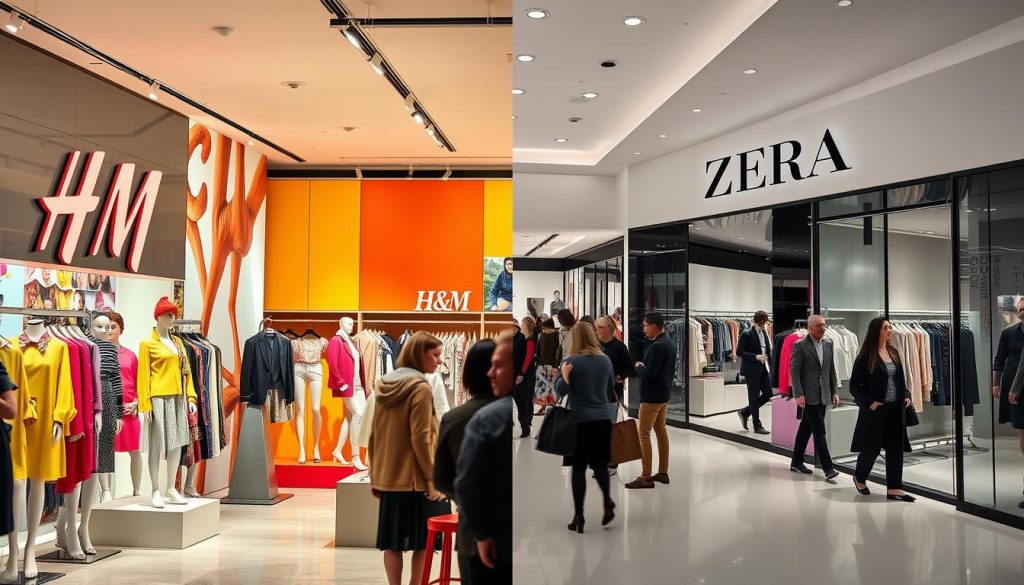
The battle between H&M and Zara is intense. Both are working on being more sustainable and ethical. By understanding their differences, shoppers can choose wisely in the fast-changing fashion world.
H&M: The Swedish Fashion Giant’s Business Model
H&M is a top fast fashion brand known for trendy clothes at good prices. It aims to meet the needs of budget-savvy shoppers who want to look stylish.
Design Philosophy and Target Market
H&M’s style is more classic than Zara’s. It offers both basic and trendy items. This appeals to people aged 18 to 35, making it a favorite for affordable fashion.
Price Point Analysis: H&M vs. Zara
H&M keeps prices low to make fashion affordable. In the last quarter, the company experienced a 4% drop in sales, its largest decline since the previous year’s third quarter. It plans to boost its profit margin to 10% by 2024 by focusing on higher-priced items and cutting discounts.
Quality Assessment
H&M’s quality is average, matching its affordable prices. While H&M’s shares have increased by 56% this year, outperforming Inditex (Zara’s parent company), the brand is also facing increased competition from fast fashion disruptors like Shein. To stay ahead, H&M targets wealthier shoppers and works with top designers, like Paco Rabanne, to improve its image.
H&M uses creative marketing and social media to boost its image. It has over 38 million online followers, showing its strong online presence and focus on shopping experiences across all channels.
Zara’s Unique Approach to Fashion Retail
Zara has changed the fashion world with its fast and flexible way of doing things. Unlike others, Zara focuses on quick changes in fashion trends. This has made it the third-largest clothing company worldwide.
Zara’s secret is its fast response to what people want. It has over 3,000 designers making 40,000 new items every year. But, only 10,000 designs get made, showing Zara’s careful choice in fashion.
Zara’s fast production means new clothes hit stores twice a week. This keeps customers coming back for more. In Spain, Zara fans visit stores 17 times a year, much more than others.
Zara also stands out in pricing. It sells 85% of its items at full price, unlike the 60% average. This keeps Zara’s value high while still offering affordable fashion.
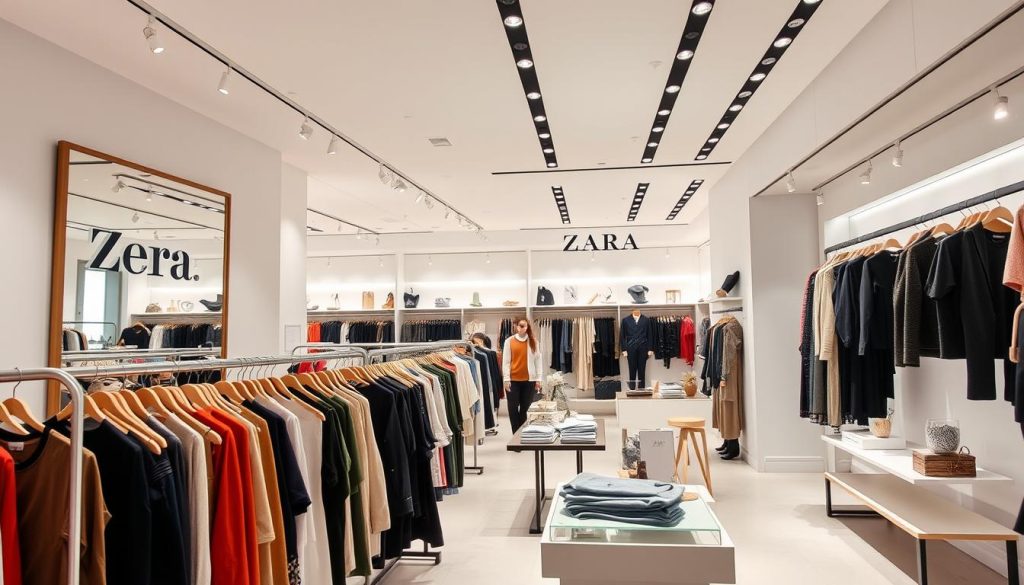
Zara is also serious about being green. It aims to remove harmful chemicals from its products by 2020. This shows Zara’s commitment to quality and caring for the planet.
As fashion keeps changing, Zara’s quick and creative approach will shape the future. It’s a key player in the ever-evolving fashion world.
Supply Chain and Production Strategies
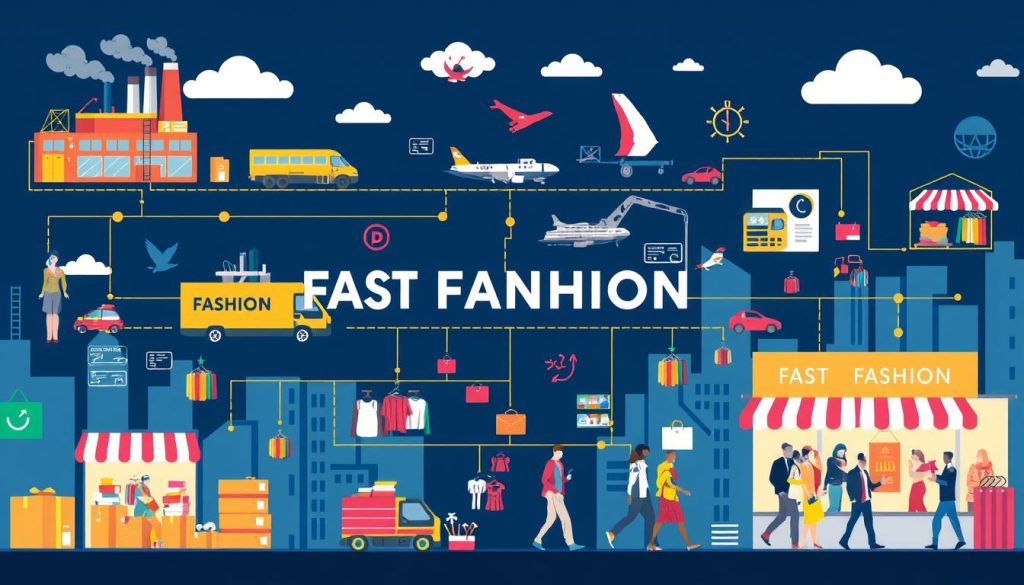
H&M and Zara have different ways of managing their supply chains and production. Zara’s model lets them quickly turn designs into store items in just 20 days. H&M’s process takes a bit longer. This speed gives Zara an edge in keeping up with trends and getting new styles to customers fast.
H&M vs. Zara: Manufacturing Timeline Comparison
Zara is super quick with its production. They can get new designs to stores in about 25 days. H&M takes a bit longer, with collections ready in 6-8 weeks.
Distribution Networks
Zara and H&M both have big global networks, but Zara’s is more focused. Zara has over 3,000 stores in 96 countries, with a focus on key locations. H&M has stores in 74 markets, with a more spread-out approach.
Inventory Management
Both brands are good at managing their stock. Zara makes only a few of each item to make it seem special. H&M, on the other hand, makes more of each item. This affects how they handle trends and leftover stock.
The way H&M and Zara manage their supply chains and production is key to their success. By being smart about their stock and distribution, they offer the latest fashion at good prices. This is thanks to their focus on textile manufacturing and supply chain management.
Style and Design Philosophy Differences
H&M and Zara have different design philosophies in the fashion world. H&M offers a wide range of clothes, from classic basics to trendy items. This appeals to many customers. Their designs are conservative and versatile, focusing on being affordable.
Zara, on the other hand, is all about the latest fashion trends. Their clothes are fitted and tailored, perfect for those who love staying on top of style. Zara’s team watches global fashion closely, making sure their collections are always fresh and in demand.
| H&M | Zara |
|---|---|
| Offers a mix of essentials and trendy items | Focuses on more fashion-forward, runway-inspired designs |
| Designs are generally more conservative and widely appealing | Clothing tends to be more fitted and tailored |
| Caters to a broad range of consumers | Targets a more style-conscious consumer |
H&M and Zara show how different design philosophies can attract different customers. This brand comparison shows how these fast fashion leaders meet their consumer preferences.
Pricing Strategies and Value Proposition
In the fast fashion world, H&M and Zara have different pricing plans. H&M keeps prices low with lots of sales and discounts. This makes trendy clothes affordable. Zara has slightly higher prices but offers quality and design at good costs.
Cost Per Wear Analysis
Both H&M and Zara are affordable, making them good for long-term value. Zara’s quality might mean you wear items longer. This could make Zara a better choice for those looking to save money over time.
Seasonal Sales Patterns
H&M and Zara have big sales at the end of each season. This is a great time to save, especially on items that are no longer in style. They offer trendy clothes at prices that fit the budget of many shoppers.
| Metric | H&M | Zara |
|---|---|---|
| Average Price Point | Lower | Higher |
| Frequency of Discounts | Higher | Lower |
| Cost Per Wear | Relatively Low | Relatively Higher |
| Seasonal Sales Patterns | Major Discounts at End of Season | Major Discounts at End of Season |
H&M and Zara have found success in fast fashion by focusing on affordable and trendy clothes. Their pricing strategies meet the needs of today’s shoppers. Both brands offer value, making them popular in the industry.
Global Market Presence and Store Experience
H&M and Zara have grown big in the fast fashion world. H&M has over 5,000 stores in many countries. Zara has around 2,000 stores worldwide. Their growth has helped them succeed in the retail clothing market.
H&M stores are big and offer lots of choices. Zara stores focus more on fashion and are smaller. Both brands have made their stores fit local tastes while keeping their brand feel.
Recently, NIKE has become bigger in Europe than H&M. But Zara beat H&M in sales growth in 2023. Shein, a fast-fashion brand, is also popular with young people because it’s cheap.
H&M and Zara have grown by expanding globally. As online shopping grows in Europe, they’re changing to keep up with what customers want.
| Brand | Global Store Count | E-commerce Performance | Key Market Expansion |
|---|---|---|---|
| H&M | Over 5,000 stores | Consistent online growth, 20% of total sales | Dominant presence in California and Texas (US) |
| Zara | Around 2,000 stores | 68.3% growth in e-commerce net sales (2019-2020), 21.1% (2020-2021) | Strong presence in New York (US), expanding in emerging markets |
H&M and Zara need to keep improving their stores and global plans to stay ahead in the retail clothing world.
Sustainability Practices and Ethical Considerations
In the fast fashion world, H&M and Zara face criticism for their environmental and labor practices. These global leaders are trying to improve, but their business models make it hard. They struggle to be truly sustainable.
Environmental Impact
H&M operates in 74 countries and has a big environmental impact. It has been rated “Not Good Enough” by independent assessors. Despite efforts like the “Conscious” collection and recycling, real progress is hard to see.
Zara also gets a lot of criticism for its environmental footprint. It aims to use 100% renewable energy by 2022 and stop single-use plastics by 2023. But, the fast fashion model makes it hard to achieve these goals.
Labor Practices
H&M and Zara have faced many labor scandals. Issues include wage theft, poor working conditions, and lack of transparency. H&M’s labor practices have been rated “Not Good Enough” due to these problems.
Zara has also been accused of labor rights violations. Reports show wage theft and unsafe conditions in its factories. While they’ve tried to improve, more change is needed.
Corporate Responsibility
H&M and Zara have a big role to play in making fashion more sustainable and ethical. They’ve started initiatives like H&M’s Conscious collection and Zara’s Join Life program. But, these efforts are seen as not enough.
They need a more complete and lasting solution to fix the fast fashion industry’s deep problems. A true change is necessary.