In the world of dental care, electric toothbrushes are a big topic. They promise better plaque removal and gum health. But are they worth the cost, or just a fancy item?
We’ll look into electric toothbrushes in this article. We’ll explore their features, benefits, and if they really deliver as promised.
Key Takeaways
- Electric toothbrushes have become increasingly popular in recent years, with researchers investing over 120 hours in evaluating and testing dozens of powered toothbrushes.
- Powered toothbrushes typically cost 10 times more than manual toothbrushes and require regular brush head replacements, adding to the overall cost of ownership.
- Electric toothbrushes with built-in timers and pacing features can encourage users to brush for the recommended two minutes, compared to an average of 46 seconds without a timer.
- Leading electric toothbrush brands like Oral-B and Sonicare offer a range of features and cleaning modes to meet the diverse needs of consumers.
- Both Oral-B and Sonicare have their respective strengths, with Oral-B being more affordable and Sonicare offering superior battery life and a quieter operation.
Introduction to Electric Toothbrushes
Electric toothbrushes are now more popular than manual ones. They use technology like oscillating or sonic vibrations to clean teeth better. This has changed how we keep our mouths healthy.
The first electric toothbrush was patented in 1937. Since then, they’ve become a key part of our oral care. Today, we have many types, from simple to advanced models.
These toothbrushes are better at removing plaque and reducing gum inflammation. They’ve made our dental care better. As technology improves, electric toothbrushes will keep getting better.
“Biofilm, or plaque, regenerates quickly and causes infections in the mouth; electric toothbrushes are more effective at removing debris compared to manual brushing.”
| Toothbrush Type | Movements per Minute | Key Benefits |
|---|---|---|
| Manual Toothbrush | 300 | Affordable, easy to use |
| Electric Toothbrush | 2,500-7,000 | More effective plaque removal, less gum abrasion |
| Sonic Toothbrush | 24,000-48,000 | Superior plaque removal, less gum irritation |
| Ultrasonic Toothbrush | 192,000,000 | Vibrations reaching below the gum line, advanced plaque removal |
Electric toothbrushes are changing how we take care of our teeth. They’ve come a long way since the first models. Now, they’re a key part of our daily oral hygiene.
Benefits of Using an Electric Toothbrush
Electric toothbrushes have become more popular lately. They offer many benefits for better plaque removal and gum health. One key advantage is their ability to remove plaque, a harmful film of bacteria.
Improved Plaque Removal
An electric toothbrush’s powered motion helps remove more plaque than a manual toothbrush. Studies show electric toothbrushes are better at removing plaque. They can do up to 50,000 strokes per minute, while manual toothbrushes only do about 200.
Reduced Gum Inflammation
Electric toothbrushes also help reduce gum inflammation and gingivitis. They clean better, keeping gums healthy. This leads to better oral hygiene and dental care.
“Electric toothbrushes make brushing more engaging for kids by offering music or interactive features.”
Many electric toothbrushes have special features. They have pressure sensors, timers, and even Bluetooth to track brushing. These features make brushing more effective and fun.
| Feature | Benefit |
|---|---|
| Pressure Sensors | Prevent excessive brushing pressure to protect sensitive gums |
| Built-in Timers | Ensure the recommended two-minute brushing duration |
| Bluetooth Connectivity | Track brushing patterns and habits for improved oral hygiene |
Using an electric toothbrush makes brushing more effective and enjoyable. It leads to better plaque removal, gum health, and overall dental care.
Types of Electric Toothbrushes
There are two main types of electric toothbrushes: oscillating and sonic. Each has its own special features and benefits. They meet different needs and preferences for dental health.
Oscillating Toothbrushes
Oscillating toothbrushes have a round brush head that moves in a circular motion. They work like manual brushes but are more effective. The Oral-B Pro 500 Precision Clean is a well-liked model, priced at $33 at Walmart. It has an oscillating and rotating head and a timer that lasts two minutes.
Sonic Toothbrushes
Sonic toothbrushes use fast vibrations to clean teeth. They are great at getting rid of plaque and bacteria, even in tough spots. The Philips Sonicare for Kids Rechargeable Electric Toothbrush is a top choice, priced at $33 at Walmart. Sonic toothbrushes are seen as more advanced and effective.
Ada S. Cooper says both sonic and oscillating toothbrushes are good at reducing plaque. Your choice depends on what you prefer and your dental needs.
| Toothbrush Type | Features | Brands | Price Range |
|---|---|---|---|
| Oscillating | Rotating and pulsating brush head | Oral-B | $33 – $119 |
| Sonic | High-frequency vibrations for fluid dynamics | Sonicare | $33 – $119 |
“Both sonic and oscillating toothbrushes are effective in reducing plaque, as per recent studies.”
– Ada S. Cooper
How Electric Toothbrushes Work
Electric toothbrushes change how we keep our teeth clean. They use new technology to clean better than regular toothbrushes. There are two main kinds: oscillating and sonic.
Oscillating Electric Toothbrushes
Oscillating toothbrushes have a round head that moves in circles. This action is like manual brushing but stronger. It gets rid of plaque better and reaches spots manual brushes miss.
Sonic Electric Toothbrushes
Sonic toothbrushes use fast vibrations to clean. This motion pushes away plaque and bacteria deep into teeth. It helps keep your mouth healthy and prevents gum disease and tooth decay.
Both kinds of electric toothbrushes clean better than manual ones. They make sure your teeth and gums stay healthy.
| Feature | Oscillating Electric Toothbrushes | Sonic Electric Toothbrushes |
|---|---|---|
| Brushing Motion | Rotating and pulsating | High-frequency vibrations |
| Plaque Removal | Excellent at dislodging and removing plaque | Effective at sweeping away plaque and bacteria |
| Reach | Targets areas often missed by manual brushing | Extends cleaning beyond the reach of bristles |
| Dental Health Benefits | Reduces risk of gum disease and tooth decay | Improves overall oral hygiene and freshens breath |
Electric toothbrushes use new tech to clean teeth better. They use oscillation or sonic vibrations to clean deep. This keeps your teeth and gums healthy, giving you a bright smile.
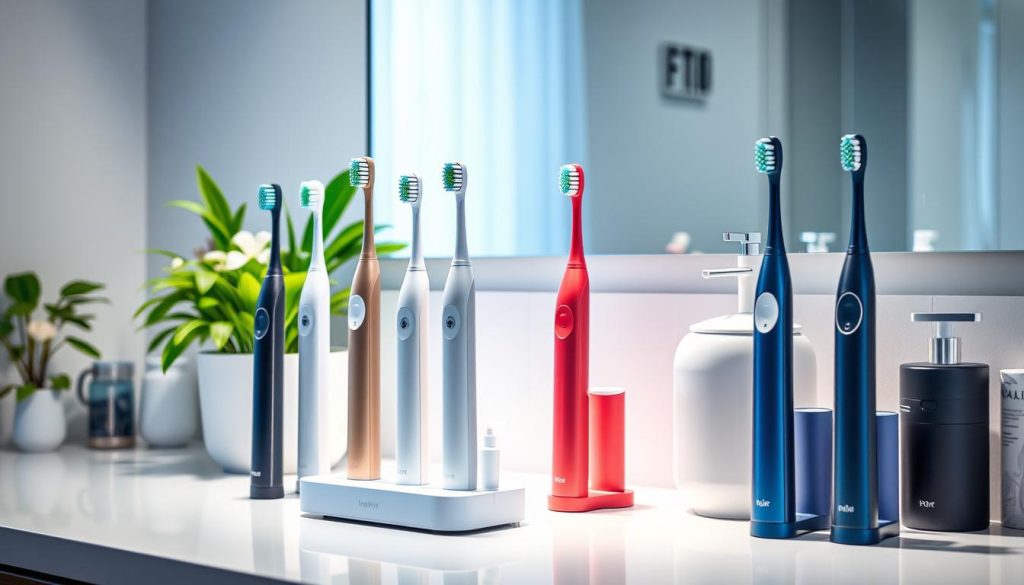
Electric Toothbrushes: Are They Worth the Hype?
Electric toothbrushes are getting more popular, but people are still debating if they’re worth it. Studies show they can remove plaque better and help gums less inflamed than manual brushes. But, how well they work depends on how you brush and your technique.
Electric toothbrushes clean well because they brush consistently. They have timers and alerts to make sure you brush each part of your mouth long enough. Some even have sensors to tell you if you’re brushing too hard, which can hurt your gums.
But, electric toothbrushes cost more upfront and you need to replace the heads often. Their batteries last about two to three weeks. You should change the brush head every three months.
| Feature | Electric Toothbrush | Manual Toothbrush |
|---|---|---|
| Plaque Removal | 11% more effective | Less effective |
| Gum Health | 17% reduction in gingivitis | Less effective |
| Brushing Time | Built-in timer ensures proper brushing duration | Relies on user to maintain proper brushing time |
| Pressure Monitoring | Some models have built-in sensors to alert users | No built-in pressure monitoring |
| Connectivity | Many models offer Bluetooth connectivity for habit tracking | No connectivity features |
| Cost | Higher initial and ongoing costs | Lower initial and ongoing costs |
Choosing between an electric toothbrush and a manual one depends on what you prefer and your oral health needs. Electric toothbrushes might offer better plaque removal and gum health. But, if you brush well with a manual toothbrush, you can still keep your mouth healthy. Talking to a dentist can help you decide what’s best for your oral hygiene and cost-effectiveness.
“Electric toothbrushes can be a game-changer for individuals who struggle with maintaining consistent and thorough brushing habits. The built-in features and guidance can make a significant difference in improving plaque removal and gum health.”
Choosing the Right Electric Toothbrush
Choosing an electric toothbrush involves several important factors. These include the brushing mechanism, available modes, advanced features, and battery life. The right toothbrush can greatly improve your oral hygiene routine.
Factors to Consider
- Brushing mechanism: Choose between oscillating or sonic toothbrushes based on your needs.
- Brushing modes: Look for models with various modes for different oral health needs.
- Pressure sensors: These sensors alert you if you’re brushing too hard, preventing gum irritation.
- Battery life: Check the battery life, which can range from 2 to 6 weeks on a single charge.
- Brand reputation: Research the brand’s quality, reliability, and customer satisfaction.
Top Brands and Models
Oral-B and Philips Sonicare are top electric toothbrush brands. They offer a wide range of models for different budgets and needs.
The Oral-B Pro 1000 is a good starting point. It has rotating, oscillating, and sonic movements, soft bristles, a pressure sensor, and a two-minute timer. The Oral-B iO Series 5 and Oral-B iO Series 7G offer smoother motors, better cleaning, and smart features.
The Philips Sonicare 4100 is a favorite for travel. It has an automatic shut-off timer and a gentle cleaning experience. The Pro-Sys VarioSonic toothbrush is also great for sensitive teeth, with various brushing modes.
When picking an electric toothbrush, consider its features and how they meet your needs. Talking to your dentist for advice can also help.
Proper Brushing Technique with Electric Toothbrushes
Using an electric toothbrush correctly is key to getting the most out of it for your dental hygiene. Hold the brush at a 45-degree angle to your gums. Gently move the brush head across your teeth, focusing on the gumline. Make sure to brush for the full two minutes.
Many electric toothbrushes have a quadrant pacing feature. It tells you when to move to a new area of your mouth every 30 seconds. Following these steps helps remove plaque well and keeps your gums healthy.
- Hold the electric toothbrush at a 45-degree angle to your gums.
- Gently guide the brush head across all surfaces of your teeth, focusing on the gumline.
- Brush for the recommended two minutes, ensuring you spend 30 seconds on each quadrant of your mouth.
- Use the quadrant pacing function, if available, to ensure even coverage.
- Apply gentle pressure, avoiding excessive scrubbing which can damage gum health.
Mastering the right brushing technique with your electric toothbrush boosts your dental hygiene. It helps keep your smile healthy and free of plaque.
“Consistent and proper use of an electric toothbrush can lead to a 21% reduction in plaque after just 3 months, compared to manual toothbrushes.”
Maintenance and Care for Electric Toothbrushes
To keep your electric toothbrush working well, you need to take care of it. This means changing the brush head often and keeping the handle and base clean.
Replacing Brush Heads
Experts say to change the brush head every 3 to 4 months. This is because the bristles wear out and lose their cleaning power. If the bristles are frayed, they can hurt your gums. So, it’s important to replace the brush head regularly.
Don’t share electric toothbrush heads. This can spread bacteria and make your toothbrush less effective.
Cleaning and Storage
It’s also key to clean the toothbrush handle and base. This stops bacteria and dirt from building up. Storing your toothbrush upright can help it last longer. It keeps water out and prevents mildew.
When you charge your toothbrush, don’t overdo it. Overcharging can shorten the battery life. Always follow the maker’s charging tips to keep your toothbrush in top shape.
By taking good care of your electric toothbrush, you make it last longer. This means better oral hygiene for years.
Cost Considerations for Electric Toothbrushes
Electric toothbrushes are becoming more popular. They cost more than manual toothbrushes but offer long-term benefits. This makes them a good choice for many people.
The first thing to think about is the price. Electric toothbrushes can cost between $50 and $200. But, they might save you money on dental care in the long run.
Another cost is the replacement heads. These cost $5 to $10 each and need to be changed every 3-6 months. Even though they’re expensive, electric toothbrushes can save you money on dental treatments.
Choosing an electric toothbrush depends on your needs and budget. Think about the cost and the benefits for your teeth. This will help you decide if it’s right for you.
| Product | Regular Price | Sale Price | Discount | Rating | Reviews |
|---|---|---|---|---|---|
| Diamond Teeth Whitening Kit | $99.00 | $58.65 | 41% off | 4.9 out of 5 stars | 5,639 Reviews |
| Extra-Strength Teeth Whitening Serum | $49.00 | $39.00 | – | 4.9 out of 5 stars | 1,184 Reviews |
| Diamond Dissolving Whitening Strips | $39.00 | $29.00 | 48% off | 5.0 out of 5 stars | 22 Reviews |
| LED Whitening Electric Toothbrush (Gen 2) | $129.00 | $67.15 | 48% off | 4.8 out of 5 stars | 343 Reviews |
| Diamond Wireless Teeth Whitening Kit | $129.00 | $84.15 | 35% off | 4.9 out of 5 stars | 495 Reviews |
| Nano-Hydroxyapatite Whitening Toothpaste | $28.00 | $22.00 | – | 4.8 out of 5 stars | 1,424 Reviews |
The table shows different dental products, including electric toothbrushes, at good prices. They have high ratings from customers. This gives people options when thinking about their oral health and budget.
In conclusion, electric toothbrushes might cost more upfront. But, they can lead to better dental health and save money on dental care in the long run. By considering the costs and benefits, you can make a choice that fits your needs and budget.
Electric Toothbrushes
The world of dental care has changed a lot with electric toothbrushes. These tools are now more popular than old-fashioned manual brushes. They help remove plaque better and keep gums healthy, changing how we brush our teeth every day.
Today’s electric toothbrushes come with cool smart features. They can connect to phones via Bluetooth, giving feedback and tips on brushing. They also have sensors that warn you if you’re brushing too hard, protecting your gums.
People are also caring more about the environment, and electric toothbrushes are getting greener. Brands are making eco-friendly models with rechargeable batteries and parts that can be recycled. This shows the industry’s effort to be more sustainable.
As more people learn about electric toothbrushes, they’re becoming more popular. They offer advanced features, better dental care, and are good for the planet. These tools are set to become a big part of our daily lives, making brushing teeth better and more sustainable.
| Toothbrush Model | Battery Life | Noise Rating | Cleaning Modes | Replacement Head Cost |
|---|---|---|---|---|
| Oral-B Pro1000 | 7 days | 1 out of 3 | 1 (Daily Clean) | $15 and up for 3 |
| Philips Sonicare 4100 | 14 days | 3 out of 3 | 1 (Clean with high and low intensity) | $30 and up for 3 |
| Philips Sonicare 9900 Prestige | 14 days | 1 out of 3 | 5 | $30 and up for 2 |
| Oral-B iO Series 9 | 14 days | 2 out of 3 | 7 | $36 and up for 4 |
| Quip Adult Electric Toothbrush | 90 days | 3 out of 3 | 1 | $5 every 3 months |
| SuperMouth Smile Sidekick Sonic Mouthbrush | N/A | N/A | N/A | $10 each |
The table above shows the main features of different electric toothbrushes. It helps you compare things like battery life, noise, and cost. This info can help you choose the best oral hygiene and dental care tools.
“Electric toothbrushes have revolutionized the way we approach our daily dental routines, offering a myriad of benefits that surpass traditional manual brushing.”
Conclusion
Electric toothbrushes are a game-changer for oral hygiene and dental health. They remove plaque better, help gums stay healthy, and make brushing easier. Even though they cost more upfront, their long-term benefits make them a smart choice.
As technology gets better, electric toothbrushes will keep getting more advanced. They might even connect to your phone and be eco-friendly. This means they’ll soon be a common sight in homes everywhere.
Electric toothbrushes are great for anyone wanting to improve their plaque removal or gum health. They make brushing teeth more efficient. By using one, you’re investing in a healthier smile for the future.