Fireworks have amazed people for over 2,000 years. They started in China and have since become a global favorite for big celebrations. From ancient bamboo explosions to today’s high-tech shows, fireworks show our creativity and ingenuity. History of Fireworks is full of joy and fun.
Fireworks are a big part of many celebrations. They light up the sky during Japan’s Tokyo Olympics and the Fourth of July in the U.S. These shows are a big part of our shared experiences.
Key Takeaways
- Fireworks originated in China around 2,000 years ago, with the first firecracker created by a Chinese monk named Li Tian nearly 1,000 years later.
- Fireworks have become a global phenomenon, used to celebrate festivals, special events, and sporting events like the Super Bowl in the United States.
- The chemical composition of fireworks, with specific elements producing different colors, has evolved over time, making the art of pyrotechnics an intricate science.
- The United States is a major consumer of fireworks, with 265.5 million pounds consumed in 2007, but only around 6 million pounds being domestically produced.
- China is the world’s largest exporter of fireworks, with concerns raised about the environmental impact of the industry.
Ancient Chinese Origins: From Bamboo to Gunpowder
The history of fireworks starts in ancient China over 2,000 years ago. The Han Dynasty saw the first “firecrackers” from bamboo’s explosive nature. By the 9th century, Chinese alchemists found the mix of charcoal, sulfur, and saltpetre, or gunpowder.
The Bamboo Discovery
It’s said that around 200 BC, Chinese soldiers found that heating bamboo made it explode. This discovery led to the first chinese fireworks. Bamboo firecrackers became a big part of Chinese celebrations, leading to more advanced fireworks later.
Evolution of Early Pyrotechnics
In the 10th century, Chinese alchemists improved pyrotechnics. They filled bamboo with gunpowder, making the first ancient chinese fireworks, called “baozhu” or “exploding bamboo.” These early gunpowder inventions were used for fun and in the military, showing fast progress in Chinese pyrotechnics.
The Role of Gunpowder Innovation
The 9th century saw the creation of gunpowder, a big step in chinese fireworks. Chinese alchemists, looking for immortality, made gunpowder by accident. By the 13th century, gunpowder spread to the Islamic world and Europe, changing military and entertainment uses.
The Journey from East to West: Fireworks Spread Across Civilizations
The story of fireworks is filled with cultural exchange and innovation. It started with ancient Chinese inventors. As time went on, fireworks spread to other cultures, adding their own flair to the art.
In the 14th century, fireworks reached Europe. Italian artists created stunning displays, mixing fireworks with theatrical sets. This was a big step in the history of pyrotechnics.
Every culture that discovered fireworks brought its own twist. European shows were known for their detailed choreography. Meanwhile, the East celebrated with vibrant festivities. Fireworks became a global language of joy, touching hearts everywhere.
The journey of fireworks from China to the world shows the strength of cultural exchange. It shows our love for creating amazing moments. As fireworks continue to evolve, we look forward to even more breathtaking displays lighting up the sky.
History of Fireworks: A Timeline Through the Ages
The story of fireworks is fascinating, starting in ancient China and ending with today’s amazing displays. Let’s look at the key moments that have shaped fireworks history.
Medieval Celebrations
In the Middle Ages, fireworks were used in Europe to celebrate big events and entertain kings and queens. These early shows were simple, making smoke and noise. They were the start of what we see today.
Renaissance Innovations
The Renaissance brought new life to fireworks, making them more artistic and advanced. The Firenzi family from Italy was famous for their detailed fireworks. By the 17th century, they had created aerial shells that light up the sky like a flower.
Industrial Revolution Advancements
The 19th century was a big step forward for fireworks. New materials like potassium chlorate made colors like red and green brighter. The Industrial Revolution also led to more complex and stunning fireworks shows.
Today, fireworks are known for their bright colors and amazing shapes. The history of fireworks shows how people have always wanted to create something beautiful and exciting. As fireworks continue to evolve, we can look forward to even more incredible shows.
“Illuminations” or fireworks displays have been an integral part of American Independence Day celebrations since the nation’s founding, as envisioned by John Adams in 1776.
The Science Behind the Spectacle: Chemical Compositions
Fireworks have amazed people for centuries. They light up the sky with colors and sounds. But what makes them so special? It’s the chemistry that powers these shows.
Every firework has a mix of oxidizers and fuels. Oxidizers like potassium nitrate help things burn. Fuels, like sulfur, give the firework its energy. This mix creates the firework’s sound, color, and effects.
The colors in the sky come from metal salts. Strontium salts make red, barium salts make green, and copper makes blue. Fireworks chemists use these to create amazing colors.
But there’s more to fireworks chemistry. Scientists are working on making fireworks better for the environment. They’re using new compounds instead of heavy metals. This shows how fireworks are always changing, blending old traditions with new science.
From the first spark to the final burst, fireworks show our creativity and science. Watching them, we see the magic of pyrotechnics history and fireworks chemistry come together.
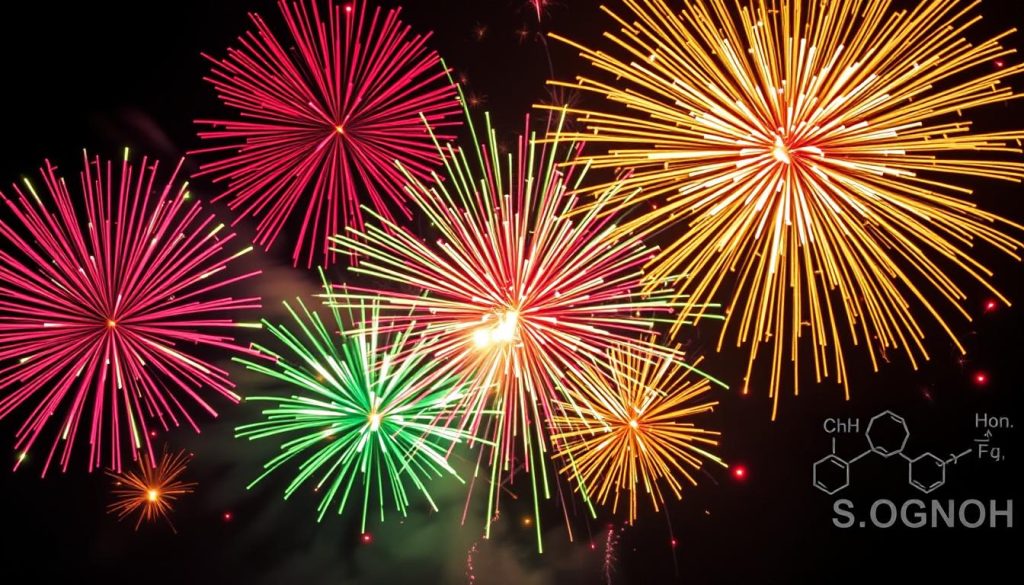
The Art of Color: Creating Vibrant Displays
Fireworks displays are a mix of science and art. Each color and pattern is made by experts. The magic happens with metal compounds and their color-making abilities.
Metal Compounds and Their Colors
Fireworks get their colors from metal salts and chemicals. Strontium salts make red, barium salts make green, and copper salts make blue. By mixing these fireworks colors, experts create stunning shows.
Temperature and Brightness Effects
The brightness of fireworks depends on pyrotechnic color chemistry. Adding aluminum or magnesium can brighten the colors. But, it might make the colors less pure. Finding the right balance is key for fireworks display technology.
Modern Color Innovations
Pyrotechnics have seen big changes in recent years. New compounds and tech have led to brighter, more varied colors. This has made fireworks displays even more amazing.
“The true beauty of a fireworks display lies not only in the brilliant colors but also in the masterful orchestration of light, sound, and movement – a true celebration of the remarkable achievements of human ingenuity.”
History of Fireworks: Fireworks in American Culture and Independence Day
Fireworks are a big part of American culture, especially on Independence Day, July 4th. They light up the sky with bright colors. This tradition started in 1777, just after the Declaration of Independence was signed.
John Adams suggested using “illuminations” for July 4th. The first big celebration in Philadelphia had fireworks. Since then, fireworks have been a key part of Independence Day, with 246.5 million pounds sold in 2022.
The link between July 4th fireworks and American fireworks traditions has grown. Independence Day celebrations feature big fireworks shows. These shows are set to patriotic music and are part of community events.
The tradition of July 4th fireworks is a big part of American fireworks traditions. It shows the American spirit of freedom and pride. From Adams’ idea to today’s shows, fireworks symbolize American independence and unity.
History of Fireworks: Evolution of Display Technologies
Fireworks have changed a lot since ancient China. The technology behind them has evolved a lot. Now, we see amazing shows thanks to new systems.
Traditional Manual Firing Methods
At first, fireworks were lit by hand. Skilled people had to set up each one carefully. It was hard work that needed great timing.
The shows were beautiful but not as complex as today’s. They didn’t have the synchronization we see now.
Computer-Controlled Systems
New systems have changed fireworks. Computers help make shows match music and lights perfectly. This makes the displays even more amazing.
Now, fireworks can be set up to make shapes and patterns. It’s a big change that makes shows more exciting.
Synchronized Shows
With computers, fireworks can be set off at the same time. This makes amazing designs in the sky. It’s a big step forward in fireworks technology and pyrotechnic innovations.
“The evolution of fireworks technology has transformed the way we experience these dazzling pyrotechnic shows.”
History of Fireworks: Safety Regulations and Environmental Considerations
Fireworks have long amazed us with their bright colors and loud sounds. But, they also come with a big responsibility for safety. In 2022, over 9,700 people went to the emergency room for fireworks injuries, with eight deaths. This shows how important fireworks safety is.
There are strict rules for using fireworks safely. The NFPA 1124 standard guides how fireworks are made, stored, and moved. Fireworks factories must use fire-resistant materials and follow rules for ventilation and explosion control. Storage buildings must keep different fireworks types apart to avoid fires.
Fireworks also affect the environment. They release almost 300 million pounds of harmful particles and carbon dioxide each year. This can make the air much worse, especially on the Fourth of July. People like children, older adults, and those with lung or heart disease are more at risk from this pollution.
- Proper handling and lighting of fireworks is vital for ensuring the safety of everyone involved.
- Celebrations with fireworks can distress animals, particularly pets and wildlife.
- Proper disposal of unused or spent fireworks is essential to prevent fire hazards.
As we love fireworks, we must keep safety and the environment in mind. By focusing on both, we can make sure fireworks stay a special part of our celebrations for years to come.
“The beauty of the fireworks is undeniable, but the risks they pose cannot be ignored. It’s our responsibility to strike a balance between enjoyment and responsible stewardship.”
History of Fireworks: Cultural Celebrations Around the World
Fireworks are a big part of cultural celebrations all over the world. They show the many traditions and customs that have grown over centuries. The Sumidagawa Fireworks Festival in Tokyo, Japan, started in 1733. The Festival of San Juan in Spain is celebrated on June 23rd. These global fireworks traditions amaze people everywhere.
In the United States, fireworks are a big part of Independence Day since 1777. They show the country’s spirit and strength. In Sydney, Australia, the New Year’s Eve fireworks are a huge event. Millions watch as Sydney welcomes the new year first.
Fireworks are also key in many other celebrations. For example, the Chinese New Year in China and the Festival of San Juan in Spain. These events use fireworks to symbolize purification and protection.
Fireworks have a deep history and a big impact on people all over. New ideas and technology keep making fireworks even more magical.
“Fireworks have the power to transport us to a world of wonder, where the night sky is transformed into a canvas of vibrant colors and dazzling displays.”
History of Fireworks: Modern Innovations in Pyrotechnic Entertainment
Fireworks have seen big changes, focusing on eco-friendly fireworks and smart technologies. These changes are making pyrotechnics better for the environment and more exciting for viewers.
Smart Technology Integration
Fireworks now use computer systems for better shows. These systems make sure everything is perfectly timed and coordinated. This has turned fireworks into amazing multimedia events.
Eco-Friendly Developments
People making fireworks are now thinking about the planet. They’re making fireworks innovations that are better for the environment. These new fireworks burn cleaner, use less harmful materials, and make less smoke.
Future Trends
New things are coming to fireworks, like laser shows and drone displays. These are quieter, don’t pollute, and are reusable. The future of fireworks is looking bright and green.
“The future of fireworks lies in finding the perfect balance between captivating visuals and environmental responsibility.”
| Fireworks Innovations | Eco-Friendly Fireworks | Future of Pyrotechnics |
|---|---|---|
| Computer-controlled systems for synchronized displays | Clean-burning propellants and reduced heavy metal usage | Laser shows and drone formations as alternatives to traditional fireworks |
| Incorporation of innovative effects and multimedia elements | Minimized smoke and particulate matter emissions | Advancements in materials science and choreography techniques for breathtaking displays |
| Precision timing and coordination for captivating performances | Prioritizing environmental sustainability in pyrotechnic design | Reusable, emission-free, and quieter experiences for audiences |
Conclusion
Fireworks have a long history, starting with the ancient Chinese discovery of gunpowder. They have evolved from simple bamboo explosions to a sophisticated art form. Today, they amaze people all over the world with their bright displays.
In America, fireworks are a big part of Independence Day celebrations. Communities come together to watch the shows. Thanks to new technology, fireworks are now safer and better for the environment, keeping their popularity high.
Fireworks bring people together, creating memories that last a lifetime. Events like Macy’s Fourth of July Fireworks in New York City are famous. But it’s the small-town celebrations that really show the true spirit of fireworks. They remind us of our love for light, color, and sound.