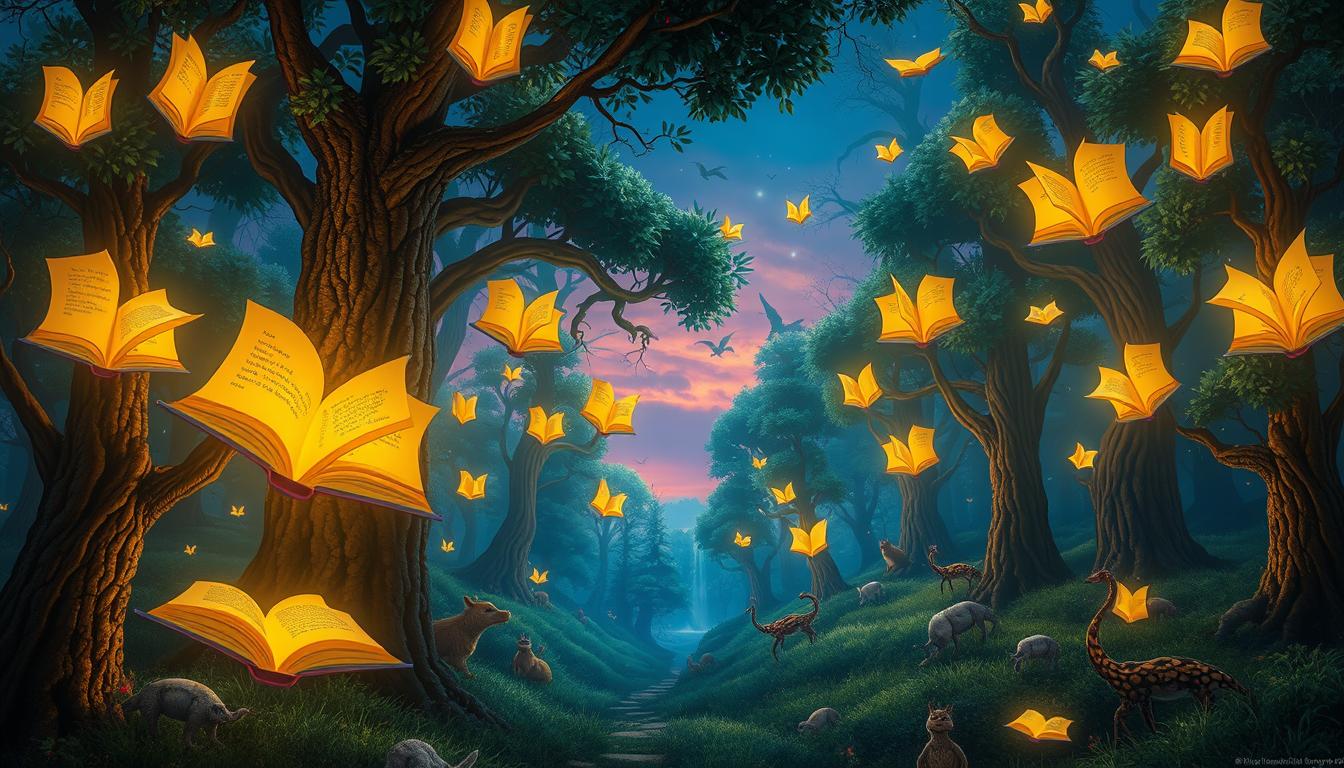
Storytelling has been a key part of human life since ancient times. It connects different parts of our lives. From cave paintings to digital media, stories help us understand the world and ourselves. Stories bring us together, help us make sense of our experiences, and help us learn and bond. The magic of storytelling is in its ability to make us feel, imagine, and connect with others.
Whether it’s a great book, a movie, or a story told aloud, stories can take us to new places. They challenge our views and help us see the world in new ways.
Our love for stories comes from wanting to connect, understand, and find meaning in life. Stories are a universal language that can reach across cultures and time. By diving into others’ stories, we grow empathy, compassion, and a deeper understanding of humanity.
Key Takeaways
- Storytelling has been a fundamental part of human existence since ancient times, shaping our understanding of the world and ourselves.
- Narratives have the power to evoke emotions, spark imagination, and foster deeper connections between individuals and communities.
- The human desire to connect, understand, and make meaning of the world is at the core of our fascination with stories.
- Stories serve as a universal language, crossing cultural and linguistic boundaries to create a shared experience.
- Immersing ourselves in stories helps develop empathy, compassion, and a deeper appreciation for the complexities of the human condition.
The Evolution of Human Storytelling Through Time
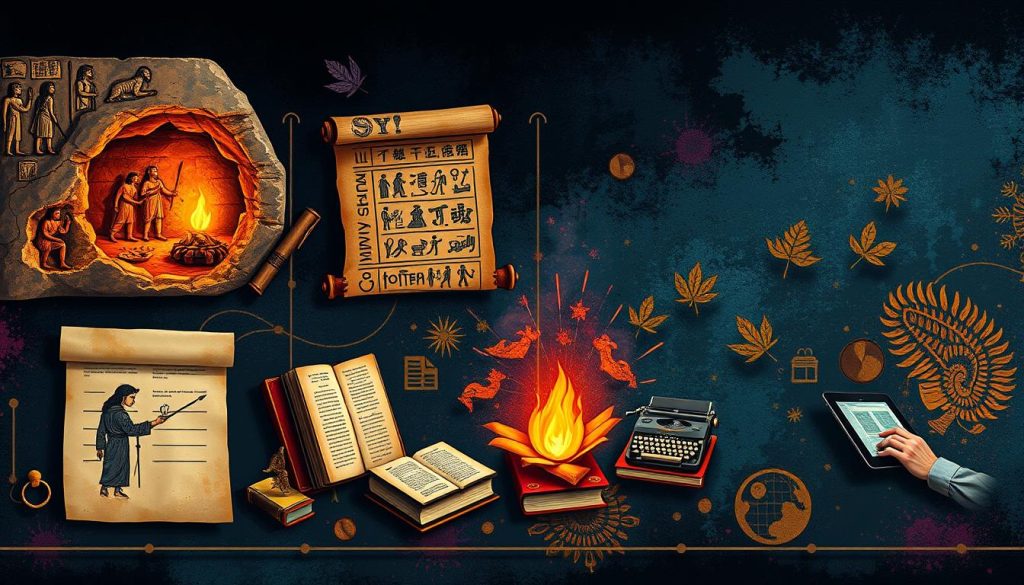
Storytelling has changed a lot over time. It started with cave paintings and now we have digital stories. This shows how human experiences have changed.
From Cave Paintings to Digital Media
Our ancestors used cave paintings to tell stories. These paintings showed their triumphs and myths. Later, writing let stories travel far and wide.
Ancient Oral Traditions and Modern Narratives
Oral stories were key too. They included epic tales and myths. The printing press made stories more accessible. Now, we have digital stories.
The Role of Fire Circles in Early Storytelling
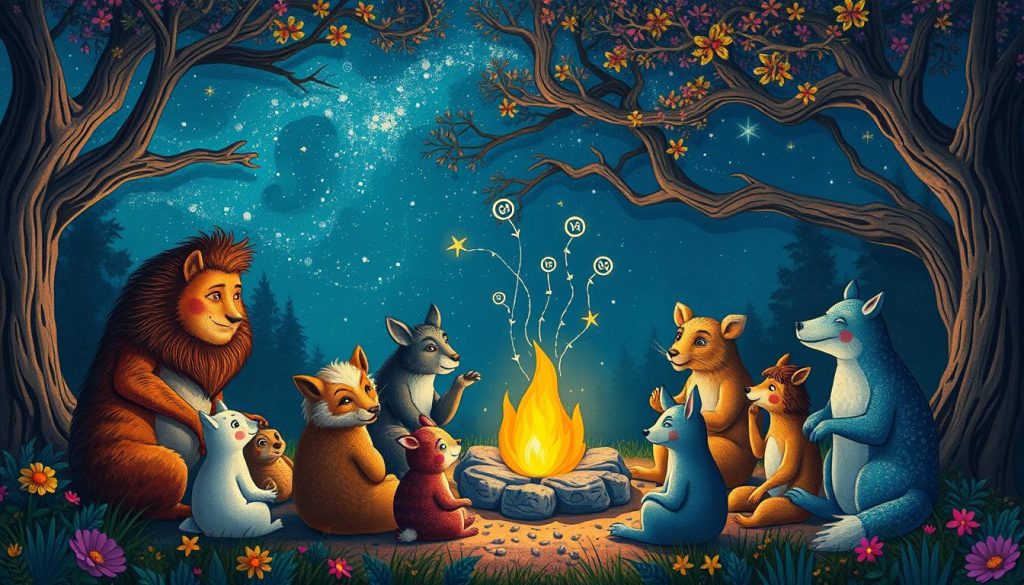
Fire circles were where stories were shared. They told of heroes and myths. These stories passed down traditions and sparked imaginations.
“The stories we tell literally make the world. If you want to change the world, you need to change your story.” – Michael Margolis
Storytelling has always been powerful. It has changed from cave paintings to digital stories. It shows our love for stories and our changing world.
Magic of Storytelling: The Science Behind Our Story-Loving Brains
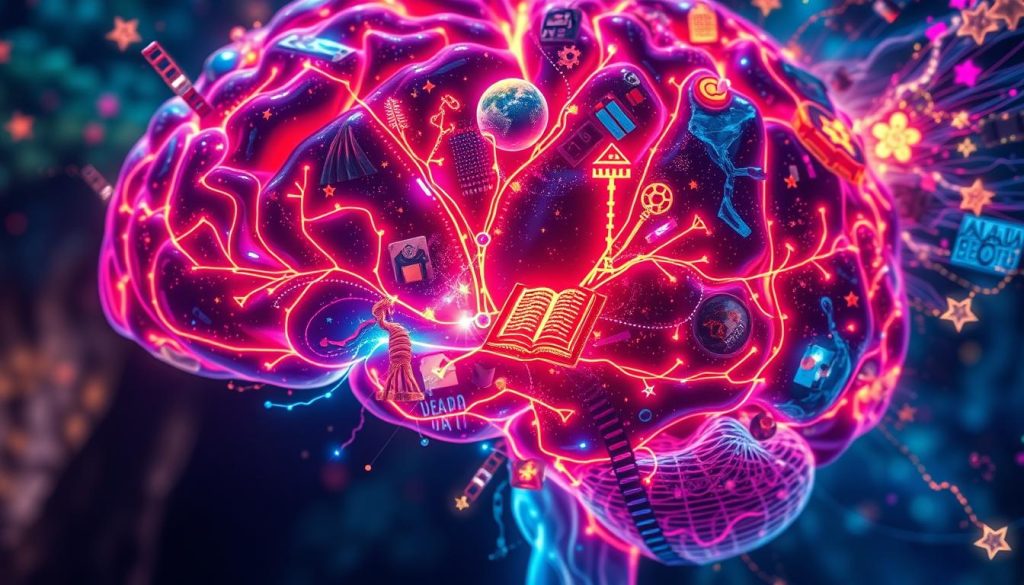
Our brains are wired to love stories. Studies show that listening to a story turns on many brain areas, not just for language. It also activates sensory, experiential, and emotional parts of our brain. This lets us live the story, feeling the emotions of characters and going on their journey.
At Princeton University, researchers found something interesting. They discovered that good stories turn on brain parts linked to experiencing the story. This includes the olfactory cortex and motor cortex. It’s like our brains think we’re the main character, pulling us into the story’s world.
When we feel empathy from a story, our brain releases oxytocin, the “bonding chemical.” This makes us feel connected and trustworthy. Also, stories with strong emotions trigger dopamine in the amygdala. This helps us process information and remember it better.
| Neurological Findings | Impact on Storytelling |
|---|---|
| Mirror neurons fire when an action is performed and when it is observed in others | Responsible for the empathetic responses people have to storytelling |
| Oxytocin release during story experiences | Leads to feelings of connection and trust between storytellers and audiences |
| Dopamine release in the amygdala during emotionally charged events in stories | Aids in information processing and memory retention |
Developmental molecular biologist John Medina says stories should only have the most important details and emotions. This keeps the audience engaged. Paul J. Zak’s research also shows that tension is key in stories. It creates a strong emotional impact between the storyteller and the audience.
The science behind our love for stories shows how powerful they are. They can captivate and connect with us, making them a key tool for branding and communication.
The Magic of Storytelling: Neural Pathways and Emotions
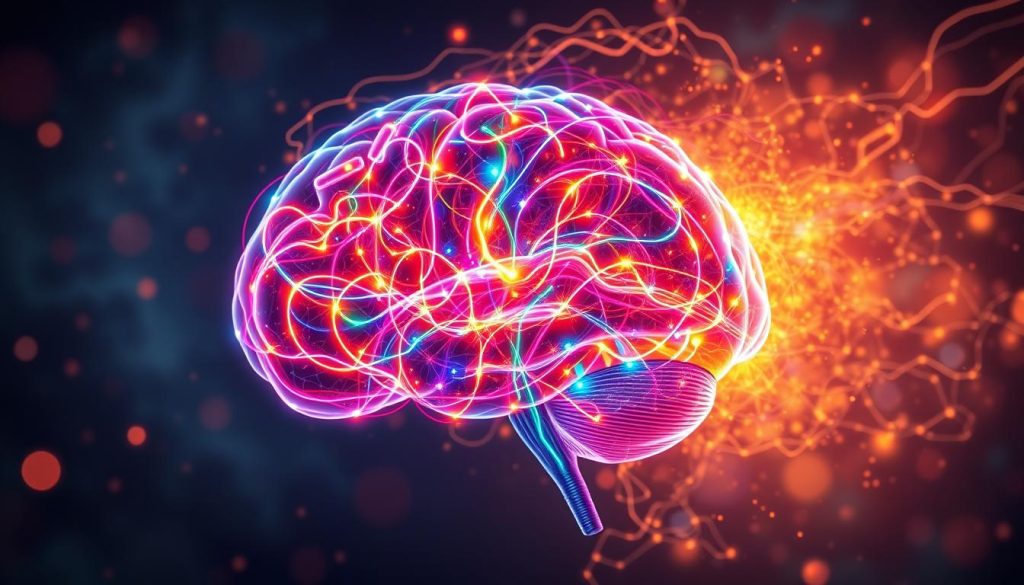
Storytelling is a powerful tool that grabs our attention and stirs our emotions. It works by connecting with our brain’s pathways, releasing chemicals that boost our emotional connection and create deep experiences.
The Release of Oxytocin and Dopamine
Engaging with a story makes our brains release oxytocin, known as the “love hormone.” This hormone increases empathy, trust, and connection, letting us feel characters’ feelings as our own. At the same time, dopamine, the “feel-good” chemical, is released during suspense, giving us a sense of reward.
How Stories Activate Multiple Brain Regions
Listening to a story fires up different parts of our brain. The sensory cortex makes us feel like we’re experiencing it ourselves. The prefrontal cortex helps us understand characters’ thoughts and actions. This connection makes us feel like we’re part of the story.
The Role of the Amygdala in Narrative Processing
The amygdala, our emotional center, gets very active during suspenseful stories. This is why we get so caught up in them. The amygdala is key in processing the emotional parts of stories, making us feel deeply connected.
Understanding how our brains respond to stories shows why we love them so much. Stories tap into our brain’s chemistry and activate various areas, creating strong emotional bonds and immersive experiences. These connections are rooted in our evolution and are essential to being human.
“Stories are the creative conversion of life itself into a more powerful, clearer, more meaningful experience. They are the currency of human contact.”
– Robert McKee
Storytelling as a Tool for Survival and Knowledge Transfer
Throughout history, storytelling strategies have been key for survival. They help share important info about food, avoiding dangers, and community values. Stories grab our attention and create strong bonds, making them great for sharing knowledge.
Ancient and modern tribes know storytelling’s value. It keeps lessons, myths, and practical tips alive. From cave paintings to oral tales, stories connect us across time, helping our species survive.
Take the Inuit of the Arctic. For ages, they’ve used stories to share hunting tips, navigation, and weather info. This way, they thrived in harsh conditions. Their stories made learning fun, helping their communities grow and adapt.
| Storytelling Strategies | Impact on Knowledge Transfer |
|---|---|
| Engaging narratives | Captures the imagination and creates emotional connections |
| Simplicity and depth | Ensures information is easily understood and retained |
| Conflict and emotion | Heightens engagement and enhances memory retention |
| Incorporation of imagery | Aids in visualizing and recalling key concepts |
Storytelling’s role in knowledge transfer is huge. It uses our love for stories to share vital info and traditions. This way, we learn from our past and grow wiser for the future.
“Storytelling is the most powerful way to put ideas into the world today.”
– Robert McKee, Screenwriter and Author
Magic of Storytelling: The Power of Emotional Connection in Narratives
Stories have a unique power to make us feel empathy and connect deeply with others. They let us see the world through different eyes, helping us understand more about life’s many experiences.
Building Empathy Through Character Development
Characters are the heart of any great story. As we follow their ups and downs, we form a strong bond with them. This bond is key to empathy, as we feel their struggles and triumphs.
Creating Lasting Emotional Impact
A story’s emotional impact can change us in lasting ways. It can shape our views and actions long after we finish reading. Research shows that feeling connected to a story can make us more open to its messages.
The Psychology of Reader Engagement
Good storytelling is more than just a plot. It’s about connecting with readers on an emotional level. By understanding what engages us, we can craft stories that truly touch our hearts.

“Stories have the power to transport us to different worlds, open our minds to new perspectives, and leave a lasting impact on our hearts and minds.”
As storytelling changes with new technologies, emotional connection becomes even more crucial. By creating stories that deeply resonate, we can change lives, inspire, and bring people closer together.
Magic of Storytelling: Cultural Identity and Storytelling Traditions
Storytelling has shaped human culture for thousands of years. It helps us understand who we are and our place in the world. From ancient oral traditions to today’s digital stories, narratives are key to our identity.
Indigenous communities have used storytelling for tens of thousands of years. It was their main way to share knowledge and culture before European settlers arrived. Losing these stories can hurt their education, self-esteem, and cultural knowledge.
“Storytelling is seen as a way to communicate struggles, triumphs of the past, and to explain one’s place within the environment.”
Oral tradition has been around since before writing existed. It has moved into the digital world, keeping its importance today. Storytelling shows our culture, spirit, and what makes us human.
In today’s fast-changing world, storytelling is still powerful. It helps us connect, celebrate our heritage, and build a more caring world. By sharing our stories, we can grow closer and appreciate our differences.
Magic of Storytelling: The Therapeutic Power of Narrative Expression
Narrative therapy has become more popular for its ability to change lives. It helps people take control of their stories, moving away from negative ones. By looking at events in a new way, they can rewrite their pasts in a positive light.
Healing Through Story Construction
Crafting compelling stories is a strong tool for personal growth. Narrative therapy lets people see their problems as separate from themselves. This way, they can find new paths and identities.
Narrative Therapy Applications
This article combines narrative therapy with gardening to help in business and personal healing. It involves four steps: removing bad stories, choosing better ones, nurturing hope, and celebrating growth.
Personal Growth Through Storytelling
Letters or poems from therapy show a person’s true stories and potential. Through narrative therapy, people can connect their actions with their sense of self. This helps them regain control and create a more meaningful life.
“Narrative therapy aims to rescue the beauty and dignity of life, emphasizing the creation of a good story.”
Magic of Storytelling: Stories as Bridges of Understanding
Captivating storytelling can take us to different worlds, helping us understand others better. Studies show that reading fiction makes us more empathetic. This empathy helps us build stronger, kinder relationships, connecting us across cultures and experiences.
Stories have a special structure that lets us see things from different viewpoints. Through characters, conflicts, and solutions, we learn to appreciate the human experience. Stories make us feel connected to others, helping us see the world in a new light.
In today’s fast-paced world, stories are more important than ever. They capture our attention and inspire us. By exploring engaging stories, we can break down barriers and connect with people from all walks of life. This way, we build a more caring and understanding world.