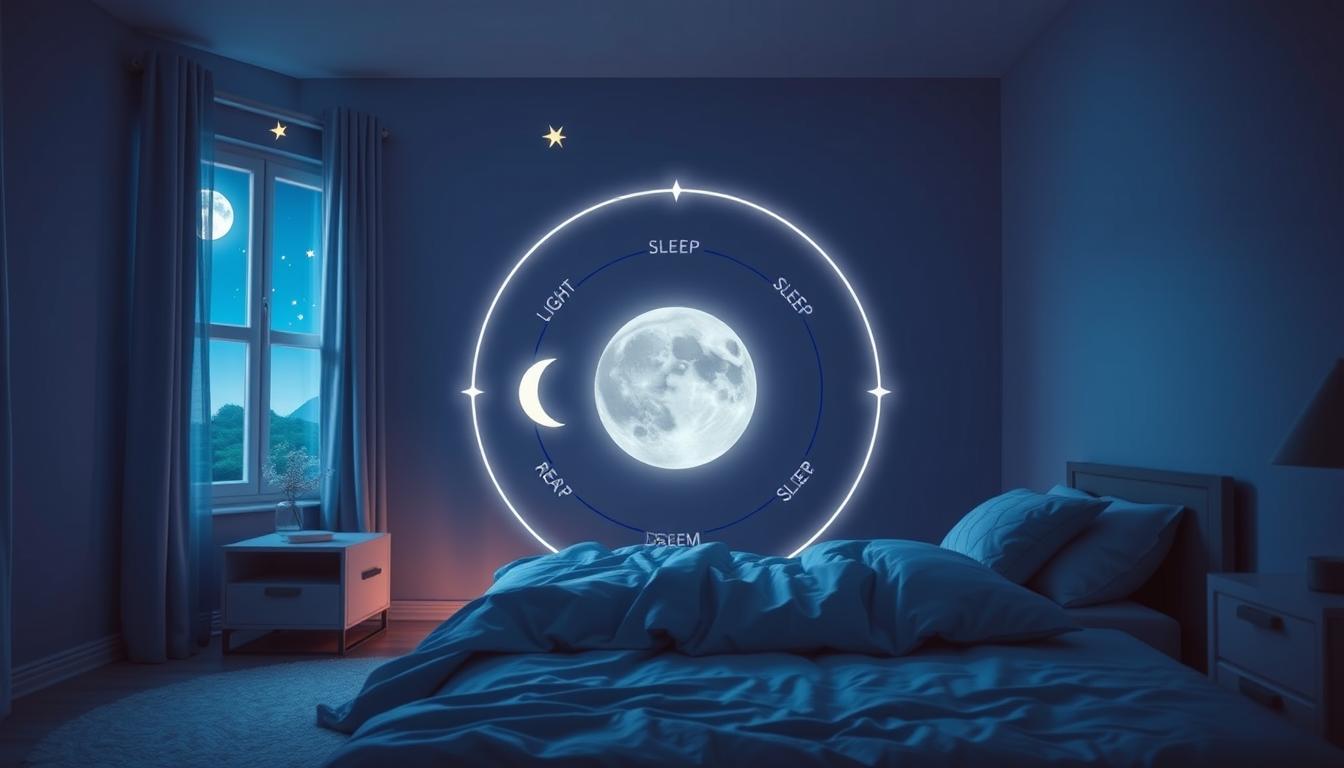
Sleep is key to our health and happiness. It helps us feel energized, keeps our immune system strong, and improves our thinking. Yet, many of us don’t get enough sleep, leading to a big problem. In this guide, we’ll explore the science of sleep. We’ll look at the different stages of sleep, why our body clocks matter, and how sleep affects our brain and health. Knowing how sleep works helps us find ways to sleep better and feel our best.
Key Takeaways
- Sleep is essential for overall health, affecting energy levels, immune function, and cognitive processes.
- Quality sleep helps boost energy and supports memory consolidation.
- Adults need at least seven hours of sleep per night, but more than one-third of Americans get less than the recommended amount.
- Sleep debt, or sleep deficit, can accumulate quickly and increase the risk of various health issues.
- Understanding the science of sleep is crucial for developing effective strategies to optimize sleep quality and duration.
Understanding Sleep Architecture
Sleep is a complex process with different stages, each with its own role. To understand sleep, we must explore the sleep stages, sleep cycles, and brain wave patterns.
The Four Stages of Sleep
The sleep cycle has four main stages: three non-REM stages and one REM stage. These stages are important for memory, thinking, and physical repair.
- Stage 1 (N1): This stage lasts from one to seven minutes. It’s the start of sleep.
- Stage 2 (N2): This stage lasts 10 to 25 minutes. It’s the first real sleep stage.
- Stage 3 (N3): Known as deep sleep, it’s vital for recovery and memory. It lasts longer than the first two stages.
- REM Stage: This stage lasts from 10 to 60 minutes. It’s key for memory and learning, making up 25% of adult sleep.
Sleep Cycles and Their Duration
A sleep cycle lasts about 90 minutes. The first cycle can be shorter, and the rest last between 90 and 120 minutes. People go through four to six cycles a night. The mix of stages changes with age, sleep history, and alcohol use.
Brain Wave Patterns During Sleep
Different stages of sleep show different brain wave patterns. Deep sleep has slower waves, while REM sleep has faster waves and eye movements. Knowing these patterns helps us understand how sleep affects our minds and bodies.

Science of Sleep: The Biological Clock and Circadian Rhythms
Our bodies have internal timekeepers called circadian rhythms. These 24-hour cycles control our sleep, hormone release, body temperature, and thinking. The biological clock is mainly influenced by light and darkness.
The master clock is in the suprachiasmatic nucleus (SCN) of the brain. It’s very sensitive to light. This helps our internal rhythms match the day-night cycle.
Melatonin, made by the pineal gland, helps us sleep. When it’s dark, melatonin levels go up. This tells our body it’s time to sleep. When it’s light, melatonin goes down, making us feel awake.
Things like jet lag or working at night can mess with our rhythms. This can lead to sleep issues, poor thinking, and health problems. It might even increase the risk of some diseases.

To keep our rhythms in check, we need regular sleep and natural light. Knowing how our internal clocks work helps us sleep better, be more productive, and stay healthy.
The Science of Sleep: Brain Chemistry and Hormones
Sleep is a complex process controlled by brain chemistry and hormones. Knowing how these elements work is key to understanding good sleep and rest.
The Role of Melatonin
Melatonin, called the “sleep hormone,” helps control our body’s clock. As the sun sets, our pineal gland makes more melatonin. This tells our body it’s time to sleep. Melatonin peaks in the morning, helping us start our sleep cycle.
Neurotransmitters in Sleep Regulation
Neurotransmitters like GABA, acetylcholine, orexin, and serotonin are crucial for sleep and wakefulness. GABA relaxes muscles and calms the brain in Stage 2 sleep. Acetylcholine helps with visual processing in REM sleep. Dopamine, histamine, and norepinephrine keep us awake.
The Impact of Adenosine
Adenosine builds up in the brain when we’re awake, making us tired. As it increases, it tells our body it’s time to sleep. This helps us drift into a restful state.
The balance between sleep hormones and neurotransmitters is vital for good sleep regulation. Problems in this balance can lead to sleep issues. So, it’s important to grasp the science behind sleep.

“The brain consumes about one-third of a person’s energy while they are asleep.”
Sleep-Wake Homeostasis Explained in Science of Sleep
Sleep-wake homeostasis is how our body builds up a need to sleep. This need grows stronger the longer we stay awake. Things like stress, hunger, caffeine, or light from screens can affect this need.
Our brain manages this process through complex signals. These signals make our body react in specific ways.
As we stay awake longer, we feel more tired. This is called the sleep drive. When we sleep, this drive goes down, making us feel more awake. The balance between sleep drive and circadian rhythms helps us sleep right.
But, things can go wrong. Artificial light at night can mess with our sleep hormones. This can make it hard to fall or stay asleep. Age, stress, and lifestyle can also affect our sleep.

- Maintaining a consistent sleep schedule, even on weekends
- Limiting exposure to blue light from electronic devices before bedtime
- Engaging in regular physical activity during the day
- Avoiding large meals, caffeine, and alcohol close to bedtime
- Creating a comfortable, dark, and quiet sleep environment
Understanding sleep-wake homeostasis helps us sleep better. Healthy sleep habits improve our health and well-being.
Science of Sleep: The Role of Brain Structures in Sleep
Sleep is a complex process that involves many brain structures working together. These structures help control our sleep-wake cycles. This ensures we get enough rest for our bodies and minds.
Hypothalamus and Sleep Control
The hypothalamus is a small but important part of the brain. It has the suprachiasmatic nucleus, our internal clock. This area gets light information and helps set our sleep-wake cycle.
Function of the Pineal Gland
The pineal gland, also known as the “third eye,” is key in sleep control. It makes melatonin, a hormone that helps us sleep. When it gets dark, the gland makes more melatonin, telling our body it’s time to sleep.
Brainstem’s Role in Sleep Regulation
The brainstem connects the cerebrum to the spinal cord. It has parts that help us switch between being awake and sleeping. It’s especially important for REM sleep.
These brain parts work together to help us sleep well. By understanding how they work, we can value sleep more. We can also make changes to improve our sleep health.
Science of Sleep: REM Sleep and Dreaming
Sleep is a complex process with different stages. REM (Rapid Eye Movement) sleep is fascinating because it’s linked to dreaming. It happens about 90 minutes after falling asleep, with rapid eye movements and brain activity.
During REM sleep, the brain is very active. This is when most vivid dreams happen. Dreams can occur in all sleep stages, but REM sleep dreams are the most intense.
As people get older, they spend less time in REM sleep. This can affect their thinking and emotions. Stress or anxiety can make dreams more intense and scary, as the brain tries to process these feelings.
The link between REM sleep and dreaming is intriguing. Researchers are still trying to understand how dreams are made. Studies show that certain brain areas, like the amygdala and hippocampus, play a big role in dream vividness.
Learning about REM sleep and dreaming helps us understand our minds and bodies better. It shows how important a good night’s sleep is for us.
Understanding Sleep Debt and Recovery in Science of Sleep
Sleep debt is the gap between how much sleep you need and how much you get. It can build up fast and harm your health. But, you can pay off sleep debt with the right strategies.
Calculating Your Sleep Debt
To figure out your sleep debt, track your sleep for a week. Find out your nightly average and compare it to 7-9 hours for adults. The gap is your sleep debt. For instance, if you sleep 6 hours a night, you owe 1-3 hours of sleep each day.
Recovery Timeline
Recovering from sleep debt takes time. It might take up to four days to get back from losing one hour of sleep. Paying off a long-term sleep debt can take even longer, up to nine days. Be patient and keep at it to pay off your sleep debt.
Long-term Effects of Sleep Deprivation
Long-term sleep deprivation can harm you a lot. It raises the risk of diabetes, hypertension, heart disease, and stroke. It can also cause obesity, weaken your immune system, and lead to depression and anxiety. It’s vital to make sleep a priority for your health.
| Metric | Impact of Sleep Debt |
|---|---|
| Cognitive Function | Decline in decision-making, focus, and mental control |
| Physical Performance | Increased risk of injury and impaired recovery |
| Chronic Diseases | Higher likelihood of developing conditions like diabetes, heart disease, and obesity |
It’s key to tackle sleep debt and adopt healthy sleep habits. Knowing about sleep debt and recovery helps you take steps to rest well. This is essential for your physical and mental health.
Science of Sleep: Optimal Sleep Duration Across Age Groups
The amount of sleep we need changes with age. From newborns to older adults, sleep needs range from 7 hours to 19 hours daily. Knowing these needs is key for staying healthy and feeling good throughout life.
Newborns (0-3 months) sleep the most, needing 14-17 hours a day. Infants (4-12 months) need 12-16 hours. Toddlers (1-2 years) and preschoolers (3-5 years) need 11-14 and 10-13 hours, respectively. School-age children (6-12 years) need 9-12 hours, and teenagers (13-17 years) should aim for 8-10 hours.
Adults need at least 7 hours of sleep each night. Most adults need 7-9 hours. As we get older, our sleep patterns and needs can change, with older adults often needing less sleep.
Following these sleep guidelines is important for staying healthy and sharp. It helps with physical and mental health, improves thinking, and supports aging well. By focusing on quality sleep and good sleep habits, we can enjoy many benefits.
| Age Group | Recommended Sleep Duration |
|---|---|
| Newborns (0-3 months) | 14-17 hours |
| Infants (4-12 months) | 12-16 hours |
| Toddlers (1-2 years) | 11-14 hours |
| Preschoolers (3-5 years) | 10-13 hours |
| School-age children (6-12 years) | 9-12 hours |
| Teenagers (13-17 years) | 8-10 hours |
| Adults (18+ years) | At least 7 hours |
These are general guidelines, and sleep needs can vary. Health, activity levels, and personal preferences also play a role. Talking to a healthcare provider can help find the right sleep amount for each person.
“Proper sleep is essential for physical and mental well-being, and understanding age-specific sleep needs can help individuals of all ages achieve the rest they require for optimal health and productivity.”
Creating the Perfect Sleep Environment in Science of Sleep
Making your bedroom the perfect place for sleep is key to feeling good. It’s all about the right temperature, keeping it dark, and quiet. Every little thing in your bedroom helps you sleep better.
Experts say the best bedroom temperature is about 65 degrees Fahrenheit. Even a bit of light can mess with your heart and body, so it’s important to sleep in the dark. A white noise machine can help you stay asleep, especially in loud places. Plus, using scents like lavender and peppermint can make your room smell fresh and help you sleep better.
Going to bed and waking up at the same time every day is good for your sleep. The color of your room can also affect how you feel. Warm colors can make you feel more energetic, while cool colors help you relax. Keeping your room tidy can also make you feel better when you wake up.
- Keep the bedroom at an ideal temperature of 65 degrees Fahrenheit (18.3 degrees Celsius)
- Minimize light exposure by using room-darkening curtains or blinds
- Incorporate a white noise machine to block out disruptive sounds
- Use calming essential oils like lavender and peppermint to create a relaxing atmosphere
- Maintain a consistent sleep schedule by going to bed and waking up at the same time every day
- Choose a bedroom color that promotes relaxation, such as cool tones like blue or green
- Keep the bedroom organized and decluttered to enhance a sense of calm
By making your sleep environment the best it can be, you create a place for quality sleep quality. A well-designed bedroom can help you stay healthy, focused, and feel your best.
Sleep Hygiene Best Practices
Good sleep hygiene can greatly improve your sleep quality. A consistent bedtime routine is key. Activities like reading, warm baths, or light stretching help signal it’s time to sleep.
Bedtime Routines
Stick to a regular sleep schedule. Go to bed and wake up at the same times every day. This helps your body’s internal clock.
Before bed, spend 30-60 minutes on calming activities. Avoid bright lights and electronic devices. This helps your body make melatonin, the sleep hormone.
Dietary Considerations
What you eat before bed affects your sleep. Avoid caffeine, large meals, and alcohol close to bedtime. They can disrupt your sleep.
Stay hydrated and eat light, non-spicy foods in the evening. This supports better sleep.
Exercise and Sleep Quality
Daytime exercise can improve sleep at night. But, avoid vigorous exercise before bed. It can keep you awake.
Instead, do 30 minutes of moderate exercise like a brisk walk or light yoga. This helps you sleep better.