Laughter is a universal way to show joy and amusement. It’s interesting to note that people laugh 30 times more when with others than alone. In psychology of humor this shows laughter’s key role in connecting and bonding with others.
Laughter involves many physical responses. It releases endorphins, relaxes the body, and uses facial muscles and the lungs. Even blind and deaf babies, and some animals like rats, laugh when tickled.
For centuries, people have been curious about why we laugh. There are many theories, from ancient ideas of superiority and relief to modern views on humor and laughter. These theories keep giving us new insights into why we find things funny.
Key Takeaways
- Laughter is a universal nonverbal expression of joy and amusement, often occurring in social settings.
- Laughter involves the release of endorphins and physiological responses like muscle engagement and respiratory changes.
- Theories of humor range from ancient concepts of superiority, relief, and incongruity to modern neurological and evolutionary explanations.
- The social aspect of laughter suggests it plays a crucial role in human interaction and bonding.
- Laughter has been studied extensively, with implications for mental and physical health, as well as social dynamics.
Psychology of Humor: Understanding the Universal Language of Laughter
Laughter is a powerful force that goes beyond words and cultures. Adults laugh about 15 times a day, and smile a bit more, around 20 times. It’s a natural way to show joy, amusement, and connection.
The Biological Basis of Laughter
Science shows laughter’s deep impact on our bodies. It makes us feel good by releasing endorphins. Laughter also makes our muscles relax and boosts our immune system.
Cultural Universality of Laughter
Laughter connects us all, no matter where we are. It brings people together, from New York to Africa. It’s a way to share joy and create bonds.
Early Development of Laughter in Humans
Infants start laughing before they can talk. It shows laughter is part of our nature. As we grow, laughter helps us understand and connect with others.
Laughter is a key to understanding us better. It helps us connect, feel good, and enjoy life’s moments.
The Psychology of Humor: From Ancient Theories to Modern Understanding
For centuries, people have been interested in why we laugh. Ancient thinkers like Plato believed laughter came from seeing others fail. Later, Sigmund Freud thought it was a way to let out hidden feelings.
Immanuel Kant said humor comes from unexpected surprises. Today, we see humor as a way to connect, relax, and share feelings. It makes our relationships stronger and happier.
Different places have their own ways of finding humor. In Britain, it’s often sarcastic. In America, it’s more about silly antics. Japan loves puns and wordplay. Our sense of humor is shaped by where we grow up and our personalities.
In our busy lives, humor is a welcome break. It connects us and brings joy, even when things are tough. Laughter releases happy chemicals in our brains, helping us feel better and less stressed.

The study of humor is still exciting today. It helps us understand ourselves and each other better. By looking at all the ways people find humor, we can appreciate laughter’s power in our lives.
Psychology of Humor: The Neuroscience Behind Laughter
Laughter is a complex process in our brains. It involves many brain areas and chemical processes. By studying the neural correlates of humor, we learn how we laugh and why.
Brain Regions Involved in Humor Processing
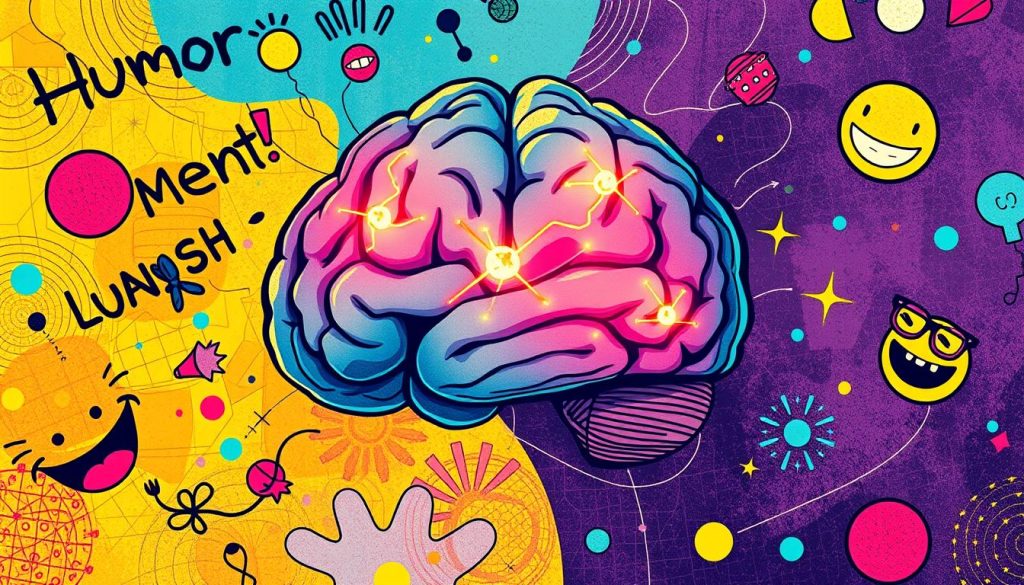
Laughter uses different parts of the brain. The frontal lobe helps us decide and control our actions. The motor cortex makes us laugh out loud. The hypothalamus, parietal operculum, amygdala, and right cerebellum help us feel tickled and amused.
Neural Pathways of Laughter
Studies show that laughter makes neurons fire together. This creates the feeling of being silly and amused. This firing is key to our experience of humor.
Role of Endorphins and Other Neurotransmitters
Laughter also releases endorphins, which make us feel good. Other chemicals like dopamine and serotonin are involved too. They show how our brain, emotions, and humor are connected.
| Statistic | Findings |
|---|---|
| Children used to laugh hundreds of times a day, but as adults, laughter becomes less frequent. | This suggests that the natural tendency to laugh frequently diminishes as we age, potentially due to the increasing demands and stress of adulthood. |
| Laughter relaxes the whole body, leaving muscles relaxed for up to 45 minutes after a hearty laugh. | Laughter has a therapeutic effect on the body, reducing tension and promoting a state of relaxation even after the laughter has subsided. |
| Laughing for 10 to 15 minutes a day can burn approximately 40 calories, potentially aiding in weight loss. | Laughter can be a simple and enjoyable way to contribute to overall health and wellness, including potential weight management benefits. |
Laughter is a fascinating topic in humor research methods. It helps us understand how we experience humor and laughter. By knowing how laughter works, we can see its big impact on our health and happiness.
Social Bonds and Laughter: Why We Laugh in Groups
Laughter is key in social bonding. People laugh much more when they’re with others than when they’re alone. This shows that laughter in social contexts helps us connect and build stronger relationships.
Even canned laughter can make us find things funny, showing how social our laughter is. Laughter signals our wish to connect and engage with others. It makes us seem more friendly, polite, and skilled to our friends.
The link between humor and relationships is deep and complex. Laughter brings people together and helps keep relationships strong. Sharing laughs helps us form deeper bonds, build trust, and improve our social interactions.
“Laughter is the shortest distance between two people.” – Victor Borge
For example, the loud laughter of schoolboys during a dull lecture shows their pent-up frustration. This shows how our laughter is tied to our emotions and social feelings.
Researchers have found different kinds of laughter, each with its own social role. These can express joy, reassurance, or even dominance. This shows how laughter is a powerful tool for communication and connection.
In summary, laughter is more than just a response to humor. It’s a deeply social act that helps us connect, strengthen relationships, and communicate effectively with others.
Psychology of Humor: Types of Laughter: From Genuine Joy to Nervous Giggles
Laughter is more than just a sign of joy. It shows many emotions, not just happiness. Studies have found many humor styles and individual differences in laughter. Also, cross-cultural perspectives on humor show how laughter varies worldwide.
Spontaneous vs. Forced Laughter
Laughter can be either natural or forced. Natural laughter comes from real joy. Forced laughter is used to ease social situations or hide discomfort. Research shows our brains react differently to each type, with natural laughter feeling more rewarding.
Context-Dependent Laughter Responses
Laughter’s meaning changes based on the situation. It can be a response to humor or a way to deal with anxiety or pain. For example, nervous laughter helps in awkward moments, while laughter during grief can ease emotional stress.
Cultural Variations in Laughter Expression
Laughter is not the same everywhere. Cross-cultural perspectives on humor highlight big differences. Some cultures value calm, while others enjoy loud laughter. These differences greatly affect how people see and react to humor.
Psychology of Humor: The Evolutionary Purpose of Humor and Laughter
Laughter is seen as a universal language, crossing cultural lines and acting as a strong tool for connecting with others. But why do we find humor so appealing? New theories suggest laughter is key to our well-being and building strong social bonds.
The theories of laughter show that humor and laughter are essential for forming connections. When we laugh, we share our feelings, like joy or relief, with others. This act of humor and well-being strengthens our relationships and makes us feel part of a group.
Moreover, research shows laughter can also help us establish social order. Leaders often laugh in a way that shows they’re in charge. This ability to use humor to show status might have helped our ancestors thrive.
“Laughter is the closest distance between two people.” – Victor Borge
Laughter’s role goes beyond just social ties. It can also affect our bodies, releasing feel-good hormones and making us less sensitive to pain. This humor and well-being link might have helped our ancestors deal with tough times and stay resilient.
As we delve deeper into the theories of laughter and applications of humor research, it’s clear that humor is vital for humans. It helps us bond, navigate social structures, and even boosts our health. Laughter has been a cornerstone in our evolution, playing a key role in our survival and success.

Psychology of Humor: Health Benefits of Laughter
Laughter is more than just a fun way to connect with others. It has many health benefits. It can reduce stress, boost the immune system, and even help with mental health. Plus, it makes social connections stronger.
Physical Health Improvements
Laughter is good for your body. It can lower the risk of heart disease. People who laugh often are less likely to get heart disease.
Laughter also helps your immune system. It increases cells that fight off infections and makes T cells work better.
Mental Health Benefits
Laughter is great for your mind too. It can help people sleep better and feel less depressed. It also helps with anxiety and boosts self-esteem and social skills.
Stress Reduction and Immune System Boost
Laughter is a natural stress-reliever. It lowers cortisol levels and releases happy hormones like endorphins and dopamine. This helps manage stress and strengthens your immune system.
Adding humor to therapy can really help patients. It improves their health and well-being. Laughter is a powerful tool for a better life and stronger social bonds.

Psychology of Humor: Cross-Cultural Perspectives on Humor
Humor is seen and used differently around the world. In the West, humor has been valued for centuries. But in Eastern cultures, like those influenced by Confucianism, humor is not as highly regarded.
Studies show that Westerners often use humor to deal with tough emotions. On the other hand, some Eastern cultures might see too much humor as a sign of being shallow.
Researchers use many ways to study humor across cultures. For example, a study in Pakistan looked at how people there use humor. It found that humor is big in daily life, with a love for sarcasm and irony.
Humor research has many uses, from psychology to marketing. It helps us talk better across cultures and even solve problems by reducing stress. But, using humor in different cultures can be tricky. What’s funny in one place might not be in another, leading to misunderstandings.