Art therapy is a powerful tool for healing from trauma. It uses creative expression to help people deal with their traumatic experiences. This approach helps individuals find mental health, self-discovery, and emotional strength.
Trauma can deeply affect a person’s mental health. Talk therapies are helpful but may not work for everyone. Art therapy fills this gap by letting people express their feelings through art.
Art therapy is special because it deals with trauma in a way that feels real. It lets people face and heal from their emotional wounds. This method helps people regain control and express themselves in a meaningful way.
Key Takeaways
- Art therapy offers a non-verbal approach to trauma healing, allowing individuals to express and process their experiences through creative expression.
- The visual and tangible nature of creative therapy reflects the sensory-based nature of traumatic memories, providing a safe and supportive space for healing.
- Art therapy has been shown to be effective in reducing trauma-related symptoms, enhancing self-awareness, and fostering emotional resilience.
- Creative expression can serve as a coping mechanism for managing triggers and promoting emotional regulation in the aftermath of a traumatic event.
- Incorporating art therapy into trauma recovery programs can lead to a significant improvement in psychological well-being and overall mental health outcomes.
Understanding Trauma and Its Impact on Mental Health
Trauma is a deeply distressing or disturbing experience. It can have lasting effects on mental health. About 80% of people worldwide face at least one shocking event in their lifetime. Around 10% develop Post-Traumatic Stress Disorder (PTSD) as a result.
PTSD symptoms include re-experiencing the traumatic event, avoiding reminders, and heightened arousal. These symptoms can greatly impair daily functioning and well-being.
Types of Trauma Responses and PTSD
Trauma can manifest in various ways, with individuals responding differently. Common trauma responses include:
- Hyperarousal: Feelings of heightened alertness, irritability, and difficulty sleeping
- Avoidance: Actively avoiding people, places, or activities that may trigger memories of the traumatic event
- Re-experiencing: Intrusive thoughts, flashbacks, or nightmares related to the trauma
The Psychological Effects of Unresolved Trauma
Unresolved trauma can deeply affect mental health. It can lead to depression, anxiety, and emotional regulation issues. Childhood trauma can have long-lasting effects.
It can lead to relationship problems, substance abuse, and even physical health concerns like heart disease and obesity.
Common Challenges in Traditional Trauma Treatment
Traditional trauma interventions like Cognitive-Behavioral Therapy (CBT), Narrative Exposure Therapy (NET), and Eye Movement Desensitization and Reprocessing (EMDR) are effective. Yet, over one-third of patients do not benefit from these approaches.
This is especially true for those with severe trauma, poor verbal memory, or difficulties talking about their experiences. This has led to a growing interest in alternative therapies, such as mental health art, to address the unique needs of trauma survivors.
Art Therapy: A Non-Verbal Approach to Healing
Art therapy is a unique way to deal with trauma. It uses the expressive arts to help people express their feelings and memories. This method is safe and supportive, mirroring the sensory nature of traumatic experiences.
Art therapy is great for those who find it hard to talk about their feelings. It lets people create art to feel more in control and boost their self-esteem. These are key steps in healing.
“Art therapy allows individuals to explore and express emotions that may be difficult to put into words. The creative process can be a powerful tool for self-discovery and emotional release.”
In cities like Austin, Texas, art therapy is becoming more popular. Austin’s creative scene is growing, offering both formal and community creative therapy sessions. Studies show it can help with anxiety, depression, and PTSD, making it a valuable way to process trauma.

Through painting, drawing, sculpting, or digital art, the therapeutic arts tackle trauma’s complex challenges. Art therapy unlocks the human mind’s creative potential. It’s a powerful, empowering way to heal through non-verbal therapy and expressive arts.
The Science Behind Art Therapy and Trauma Recovery
Art therapy is gaining attention for its deep impact on trauma recovery. It can stimulate the brain, improving problem-solving and emotional processing. Making art also releases dopamine, which can make you feel better, more energetic, and focused.
Neurobiological Benefits of Creative Expression
Studies show art therapy is effective in treating trauma. A study in the Journal of Traumatic Stress found it helped veterans with PTSD. Another study in Art Therapy showed it reduced depression and anxiety in women who had been abused.
How Art Making Affects Brain Chemistry
Creating art changes brain chemistry in big ways. Research in PLOS One found it boosts brain connections, leading to better thinking and feeling. The American Art Therapy Association also notes it helps people express themselves without words, leading to relaxation and healthier coping.
Research-Based Evidence Supporting Art Therapy
Research backs up art therapy’s role in trauma treatment. A study in Art Therapy found it helped with depression and anxiety in abuse survivors. The American Art Therapy Association also highlights its benefits in boosting self-esteem and processing traumatic memories.
“Art therapy provides a non-verbal means of communication and expression, promotes relaxation and stress reduction, enhances self-esteem and self-awareness, facilitates the processing of traumatic memories, and develops healthy coping skills and problem-solving abilities.”
– American Art Therapy Association
Core Principles of Trauma-Focused Art Therapy
Trauma-Focused Art Therapy (TFAT) uses art to help people heal from trauma. It’s based on the idea that art can express feelings and experiences in a unique way. This approach has several key principles that help guide the healing process.
First, TFAT creates a safe space for people to express themselves. Trauma-informed therapists work hard to build trust and safety. This lets clients share their stories without fear of judgment. This safety is essential for using art to express trauma.
TFAT also helps people discover themselves and their experiences. Art therapy lets clients explore and understand their trauma. This can lead to a deeper understanding of themselves and how they cope. This self-discovery is a big step towards healing.
Another important part of TFAT is integrating traumatic experiences. Through art, clients can represent their trauma. This helps them deal with fragmented memories and emotions. This integration is a key part of the healing process in TFAT.
The core principles of TFAT show a deep understanding of trauma. By using art, therapists help clients express themselves and recover from trauma. This empowers individuals to reclaim their sense of self.
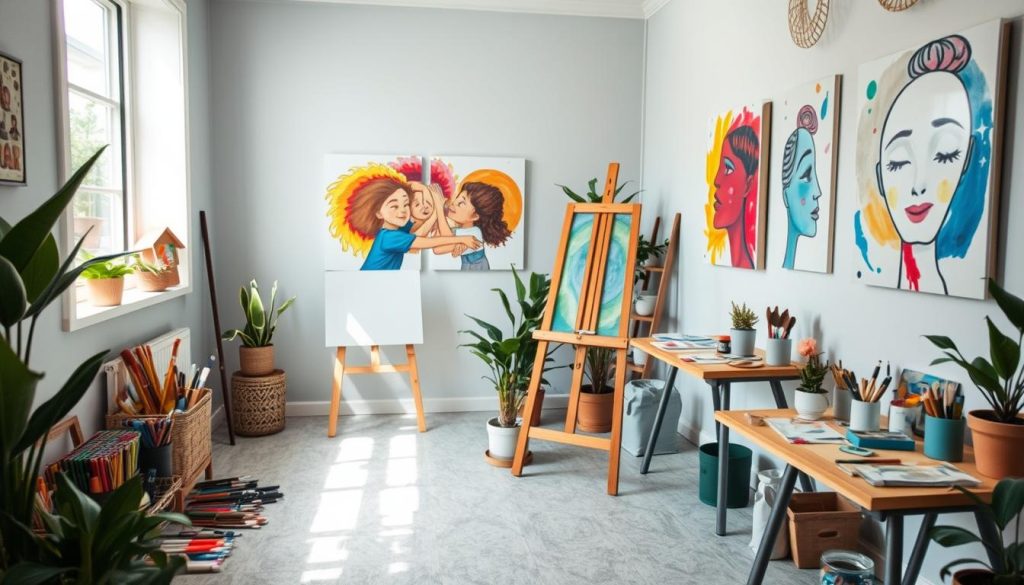
“The creation of art allows individuals to express the inexpressible and integrate the fragmented parts of their experiences into a cohesive whole.”
The Three-Phase Approach to Trauma Treatment Through Art
Trauma treatment through art therapy has a three-phase approach. It helps people deal with the harm caused by traumatic events. This method includes building safety, processing memories, and moving forward.
Stabilization and Safety Building
The first step is about feeling safe and in control. People might make a safe space or a safety doll. These activities help them learn to cope and soothe themselves.
Processing Traumatic Memories
The second phase is about dealing with traumatic memories through art. Clients use drawing, painting, or sculpting to explore their trauma. This helps them put together fragmented memories and lessen the trauma’s impact.
Integration and Moving Forward
The last phase is about integrating and reconnecting with life. Art therapy might involve creating advocacy art or exploring archetypes. This stage helps people regain their sense of self and look forward to a hopeful future.
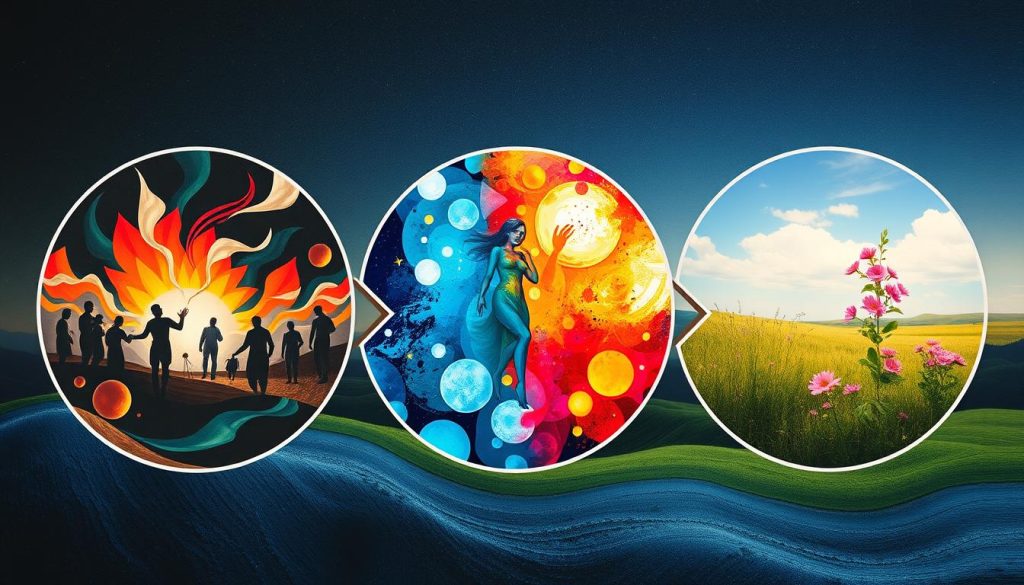
The three-phase approach to trauma treatment through art is a detailed and proven method. It addresses safety, memory processing, and integration. This holistic approach supports the individual’s path to recovery and growth.
Therapeutic Art Techniques for Trauma Processing
Healing from trauma is a personal and transformative journey. Art therapy is a powerful tool in this process. It helps individuals confront and overcome traumatic experiences through creative expression.
Drawing or painting traumatic memories is a key technique. It allows individuals to externalize their turmoil, gaining control and perspective. Creating a trauma timeline through art helps organize and understand traumatic events.
Altering images to gain new perspectives is another effective technique. It challenges ingrained perceptions and fosters a sense of agency. Developing symbols of strength and resilience through art reminds individuals of their growth and healing capacity.
The Check Protocol, developed by Hass-Cohen, is a structured approach to art therapy for trauma processing. It involves five art interventions to promote coping, control, and mastery:
- Collaborative mural creation to foster connection and support
- Clay sculpting to explore trauma-related emotions
- Breath drawings to regulate breathing and emotions
- Sensory boxes to engage the senses and promote grounding
- Collage making to integrate disparate experiences and emotions
Art therapists select and implement these techniques based on individual needs. Creative expression offers a safe and transformative pathway to confront and overcome trauma.
“Art therapy has been recognized as an effective tool for emotional expression and healing in recovery for substance abuse patients.”
Research supports the integration of art techniques into trauma-focused therapy. Studies show art therapy reduces PTSD symptoms in veterans and alleviates depression and anxiety in survivors of domestic violence. Creative activities also improve brain function and emotional regulation.
Embracing art’s therapeutic power unlocks new avenues for self-expression and growth. It aids in the journey towards healing and resilience.
The Role of the Art Therapist in Trauma Recovery
Art therapists are key in helping people heal from trauma. They create a safe space where trust grows. This space is crucial for sharing feelings that are hard to say out loud.
Creating a Safe Therapeutic Environment
Art therapists make a secure place for their clients. They know how important feeling safe is for those who have been through trauma. They use art to help clients feel in control again.
Building Trust and Therapeutic Alliance
The bond between the art therapist and client is very important. Art therapists build trust with their clients. This trust lets clients open up through art.
Art therapists guide clients through art-making. They help understand the deeper meanings in the artwork. This helps in healing from trauma. They also help manage emotions during sessions.
“Art therapy recognizes the symbolic nature of art, allowing for a deeper exploration of emotions and meanings beyond verbal expression.”
The art therapist’s role is complex but centered on creating a safe space. This space is where trauma survivors can start to heal. Art therapy and the bond between therapist and client are essential in this journey.
Measuring Progress and Treatment Outcomes
Measuring how well art therapy works for trauma recovery is complex. It uses both numbers and words. Tools like the Beck Depression Inventory-II and the Post-Traumatic Stress Disorder Checklist-5 give us numbers. Words from artwork and interviews with patients and therapists add more depth.
Seeing how art therapy helps can be done in many ways. We look at how art changes, if symptoms lessen, and if emotions get better. These signs show how art therapy can really change lives for the better.
“There is roughly 80 years’ worth of anecdotal evidence and case studies showing that art therapy is helpful on an individual basis.”
Research is growing, showing art therapy works for many people. It looks at how making art changes our brains and bodies. This research supports using creative therapy to help heal from trauma.
Art therapists use a detailed way to measure success. This helps them see how powerful art therapy is. It makes a strong case for using it more in treating trauma.
Benefits of Creative Expression in Trauma Healing
Creative expression is key in healing from trauma. Art therapy gives a way to express feelings without words. It helps survivors see their experiences in a new light.
Emotional Release and Regulation
Creating art is a powerful way for trauma survivors to release emotions. It’s a safe way to show feelings that are hard to say out loud. Research shows art therapy can cut PTSD symptoms by 30%.
Art-making also helps calm and ground people. As they continue, they learn to handle their feelings better.
Building Self-Esteem and Resilience
Art therapy boosts self-esteem and resilience. Creating art, no matter the skill, makes people feel accomplished. It builds confidence in expressing oneself.
Studies found 85% of survivors felt less anxious and depressed after art therapy. This boost in self-worth helps them face trauma recovery challenges.
“Expressive arts therapy promotes healing by allowing individuals to express themselves through various art forms like drawing, painting, music, dance, and writing.”
Art Therapy vs Traditional Trauma Interventions
Art therapy has special benefits for dealing with trauma, unlike traditional methods like Cognitive-Behavioral Therapy (CBT) or Eye Movement Desensitization and Reprocessing (EMDR). Traditional therapies focus on talking, but art therapy lets people express feelings without words. This is great for those who find it hard to talk about their experiences.
Art therapy might feel less scary and more fun for some people. This could help them stick to their treatment plan better. But, it’s usually used along with other therapies, not on its own. The right choice depends on what each person needs and prefers, and the type of trauma they face.
- Art therapy combines the creative process with therapeutic techniques, involving activities like drawing, painting, sculpting, or collage-making.
- Art therapy is beneficial for individuals who find it challenging to express their feelings with words, offering a non-verbal form of expression.
- Traditional psychotherapy, such as CBT or Acceptance Commitment Therapy (ACT), relies on verbal communication for therapy sessions.
- Both art therapy and traditional psychotherapy can be tailored to individual needs, depending on personal preferences, needs, and comfort levels.
The American Art Therapy Association says art therapy helps with personal and relational goals, as well as community issues. But, therapists who use art in their work might not have the right skills to help clients fully.
“Art therapy is about the process of making art and is accessible to all levels of ability, focusing on self-discovery and working through past traumas, emotions, and memories with the assistance of an art therapist.”
Traditional psychotherapy, like CBT, has proven methods for certain mental health problems. But art therapy takes a more complete approach, touching on emotional, cognitive, and physical health. It’s especially good for dealing with trauma because it lets people work through their feelings without talking about them.
Conclusion
Art therapy is a powerful tool for dealing with trauma. It gives people a way to express themselves without words. This creative outlet helps them process their emotions.
Studies show that art-making can change the brain in positive ways. Trained art therapists use this knowledge to help people heal. This shows art therapy’s potential in trauma recovery.
Art therapy is becoming more popular in clinics and schools. It helps people with anxiety, depression, and PTSD. It’s a creative way to treat trauma, especially for those who don’t connect with talk therapies.
More research is needed to fully understand art therapy’s benefits. But, the evidence so far is promising. It helps people regain their sense of self and build resilience.
As art therapy grows, it will play a bigger role in mental health. It’s a non-verbal approach that can help people heal from trauma. It’s a powerful tool for addressing the complex effects of trauma.