
Procrastination is more than just being lazy. So what is psychology of procrastination? It’s a mix of thoughts, feelings, and actions that affect our lives. It can mess with our school work, jobs, and even our mental health.
About 75% of college students say they procrastinate a lot. This shows how common it is, especially among young people. Knowing why we put things off is key to stopping it.
It’s not just about not managing time well or lacking willpower. Often, it’s about controlling our feelings and decisions when faced with tasks. It’s a big emotional challenge.
Exploring why we procrastinate can help us find ways to stop. This journey will give us the tools to manage our time better. We’ll learn to be more productive and reach our goals.
Key Takeaways
- Procrastination is a complex psychological phenomenon, not just a matter of laziness.
- Nearly 75% of college students admit to being chronic procrastinators.
- Procrastination is often an emotional regulation problem, not just a time management issue.
- Understanding the underlying causes is crucial for developing effective strategies to overcome procrastination.
- Addressing procrastination can lead to improved academic, professional, and mental health outcomes.
Psychology of Procrastination: The Science Behind Delaying
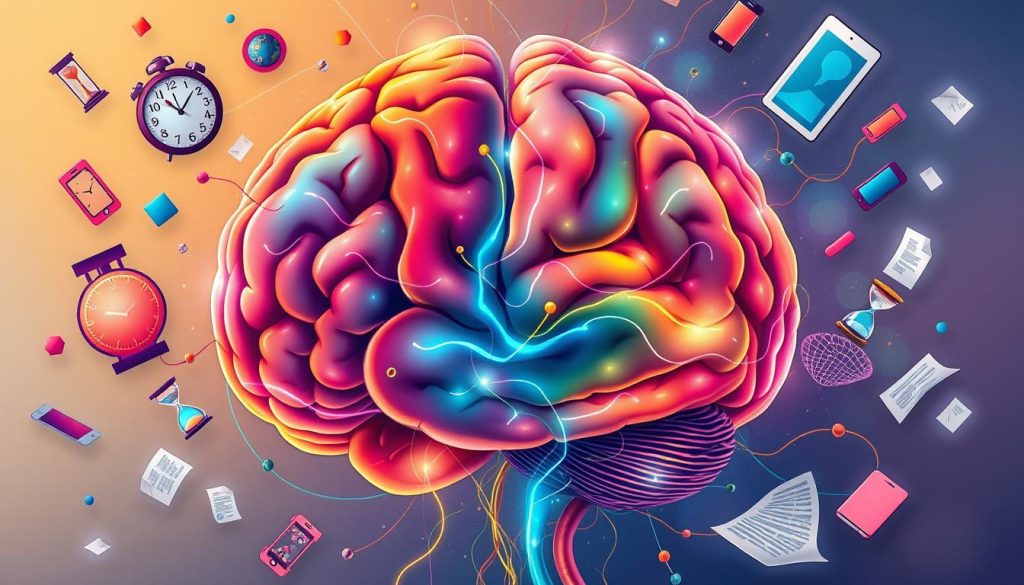
Procrastination is a common habit that affects almost everyone. It has deep roots in psychology. Studies in neuroscience have uncovered how the limbic system and the prefrontal cortex interact to cause this behavior.
Understanding the Limbic System vs. Prefrontal Cortex
Procrastination comes from a battle between the limbic system and the prefrontal cortex. The limbic system is all about quick, emotional reactions. On the other hand, the prefrontal cortex deals with making smart, long-term plans. This clash can make us choose short-term fun over long-term goals.
The Role of Present Bias in Decision Making
Present bias, or temporal discounting, is a big part of procrastination. It’s hard for us to see the future effects of our actions. So, we often choose immediate rewards over waiting for later benefits.
Emotional Regulation and Task Avoidance
Emotions also play a big role in why we put things off. We might delay tasks to avoid feelings like anxiety or boredom. This can start a cycle where avoiding tasks makes us feel worse, leading to more procrastination.
| Statistic | Percentage |
|---|---|
| University students who admit to procrastinating | 80-95% |
| Procrastinators with lower overall grades | Higher than non-procrastinators |
| Procrastinators with higher stress levels and more instances of illness | Significantly higher |
“Procrastinators often report feelings like guilt, dread, shame, and anxiety.”
Learning about the neuroscience of procrastination helps us understand why we delay tasks. It shows how the limbic system, prefrontal cortex, present bias, and emotional regulation all play a part. This knowledge can help us tackle this tough habit.
Common Types of Procrastinators and Their Behaviors
Procrastination affects many, with 20% of U.S. adults identified as procrastinators in a 2010 study. Today, technology and social media might make this number even higher. Researchers have found different types of procrastinators, each with their own reasons for delaying tasks.
The Perfectionist procrastinator wants everything to be perfect. They delay tasks because they fear not meeting their high standards. On the other hand, the Dreamer procrastinator gets lost in big ideas but doesn’t take action to make them happen.
The Worrier procrastinator is overwhelmed by anxiety and fear. They avoid tasks because of these feelings. The Crisis-Maker procrastinator, however, works best under pressure and delays until the last minute. The Defier procrastinator wants to be independent and often makes promises they can’t keep.
The Overdoer procrastinator takes on too much and delays due to overcommitting. Knowing these types and their behaviors helps in finding ways to overcome procrastination.
| Procrastinator Type | Behavioral Patterns | Reasons for Delaying |
|---|---|---|
| Perfectionist | Extremely detail-oriented, avoid making mistakes | Fear of not meeting high expectations |
| Dreamer | Focus on big ideas, lack concrete action plans | Preoccupation with fantasies, lacking practical steps |
| Worrier | Consumed by anxiety and negative thinking | Fear of change and taking risks |
| Crisis-Maker | Thrive under pressure, delay tasks until the last minute | Intentionally or unintentionally create chaos |
| Defier | Make promises but lack follow-through, offer excuses | Desire to assert independence and resist authority |
| Overdoer | Take on too much, struggle with prioritization | Unrealistic expectations and poor time management |
Procrastination can lead to anxiety, depression, low self-esteem, and stress. But, it’s a behavior that can be changed. By understanding the reasons and finding effective strategies, anyone can overcome procrastination.

The Impact of Mental Health on Procrastination Habits
Procrastination affects many people, from students to workers and retirees. Research shows it’s a battle between emotions and rational thinking. Mental health issues can make it hard to start tasks and resist delay.
Depression and Task Avoidance
Depression often leads to procrastination. It makes simple tasks seem too hard, causing people to avoid them. This cycle can make feelings of guilt and low self-worth worse.
ADHD and Time Management Struggles
ADHD makes it hard to manage time and stay focused. People with ADHD find it tough to plan and do tasks, leading to delays and missed deadlines.
OCD and Perfectionism-Related Delays
OCD can also cause procrastination, especially for those who are perfectionists. The fear of not meeting high standards can stop people from starting or finishing tasks.
Procrastination isn’t a mental illness itself. But it can be a sign of other mental health issues. Understanding how mental health affects procrastination is key to finding ways to overcome it and improve well-being.

Psychology of Procrastination: Breaking Down the Fear of Failure and Perfectionism
Procrastination often comes from deep fears and high expectations. The fear of failure and the need for perfection are big reasons. These fears can stop people from starting tasks, fearing they won’t meet their or others’ high standards.
A 2017 study in Personality and Individual Differences shows that procrastination happens when people feel they can’t do something. This feeling of not being good enough can make people avoid challenges. This avoidance makes the fear worse, starting a cycle.
Perfectionism also leads to procrastination. When people set too high standards, tasks seem too hard. Psychotherapy and Cognitive Behavioral Therapy (CBT) help overcome these fears.
Being kind to oneself is key to overcoming these fears. People often criticize themselves more than others. Getting advice from trusted people can offer a fresh view. Small wins can also help people see themselves and challenges in a new light, focusing on progress.
“The pursuit of perfection often impedes progress.” – George Bernard Shaw
By aiming for steady improvement, not perfection, people can move past these fears. Reflecting on oneself and getting help from experts like therapists can tackle these procrastination causes.

Psychology of Procrastination: Understanding Cognitive Distortions in Time Management
Procrastination often comes from how we see time and work. Our minds can play tricks, making us think we have more time than we do. This can lead to not starting tasks on time and rushing to finish them.
Overestimation of Available Time
We often think we have more time than we really do. This is called the “planning fallacy.” It makes us delay and then rush to meet deadlines.
Misconceptions About Motivation
People who procrastinate often think they’ll be more motivated later. They believe they’ll start when they feel like it or when they’re in the right mood. This thinking stops them from starting tasks now.
False Beliefs About Productivity
Another problem is thinking we need perfect conditions to work well. We might think we need a clean space or the right music. This thinking can stop us from starting tasks until everything is just right.
It’s important to know and fight these thinking traps. By understanding these biases, we can manage our time better and stop procrastinating. We can start tasks now, not when we feel like it later.

| Cognitive Distortion | Description | Impact on Procrastination |
|---|---|---|
| Overestimation of Available Time | The tendency to underestimate the time required for a task and overestimate the time available to complete it. | Leads to chronic delays and last-minute rushes to meet deadlines. |
| Misconceptions About Motivation | The belief that one will feel more motivated or inspired to work on a task in the future, rather than starting in the present. | Prevents individuals from taking immediate action, leading to procrastination. |
| False Beliefs About Productivity | The conviction that productivity requires the “perfect” conditions or environment, such as a spotless workspace or a specific time of day. | Paralyzes individuals, causing them to delay tasks until the “perfect” moment arrives. |
The Role of Environment and External Triggers
Our environment and external factors greatly affect procrastination. Distractions like social media, TV, or a messy workspace make it easy to delay tasks. These factors and external triggers play a big role in our procrastination habits.
Distractions are a major cause of procrastination. Things like phone notifications or the urge to watch Netflix can distract us. It’s important to find and reduce these procrastination cues to stay productive.
| Environmental Factor | Impact on Procrastination |
|---|---|
| Cluttered workspace | Increases visual distractions and feelings of being overwhelmed |
| Noise and background chatter | Disrupts concentration and makes it harder to focus on tasks |
| Easy access to social media and entertainment | Provides constant temptation to engage in non-productive activities |
| Lack of natural light and poor lighting | Can contribute to fatigue and decreased motivation |
By understanding these environmental factors and external triggers, we can improve our workspace and routine. This helps us avoid distractions and stay focused on our tasks.
Psychology of Procrastination: Effective Strategies for Overcoming Procrastination
Procrastination can be a big challenge, but there are ways to beat it. Techniques like the Pomodoro Technique, task chunking, and implementation intentions can help. They make your work easier and stop you from putting things off.
The Pomodoro Technique
The Pomodoro Technique is a way to manage your time. You work in focused 25-minute blocks, then take short breaks. It helps you stay focused and avoid distractions. Studies say it can make you up to 30% more productive if you struggle with procrastination.
Task Chunking Methods
Breaking big tasks into smaller steps is a great way to fight procrastination. This makes big projects seem less scary and lets you make steady progress. Research shows task chunking can cut procrastination by up to 40% in offices, helping you focus on important tasks.
Implementation Intentions
Creating plans for when and how you’ll do a task is called implementation intentions. It makes tasks seem more real and doable. Studies show it can boost motivation by 25% in those who struggle with procrastination, helping you see success and stay positive.
| Anti-Procrastination Technique | Effectiveness |
|---|---|
| Pomodoro Technique | Up to 30% increase in productivity |
| Task Chunking | Up to 40% reduction in procrastination |
| Implementation Intentions | 25% increase in motivation levels |
Using these anti-procrastination techniques can help you take back your time and boost your productivity. Remember, small steps and steady effort can really help you overcome procrastination.
Psychology of Procrastination: Building Self-Discipline and Positive Habits
Beating procrastination means learning self-discipline and good habits. Start by making schedules and setting clear goal-setting goals. Break tasks into smaller steps and track your progress to stay motivated.
It’s also key to practice self-discipline and self-compassion. When you face a tough task, think positively. Remember, setbacks are normal. Being mindful helps you stay focused and avoid distractions.
Creating productivity routines is another great strategy. Morning and evening habits, like prioritizing or relaxing, help control your time. A structured environment keeps you focused on your goals.
“The secret of getting ahead is getting started. The secret of getting started is breaking your complex overwhelming tasks into small manageable tasks, and then starting on the first one.” – Mark Twain
Building self-discipline and good habits is a journey. It takes time, patience, and learning from mistakes. Celebrate small wins to stay motivated and focused on your goals.
- Set SMART (Specific, Measurable, Achievable, Relevant, Time-bound) goals to track progress and build momentum.
- Implement Eisenhower Matrix to prioritize tasks based on urgency and importance, avoiding decision fatigue.
- Establish morning and evening productivity routines to maintain focus and control over your time.
- Practice self-compassion and mindfulness to stay resilient and overcome setbacks.
- Utilize tools and apps to assist with habit formation and time management.
By building self-discipline and good habits, you can overcome procrastination and reach your success goals.
Psychology of Procrastination: The Long-Term Effects of Chronic Procrastination
Chronic procrastination can have serious effects that last long after the task is done. Almost 75% of college students say they procrastinate a lot. This habit can affect many parts of their lives.
One big problem is increased stress and anxiety. Putting off tasks leads to last-minute rushes, causing more stress and worry. This can harm their mental health and how well they do things.
Another big issue is how it affects school or work. Delaying important work can mean lower quality and missed chances. It can even risk their career or school goals. This can make them feel frustrated and worried about money.
It can also hurt personal relationships. Neglecting duties can cause misunderstandings and fights with loved ones. Feeling guilty and ashamed can make things worse.
It’s important to tackle chronic procrastination to avoid these problems. Using strategies like breaking tasks into smaller steps and setting achievable deadlines can help. This can improve mental health, success in school or work, and better relationships.
“Procrastination is the thief of time, and the cause of much unhappiness.”
– Charles Dickens
Conclusion
Overcoming procrastination is a journey that needs self-awareness, effort, and patience. Understanding why we procrastinate helps us tackle it. By knowing our personal triggers and using effective strategies, we can fight procrastination.
This fight leads to better productivity, less stress, and more happiness in life. The first step is to know ourselves better and manage our time well. Techniques like the Pomodoro Technique and task chunking help us stay focused.
Also, dealing with mental health issues like depression or ADHD is crucial. It helps us manage procrastination better. In the end, beating procrastination is a long-term effort that needs a complete approach.
This approach includes changing our behavior, using therapy, and having a supportive circle. By focusing on overcoming procrastination, productivity improvement, and self-awareness, we can reach our goals. This way, we can live a better life.