
Creating a marketing strategy is key to growing your business. It helps nurture customers and boosts your bottom line. It’s vital for using the latest trends like short-form video and social media marketing.
To see real results, mix new trends with proven strategies. A good strategy involves research, setting goals, and aligning your team. It also means targeting the right audience and building your brand’s identity.
Maximizing ROI and checking your strategy’s performance are also important. This way, you can make sure your marketing efforts are effective.
Key Takeaways
- A comprehensive marketing strategy is essential for business success and growth.
- Research, goal-setting, and positioning are key components of an effective marketing strategy.
- Leveraging digital marketing channels, content marketing, and data analytics can drive impactful results.
- Aligning marketing tactics with your business objectives is crucial for maximizing ROI.
- Regularly refining your marketing strategy based on customer feedback and market changes is important for long-term growth.
What is a Marketing Strategy?
A marketing strategy is a detailed plan for promoting a brand and its products. It involves research, setting goals, and positioning. It includes brand objectives, target audience, marketing channels, and KPIs. A good marketing strategy guides, targets the right audience, builds brand identity, and maximizes ROI.
Understanding the Concept and Its Importance
A marketing strategy is vital in today’s fast-paced marketing world. Companies with a strategy are 313% more likely to succeed than those without (CoSchedule survey). An effective strategy focuses on the 7 Ps: product, price, promotion, place, people, packaging, and process.
There are many marketing strategies, like content marketing, SEO, and social media. The best strategies involve different teams for a unified brand message.
Knowing your target audience is key to a successful marketing strategy. This means understanding market size, trends, competitors, and customer behavior. Setting clear business objectives is also essential.
Nearly 90% of small businesses invest in marketing. Email marketing gets $42 for every dollar spent, and direct mail offers a 29% return. 31% of Baby Boomers prefer direct mail, while 92% of businesses use social media for marketing.
Content marketing is used by 82% of marketing teams. It’s seen as crucial by 40% of teams. Paid advertising boosts brand awareness for 33% of marketers.

Components of an Effective Marketing Strategy
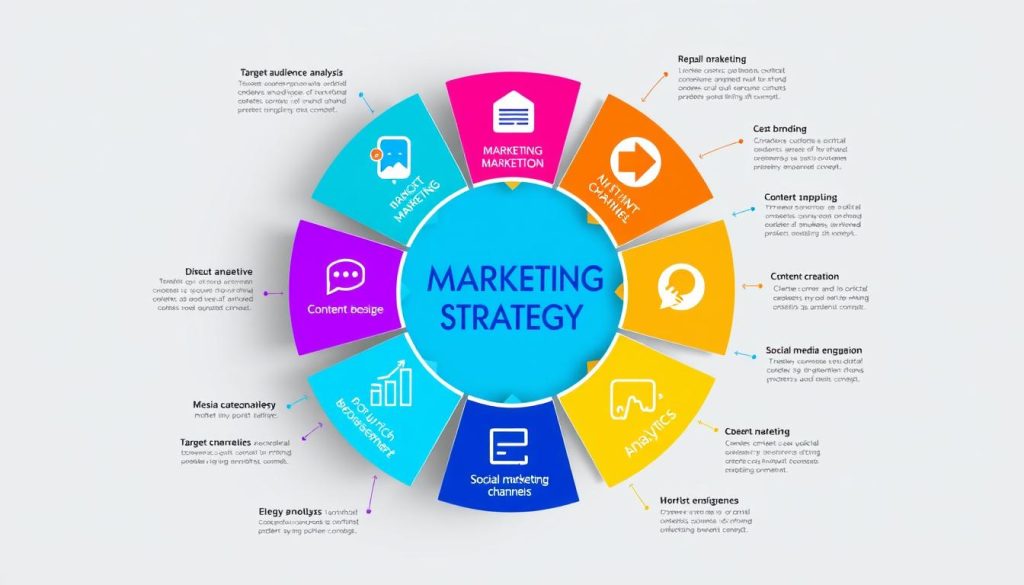
Creating a winning marketing strategy needs a mix of key parts. At its heart, the marketing mix sets up the “4 Ps” – product, price, place, and promotion. It’s also vital to have clear marketing objectives that match your business goals. This makes sure your marketing is focused and can be measured.
Having the right marketing budget is key. It lets you invest in talent, software, ads, and content creation to draw in and keep your audience. A deep competitive analysis gives you insights into the market. It helps you stand out from the competition.
Segmentation, targeting, and positioning (STP) are crucial. They help you find, reach, and place your brand right for your perfect customer. Using data, you can make your marketing fit exactly what your audience wants.
Lastly, setting up the right metrics and key performance indicators (KPIs) lets you see how well your strategy is working. This way, you can always improve your marketing for better results.
Key Elements to Include
- Marketing mix (4 Ps): product, price, place, promotion
- Marketing objectives: specific, measurable, achievable, relevant, time-bound
- Marketing budget: allocation for talent, software, advertising, content creation
- Competitive analysis: industry trends, market positioning
- Segmentation, targeting, positioning (STP): identifying, reaching, and positioning your brand
- Content creation: leveraging emerging trends to maximize visibility and engagement
- Metrics and KPIs: measuring and optimizing your marketing strategy
“Content marketing is a strategic marketing approach focused on creating and distributing valuable, relevant, and consistent content to attract and retain a clearly defined audience — and, ultimately, to drive profitable customer action.”
By combining these essential parts, you can build a strong marketing strategy. This strategy will help your business grow and succeed.
Defining Your Target Audience
Creating a good marketing plan starts with knowing your audience well. By doing deep market research and making detailed buyer personas, you can make your messages and marketing fit them best. This way, you can really connect with them.
Segmentation helps you group your potential customers into smaller groups. This makes it easier to create campaigns that speak directly to them. You learn about their demographics, behaviors, problems, and likes.
- Statista shows that 18% of TikTok users are women aged 18-24. But only 8.9% of Facebook users are in this group. This shows how different TikTok and Facebook are in demographics.
- The 2023 Social Index ReportTM by Sprout found that 21% of people follow brands because they share their values. This shows how important it is to have values that match your audience’s.
- Market research is key to finding out what your target audience wants and needs. It helps you know who to aim your marketing at.
Business intelligence and customer feedback can help you get even more specific about your audience. Social listening lets you see what people are saying about your brand. This helps you understand their feelings and what they like, so you can talk to them better.
| Demographic Factor | Influence on Consumer Behavior |
|---|---|
| Age | Significantly influences product preferences and purchasing habits |
| Gender | Plays a crucial role in shaping consumer behavior and brand loyalty |
| Income | Determines spending power and influences purchasing decisions |
By using data and research, businesses can really get to know their target audience, customer segmentation, and buyer personas. This is the base of a strong marketing strategy.

Competitive Analysis and Market Research
Doing a deep dive into your competitors and market is key for a strong marketing plan. Knowing your industry, rivals, and new trends helps you stand out. This way, you can make your brand a success.
Gaining Insights into Your Industry
By comparing yourself to others, you learn what you’re good at and what you’re not. A SWOT analysis gives you a deeper look at what’s inside and outside your control. This knowledge helps you make smart choices, use your resources well, and beat the competition.
| Reason for Competitive Analysis | Benefit |
|---|---|
| Identify differentiators | Set your brand apart from the competition |
| Find competitors’ strengths | Learn from their successful strategies |
| Set benchmarks for success | Measure your progress against industry leaders |
| Get closer to the target audience | Understand customer preferences and pain points |
Market research is more than just comparing what you offer. It’s about looking at the big picture to plan your sales and marketing. This helps you stay ahead of the game.
- Identify and categorize all competitors
- Determine each competitor’s market position
- Extensively benchmark key competitors
Neglecting category disruptors or industry redefiners can impact market share significantly.
Successful businesses use competitor analysis to stay ahead and improve customer service based on insights. Regular competitive analysis helps understand what customers want, what they’re worried about, and what opportunities there are.

Knowing who your competitors are is crucial for a competitive edge. Tools like customer surveys and online research help find them. Marketing research helps understand how competitor brands shape the market.
Developing a marketing strategy
Creating a good marketing strategy is key to business success. It starts with strategic planning and tactical execution. First, set clear, measurable marketing goals that match your business aims.
After setting your goals, decide on the best marketing tactics and channels to reach your audience. Think about your budget, resources, and expected ROI.
Plan well by mixing different marketing parts like content creation, digital marketing, and customer engagement. This makes a strong strategy. Stay flexible and keep improving your plan based on results and market changes.
According to a survey by CoSchedule in 2022, marketers who documented their marketing strategy were 331 percent more likely to report success compared to those who didn’t document their strategy.
Creating a marketing strategy needs several steps:
- Set clear, measurable marketing goals that match your business aims.
- Do deep market research to know your audience, trends, and competitors.
- Pick the best marketing tactics and channels for your audience.
- Use your resources and budget for your marketing plan.
- Make a detailed marketing plan with activities, timelines, and roles.
- Keep checking, improving, and adjusting your strategy with new data and market shifts.
By being strategic and data-focused, you can make a solid plan. This plan will help your business grow and stay ahead of the competition.

| Marketing Strategy Component | Description |
|---|---|
| Value Proposition | The unique value your product or service offers to customers |
| Target Audience | The specific group of consumers you aim to reach and serve |
| Competitive Advantage | The factors that differentiate your offerings from competitors |
| Marketing Tactics | The specific actions and channels used to reach and engage your target audience |
| Key Performance Indicators (KPIs) | The measurable metrics used to track the success of your marketing efforts |
Aligning Marketing Tactics with Goals
Creating a good marketing strategy is more than picking the right tactics. It’s about matching those tactics with your business goals. By choosing the right marketing methods and channels, you can make your marketing work better and get real results.
Choosing the Right Approach
To align marketing tactics with goals, look at the return on investment (ROI) for each tactic. You need to see how each marketing method can help you meet your goals. This could be boosting brand awareness, driving sales, or keeping customers loyal.
A good marketing plan mixes digital marketing, content creation, social media, and traditional ads. The aim is to have a strategy that uses the best of marketing tactics to reach your marketing goals.
| Marketing Tactic | Potential Impact on Marketing Goals | Estimated ROI |
|---|---|---|
| Social Media Advertising | Increased brand awareness, lead generation | $5 for every $1 spent |
| Email Marketing | Customer retention, cross-selling opportunities | $38 for every $1 spent |
| Content Marketing | Thought leadership, website traffic, lead nurturing | $3 for every $1 spent |
| Search Engine Optimization (SEO) | Organic traffic, lead generation | $2 for every $1 spent |
By matching your marketing tactics with your marketing goals, you can make a strong plan. This plan will make the most of your marketing mix and give you a good return on investment.
“Effective marketing is not about the size of your budget, but the size of your thinking.” – David Ogilvy
Leveraging Digital Marketing Channels
In today’s fast-changing world, using digital marketing channels is key to reaching your audience. Sites like social media, email, search engines, and video are great for growing your brand. They help drive traffic and build strong customer connections.
Creating a solid digital marketing strategy is crucial. It should include search engine optimization, pay-per-click advertising, content marketing, and influencer partnerships. This way, you can reach more people and build a stronger brand. Always check how your marketing is doing and make changes as needed to stay ahead.
Recent stats show that 56% of consumers read at least 4 reviews before buying. Companies lose $18 billion a year because of shopping cart abandonment. Using paid media can help you reach more people and get more sales. Email marketing is also very effective for boosting sales.
It’s important to focus on the channels where your audience is most active. A/B tests can help you see which website elements work best. To succeed in digital marketing, you need to do technical work like building pages and creating catchy CTAs.
| Digital Marketing Channel | Key Benefits | Measurement of Success |
|---|---|---|
| Search Engine Optimization (SEO) | Drives organic traffic to your website | Increased website visitors, better search rankings |
| Pay-Per-Click (PPC) Advertising | Instant visibility and targeted reach | Conversions, return on ad spend (ROAS) |
| Social Media Marketing | Builds brand awareness and engagement | Follower growth, engagement rates, referral traffic |
| Email Marketing | Nurtures leads and drives sales | Open rates, click-through rates, conversion rates |
| Video Marketing | Enhances brand storytelling and awareness | Views, shares, engagement metrics |
“Investing in the right digital marketing channels can be a game-changer for businesses looking to stay competitive and connect with their target audience.”
Content Marketing: Creating Compelling Stories
In today’s digital world, making great content is key to success. Storytelling helps businesses grab their audience’s attention. It makes them stand out and connect with customers on a deeper level. Content marketing is more than just selling stuff. It’s about sharing valuable, interesting content that meets the audience’s needs.
Engaging Your Audience Through Content
Good content marketing means knowing your audience well. It’s about giving them content that solves their problems and meets their desires. This can be blog posts, video content, social media content, or podcast episodes. The goal is to tell stories that inspire, teach, and entertain, not just sell.
Using storytelling helps businesses connect with their audience on an emotional level. It builds trust and lasting relationships. Stories make us feel good, empathize, and feel happy. This is why they’re so effective in changing how people think and act.
To make your content marketing even better, make sure your website and online spaces are easy to use. This makes your content more engaging and helps more people find you. It shows your brand is reliable and knowledgeable.
By mastering storytelling and using digital tools, businesses can create a content marketing plan that wins over their audience. It’s all about knowing your audience, telling great stories, and offering real value to them.
Measuring Success with Key Performance Indicators
Using key performance indicators (KPIs) is key to measuring your marketing strategy’s success. It helps drive growth and improve your marketing over time. By tracking sales growth, customer retention, lifetime value, and conversion rates, you get insights into your campaigns’ effectiveness. This data helps you make better decisions and refine your strategy to meet your business goals.
KPIs must be specific, measurable, and aligned with your marketing goals. This way, you can see the impact of your efforts and show the return on investment. Only 23% of marketers are sure they track the right KPIs, showing the need for a strategic approach to measuring performance.
To measure your marketing strategy’s success, track various KPIs. This includes:
- Return on Investment (ROI) – A key metric for digital marketing’s profit generation and future planning.
- Customer Lifetime Value (CLV) – Shows the long-term value of customers and the success of your marketing in keeping them loyal.
- Conversion Rates – Measures the percentage of visitors who take a desired action, like buying or filling out a form. It shows how well your marketing tactics work.
- Website Traffic and Engagement Metrics – Analyzes data like session duration, bounce rate, and visitor types. It helps understand how your audience interacts with your content and where you can improve.
| Key Performance Indicator (KPI) | Description | Relevance |
|---|---|---|
| Return on Investment (ROI) | Measures the profitability of a marketing campaign by comparing the revenue generated to the cost of the campaign. | Crucial for evaluating the overall effectiveness of marketing strategies and informing future budget allocations. |
| Customer Lifetime Value (CLV) | Estimates the total revenue a customer will generate over the course of their relationship with a business. | Provides insights into the long-term value of customer relationships and the effectiveness of marketing efforts in retaining and nurturing loyal customers. |
| Conversion Rate | The percentage of website visitors who take a desired action, such as making a purchase or filling out a lead form. | Indicates the effectiveness of marketing tactics in driving conversions and generating valuable leads or sales. |
| Website Traffic and Engagement Metrics | Data such as average session duration, bounce rate, and new versus returning visitors that provide insights into how the target audience interacts with digital content. | Helps identify opportunities for content and website optimization to improve user engagement and conversion rates. |
By regularly measuring and analyzing these KPIs, you can make informed decisions. This helps optimize your marketing efforts and drives sustainable growth for your business.
Marketing Strategy for Long-Term Growth
Creating a long-term marketing strategy for business growth needs a complete, flexible plan. It’s not just about quick wins. It’s about building brand equity, keeping customer loyalty, and setting up your business for lasting success. You must watch market trends, customer wants, and new tech to keep your marketing adaptation strong and effective.
Find the perfect mix of staying true to your brand and being open to change. This way, your marketing strategy will boost your business now and in the future. Keep tweaking your plan with new data and insights to stay sharp and competitive.
| Marketing Channel | Average Cost per Click |
|---|---|
| Search Engine PPC Ads | $2.50 |
| Facebook Social Media Ads | $0.23 |
Using digital marketing channels and content marketing is key for long-term business growth. Try interactive content, tailored offers, and A/B testing to improve your strategy and keep customers coming back. Also, team up with influencers and use content from your users to grow your brand equity and reach more people.
“Comprehensive marketing plans can lead to double-digit growth for entrepreneurs and small business owners.”
In the end, a long-term marketing strategy needs a full, data-based plan that adjusts to market shifts and customer needs. By always updating your methods and keeping up with trends, you can set your business up for sustained growth and success.
Conclusion
Creating a good marketing strategy is key for businesses wanting to grow, engage customers, and stand out. Knowing your audience well and doing a deep competitive analysis are crucial. This helps you set clear goals and make a plan that works.
Using digital marketing channels and making interesting content marketing are important. Also, tracking your success with key performance indicators (KPIs) is vital. A smart marketing plan helps your business grow over time, keeping you ahead of trends and meeting customer needs.
Focus on making decisions based on data and what your customers want. This approach helps your business grow in a lasting way. Remember, a good marketing strategy is always evolving. It needs to stay fresh and effective to keep up with the market.