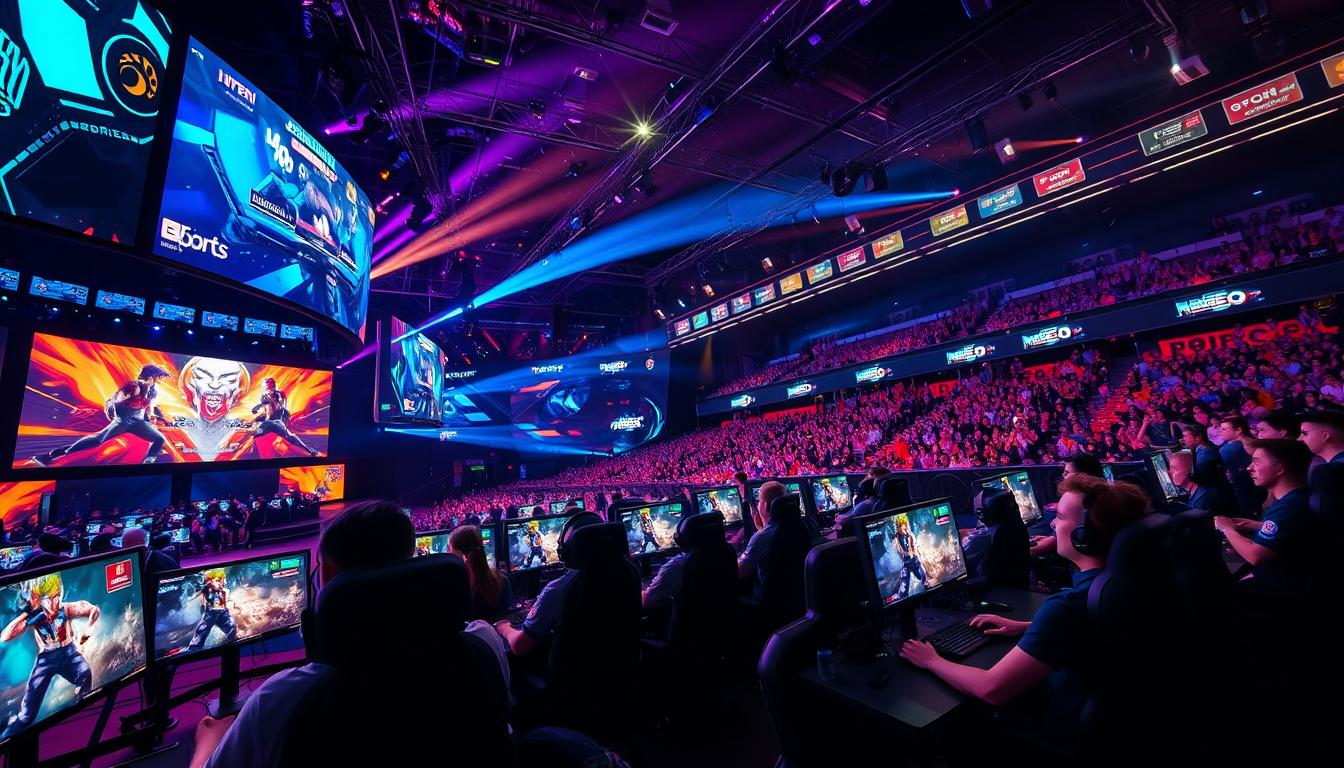
The gaming world has seen a huge change with the rise of esports. What started as a hobby has turned into a real career. This career offers fame, good money, and a huge industry worth billions.
In 2020, the U.S. saw 215.2 million people watching esports. By 2025, this number is expected to hit 318 million. This shows how fast esports is growing.
In 2016, the League of Legends world finals drew 43 million viewers. This was more than the NBA Finals Game 7 that year. This shows how popular esports has become. It now has professional leagues, big tournaments, and sponsorships from big brands.
Key Takeaways
- Esports has evolved from a casual pastime into a thriving professional industry, offering recognition, earnings, and diverse career opportunities.
- The e-sports industry is projected to reach a market volume of $5.9 billion by 2029, with a global audience of 495 million viewers in 2020.
- Major esports events, such as the League of Legends World Championship, attract millions of viewers worldwide, rivaling the viewership of traditional sports.
- The NBA, ESPN, and TBS have embraced esports, reflecting its growing mainstream acceptance and popularity.
- Colleges and universities are offering e-sports scholarships, recognizing the value of competitive gaming in education.
The Evolution of Competitive Gaming
The history of gaming tournaments and esports started in the 1970s. The first official competitive video games competition was at Stanford University in 1972. Students played “Spacewar” in this event.
In the 1980s, games like Space Invaders and Pac-Man became famous. The 1990s brought LAN parties and games like Doom and Quake.
Early Video Game Competitions
The 1990s were a big time for competitive gaming. The “Quake Red Annihilation” competition in 1997 was a major e-sports event. This event helped start organizations like Major League Gaming (MLG) in 2002 and the Electronic Sports League (ESL).
The Birth of Online Gaming
The 2000s changed competitive video games with the internet and gaming PCs. Games like StarCraft and Counter-Strike became popular. This led to online tournaments and leagues, growing the esports audience.
Modern Esports Era
Now, esports is a huge industry, worth billions of dollars. It has professional teams, sponsorships, and big tournaments. Games like League of Legends, Fortnite, and Valorant have made competitive gaming even bigger.
Players earn good money and are famous in the gaming world. The esports industry has changed the gaming world, offering new jobs and chances for growth.
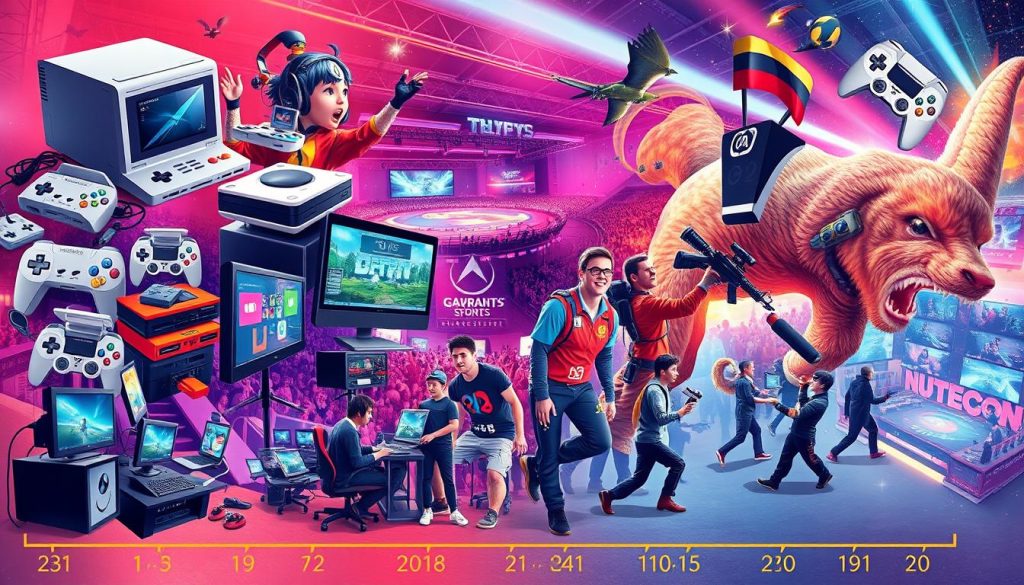
“The esports industry reached $1 billion in total revenue for the first time in 2019, and the esports audience grew from 235 million in 2015 to 443 million in 2019.”
The growth of e-sports has changed the gaming world a lot. It has opened up new career paths for players and industry workers. As technology gets better, esports will offer even more exciting experiences for fans and players.
Understanding the Esports Ecosystem
The esports world has grown a lot in recent years. It has won over millions of fans and made billions of dollars. At the center of this growth is the e-sports ecosystem. It’s a complex system of many parts working together.
Many people and groups are part of this ecosystem. This includes pro players, teams, game makers, streaming sites, and sponsors. Places like esports arenas, global fan groups, and new tech like AR and VR are also key. They make watching games better for fans.
Support roles are crucial for the industry to run smoothly. Coaches, analysts, managers, and creators help players get better. Mobile games and new tournaments have also brought in more fans. This has made competitive gaming more popular.
| Key Elements of the Esports Ecosystem | Examples |
|---|---|
| Professional Players and Teams | Team Liquid, Fnatic, Cloud9 |
| Game Publishers and Developers | Riot Games, Valve Corporation, Activision Blizzard, Epic Games |
| Streaming Platforms | Twitch, YouTube Gaming |
| Corporate Sponsors | Brands that sponsor e-sports leagues, teams, and events |
| Support Roles | Coaches, analysts, managers, content creators |
| Emerging Technologies | AR, VR, Mobile Gaming |
The esports world is growing fast and changing all the time. This makes the future of competitive gaming exciting and full of chances for everyone involved.
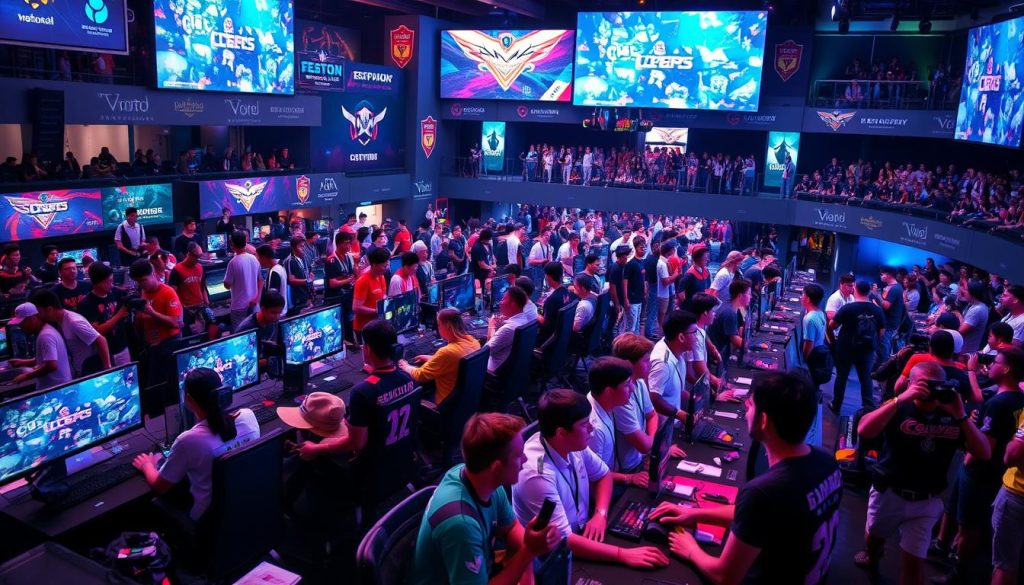
From Arcade Games to Global Phenomenon
The world of online gaming has changed a lot. It started with simple arcade games and now it’s a big deal all over the world. This change happened because of the internet, which makes playing games with others easy. This ease led to big esports tournaments and professional gamers.
The Impact of Internet Connectivity
In 1980, the Atari Space Invaders Championship had over 10,000 players. This showed people were interested in competing in games. But the internet really changed things. The 1997 Red Annihilation tournament, with a Ferrari as the prize, was a big step for e-sports.
Major Tournament Evolution
Groups like Major League Gaming (MLG), started in 2002, helped esports grow. Twitch, launched in 2011, changed how fans watch esports. Now, big tournaments like The International and the League of Legends World Championship have huge prizes and audiences.
Professional League Formation
Esports now has professional leagues like the Overwatch League and the NBA 2K League. These leagues have teams from all over, creating a community and rivalry. Places like the Blizzard Arena in Los Angeles and the Esports Stadium Arlington in Texas show how far esports has come.
| Key Milestone | Year | Impact |
|---|---|---|
| Atari Space Invaders Championship | 1980 | Attracted over 10,000 participants, showcasing early interest in competitive gaming |
| Red Annihilation Tournament | 1997 | Awarded a Ferrari as the grand prize, marking a significant milestone in e-sports evolution |
| Major League Gaming (MLG) Established | 2002 | Propelled the growth of the esports industry |
| Twitch Launched | 2011 | Revolutionized e-sports by providing a platform for live streaming gameplay to a global audience |
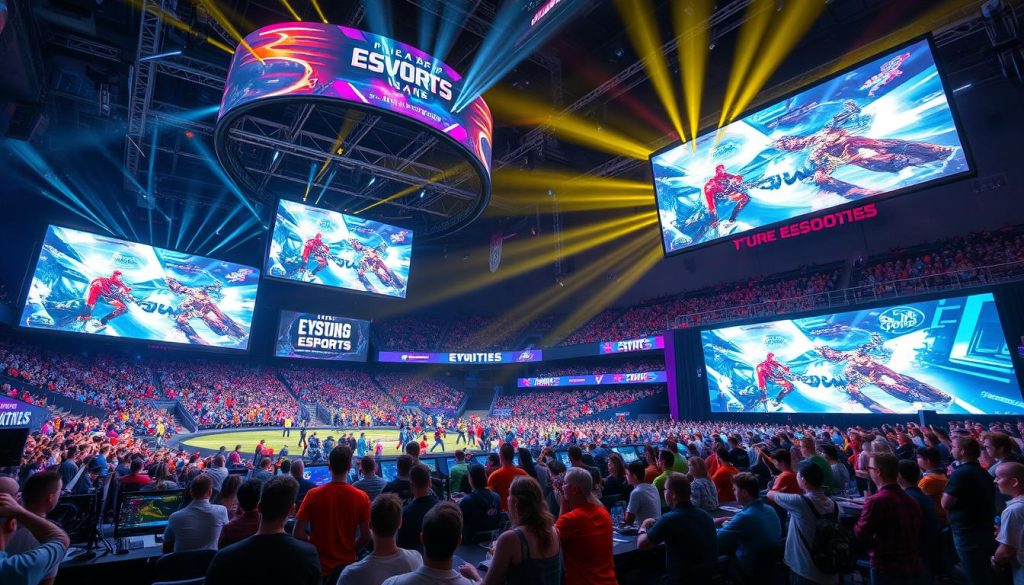
The shift from arcade games to a global phenomenon is thanks to the internet. It made online gaming smooth and led to big esports tournaments and leagues. This growth has brought in a lot of money and attention from big brands, making esports a big part of entertainment and competition.
The Economics of Professional Gaming
The esports industry is booming, expected to hit $5.9 billion by 2029. It offers big chances for gamers, teams, and companies. Top gamers make good money from tournaments, league pay, sponsorships, and endorsements.
Esports tournaments have bigger prize pools now. The 2019 Fortnite World Cup Finals had a prize pool of $30.4 million. The 2023 Esports World Cup in Riyadh had over $60 million in prizes. This shows more people and companies are getting into the esports industry.
Teams and players also make money from selling merchandise and tickets. The 2017 Intel Extreme Masters event in Poland drew 173,000 fans. This shows the power of esports sponsorships and fan support.
| Metric | Value |
|---|---|
| Esports industry growth rate (2022) | 10% |
| Esports revenue CAGR (next 5 years) | 13.8% |
| Prize pool for The International 2021 (Dota 2) | Over $40 million |
| Highest e-sports tournament prize pools | Over $10 million |
| Value of top 10 e-sports clubs | Over $3 billion |
The gaming merchandise market is growing fast. A young fan base is boosting the e-sports economy. Video games have doubled in size, reaching nearly $240 billion in 2022, thanks to mobile games.
“The global eSports market value surpassed $1 billion in 2020 and is projected to reach over $3 billion by 2025.”
The esports industry’s impact goes beyond just player earnings. It has created jobs and boosted local economies. Live events and fan support are key to this growth.
Professional Esports Teams and Organizations
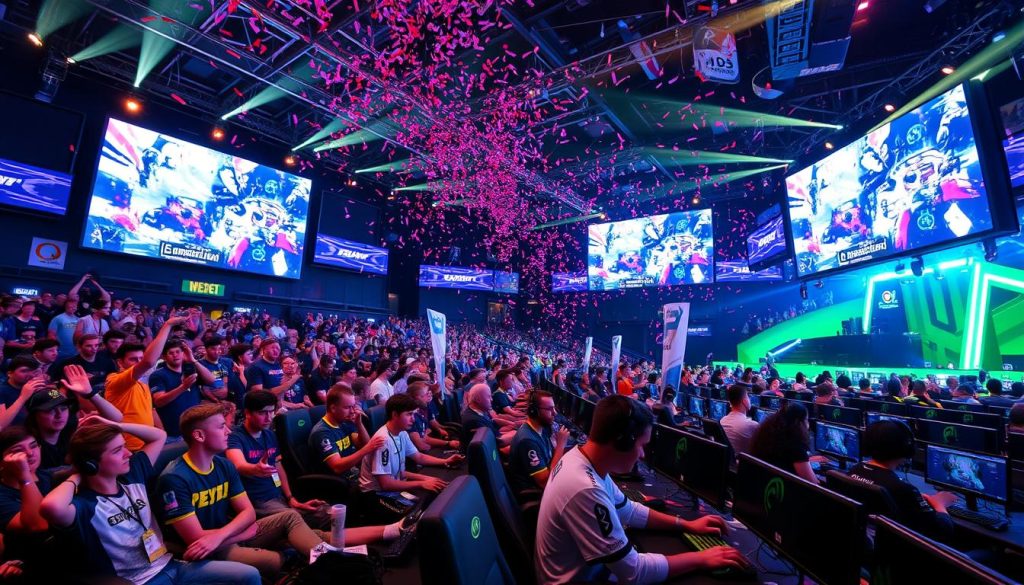
The esports world has created a thriving scene of professional gaming teams. Teams like Evil Geniuses, Fnatic, and SK Telecom T1 work like sports teams. They have support staff to help players perform better and win.
Team Structure and Management
Esports teams have a clear structure. Coaches, analysts, and sports psychologists help players improve. They have top-notch facilities to help players succeed.
Revenue Streams and Sponsorships
Teams make money from many sources. This includes tournament wins, sponsorships, and merchandise sales. Big brands like Coca-Cola, Intel, and Red Bull sponsor esports teams. They see the huge potential in this growing market.
| Esports Team | Achievements | Sponsorships |
|---|---|---|
| Astralis | Victories at ELEAGUE Major (2017), IEM (2019, 2020) | Audi, Logitech, Unibet |
| Evil Geniuses | Triumphs at The International 2015 (Dota 2), Call of Duty World League Championship 2018 | Twitch, HyperX, Alienware |
| Team Liquid | Wins at The International 2017 (Dota 2), four consecutive LCS titles (League of Legends), Intel Grand Slam (CS:GO) | Alienware, Monster Energy, Bud Light |
These esports teams are key to the growth of the professional gaming world. They drive innovation, support talent, and attract fans globally. With more fans and sponsorships, the future looks bright for these teams and the industry.
Streaming and Content Creation in Esports
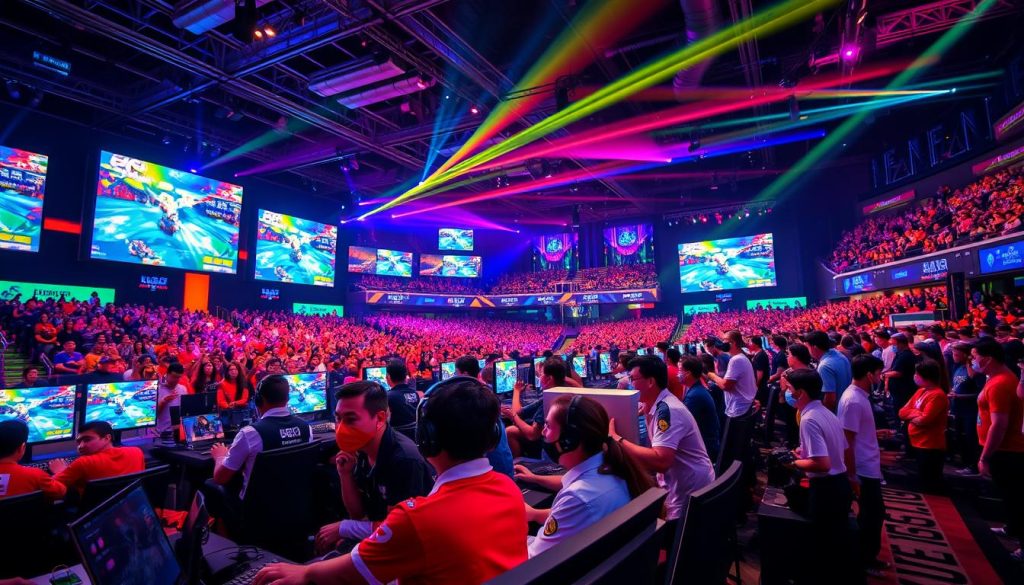
The esports world has grown beyond just playing games. Streaming sites like Twitch and YouTube Gaming have changed the game. Now, players and teams can create their own brands, connect with fans, and make more money. Top e-sports gaming influencers have become stars, making millions from their esports streaming and content.
Millions of fans worldwide watch esports tournaments. They love the thrill of competitive gaming. Esports teams see the value in this audience and invest in livestreaming and content. By working with streaming platforms, teams show off their skills, build connections, and grow their fan base.
| Metric | Forecast |
|---|---|
| Global online game streaming market size | $5.7 billion by 2028 |
| Global online game streaming users | 867.1 million by 2028 |
| Global esports market size | $10 billion by 2032 |
| Global esports audience | 318 million users by 2025 |
The future of e-sports teams in content creation looks bright. As the industry grows, so does the demand for top-notch gaming content. By using streaming and influencer marketing, esports teams can boost their brands, connect with fans, and find new ways to make money.
“The popularity of live-streamed masterclasses with expert players demonstrates the engagement power of esports teams.”
Career Pathways in the Gaming Industry
The e-sports industry has many career paths beyond just playing games. You can work in team management, coaching, broadcasting, or content creation. It’s a great place to turn your gaming passion into a job.
Professional Player Routes
Being a professional player is a clear path in esports. Top players can make good money, with salaries ranging from $80,000 to $149,000 a year. But, it’s very competitive. You need top skills, hard work, and success to make it.
Support Roles and Management
The esports world also needs a lot of support staff and managers. Jobs include team managers, coaches, esports agents, and more. These roles pay well, with salaries that show the industry’s growth.
For example, esports coaches make about $61,121 a year. Marketing specialists earn a median of $83,190. These jobs require special skills and knowledge.
Broadcasting and Commentary
Broadcasting and commentary are also big in e-sports. Esports hosts and analysts are well-known, making about $86,950 a year. They need to know games well, communicate well, and keep audiences engaged.
Universities now offer esports programs and scholarships. This shows the industry’s growing recognition. It opens doors for new professionals to learn and grow in this field.
The esports industry offers many career paths, from playing games to broadcasting. With growth and more academic support, the future is bright for those in competitive gaming.
The Role of Technology in Esports Growth
The e-sports industry has grown fast thanks to new tech. High-performance gaming PCs, fast internet, and top-notch broadcasting gear have improved the experience for fans. Now, virtual reality (VR) and augmented reality (AR) are set to make gaming even more immersive.
Esports players need top-notch hardware to compete. They use gaming PCs with the latest processors, graphics cards, and memory. This tech ensures smooth gameplay. Also, anti-cheat systems keep the game fair for everyone.
Game developers have made games more engaging and beautiful. They use data analytics and machine learning to improve the game. This helps players perform better and enjoy the game more.
Streaming sites like Twitch and YouTube Gaming have changed e-sports. They let fans watch live and interact with players. VR and AR in broadcasting make watching games even more exciting.
Technology will keep playing a big role in e-sports. With 5G networks and cloud gaming, the future looks bright. It will be full of new and exciting innovations.
| Technology | Impact on Esports |
|---|---|
| High-performance gaming PCs | Enhance the playing experience with powerful processors, advanced graphics, and high-speed memory |
| Specialized gaming peripherals | Provide professional players with a competitive edge, ensuring smooth and responsive gameplay |
| Immersive game development | Create visually stunning and challenging e-sports titles that captivate players and viewers |
| Streaming platforms | Enable global viewership and real-time fan engagement with esports events and players |
| Virtual and augmented reality | Enhance the immersive experience for e-sports viewers and expand the ways in which competitive gaming is consumed |
| 5G and cloud gaming | Improve connectivity and accessibility, facilitating international tournaments and fostering local esports communities |
“The integration of high-performance hardware and peripherals in eSports has led to a rise in the demand for gaming PCs equipped with powerful processors, advanced graphics cards, and high-speed memory.”
Major Esports Tournaments and Leagues
Esports has grown a lot, with big events and leagues drawing millions of fans. These tournaments are the best in competitive gaming. They offer huge prizes and top-notch production.
Global Championship Events
Events like The International (Dota 2), League of Legends World Championship, and Intel Extreme Masters are huge. They bring together the best teams and players. Fans watch them as much as traditional sports.
Prize Pools and Compensation
The prizes for these tournaments are huge, with some reaching tens of millions of dollars. For example, The International 2024 will have a big prize pool. The Intel Extreme Masters Cologne 2024 and Valorant Champions 2024 will offer $1 million and $2.2 million, respectively. This makes e-sports a real career option for gamers.
Tournament Formats
Esports tournaments use different formats to find the winners. These include round-robin leagues, single and double-elimination brackets, and season-long competitions. These formats make the games exciting for players and viewers. The best teams and players win in the end.
Esports has grown a lot, with 640 million fans expected by 2024. As it grows, these big tournaments and leagues will keep showing the best of gaming. They will keep drawing fans from all over the world.
| Tournament | Game | Prize Pool | Location | Date |
|---|---|---|---|---|
| The International 13 | Dota 2 | TBD | TBD | TBD |
| IEM Cologne 2024 | Counter-Strike 2 | $1 million | Cologne, Germany | Jan. 31 – Feb. 11, 2024 |
| Valorant Champions 2024 | Valorant | $2.2 million | TBD | TBD |
| League of Legends World Championship 2024 | League of Legends | TBD | London, UK | TBD |
| PUBG Global Championship 2024 | PUBG | $1.5 million | TBD | TBD |
| Esports World Cup 2024 | PUBG, Rocket League, Call of Duty, FIFA, Fortnite | TBD | TBD | TBD |
Building a Professional Gaming Career
Turning from a passionate gamer to a pro e-sports athlete needs hard work, skill growth, and smart networking. Most start by getting really good at their game, entering online tournaments, and growing their fan base on streaming sites. Joining amateur teams and local events can open doors to pro esports organizations.
Top esports players spend a lot of time improving their skills, strategy, and mental game. Building a personal brand and connecting with gamers is key for lasting success. With es-ports getting recognized in schools, scholarships for gamers are becoming more common, making this career path more accessible.
The global esports audience is growing, and the industry’s earnings are hitting new records. This means more jobs for skilled pro gamers and support roles. By using their gaming skills and love for games, people can find rewarding careers in the fast-changing esports world.