Your credit score is key to getting loans, credit cards, and even jobs. This guide will explain what credit scores are, why they’re important, and how to boost yours.
Key Takeaways
- Credit scores range from 300 to 850, with higher scores showing less risk.
- A good credit score opens doors to better financial deals, like lower interest rates.
- Payment history is crucial, making up 35% of your score.
- It’s vital to check your credit reports for errors and fix them to keep your score healthy.
- Good financial habits, like timely payments and low credit use, can raise your score over time.
What is a Credit Score and Why It Matters
Your credit score is a three-digit number that lenders use to check if you’re trustworthy with money. It shows your financial history and how risky you are. Knowing your credit score is key to managing your money well.
Understanding Credit Score Ranges
Credit scores range from 300 to 850. Higher scores mean you’re more reliable with money. Scores above 700 are good, and above 800 are excellent. These scores can really change your financial life.
Impact on Financial Opportunities
A good credit score can get you better deals on loans and lower interest rates. It also helps you get approved for credit cards, mortgages, and personal loans. Even your insurance rates and job chances might improve if you have a good score.
Key Benefits of a Good Credit Score
- Access to more favorable interest rates and loan terms
- Higher likelihood of credit card and loan approvals
- Lower insurance premiums and security deposits
- Improved bargaining power with lenders and service providers
- Enhanced financial opportunities and flexibility
Knowing how your credit score affects your money life helps you make better choices. It’s a way to improve your financial health and open up more opportunities for success.
“Maintaining a good credit score is crucial for financial stability and opportunities. It’s a key indicator of your creditworthiness that can open doors to better loan terms, lower interest rates, and increased approval chances.”
Components of Your Credit Score
Your credit score shows how good you are with money. It’s based on five main things: payment history, credit utilization, length of credit history, credit mix, and new credit. Knowing how these parts work is key to a strong credit score.
Payment history is the biggest part, making up 35% of your FICO score and 40% of your VantageScore. It shows if you pay on time and if you’ve missed payments. Always paying on time is crucial for a good score.
Credit utilization is another big factor, counting for 30% of your FICO score and 20% of your VantageScore. It’s about how much credit you use compared to what’s available. Keeping this under 30% is best. Using too much credit can hurt your score.
| Credit Score Component | Contribution to FICO Score | Contribution to VantageScore 3.0 |
|---|---|---|
| Payment History | 35% | 40% |
| Credit Utilization | 30% | 20% |
| Length of Credit History | 15% | 21% |
| Credit Mix | 10% | 10% |
| New Credit | 10% | 5% |
The age of your credit history is also important, making up 15% of your FICO score and 21% of your VantageScore. Older, well-managed accounts help your score.
Credit mix, worth 10% for both FICO and VantageScore, looks at the variety of your credit. Showing you can handle different types of credit can boost your score.
New credit, making up 10% of your FICO score and 5% of your VantageScore, looks at recent inquiries and applications. A few new accounts are okay, but too many can lower your score.
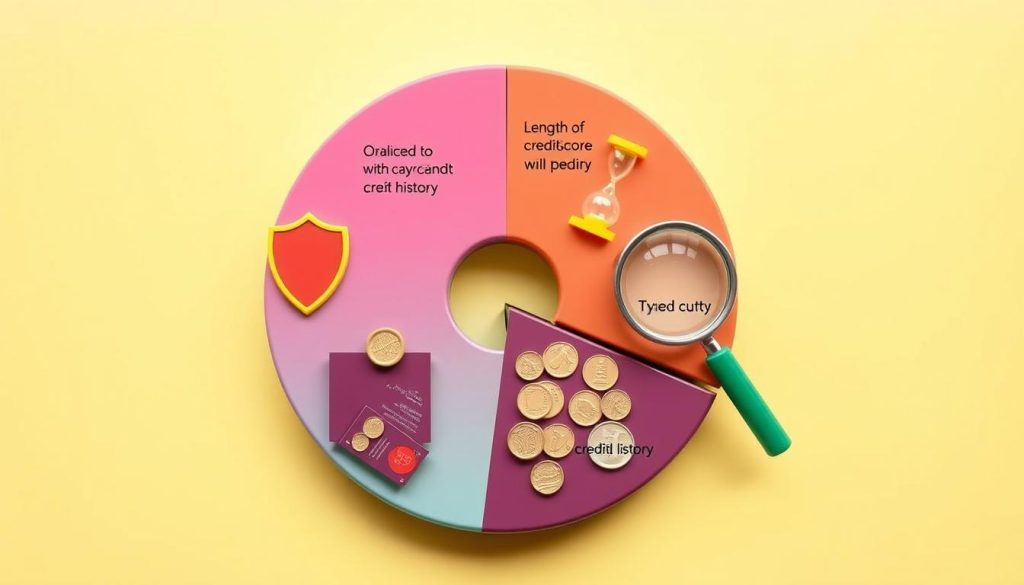
Knowing how these factors work helps you improve your credit score. This opens up better financial opportunities for you.
Understanding Credit Reports and Credit Bureaus
Having a good credit score is key to getting loans and the best interest rates. The three major credit agencies in the U.S. are Equifax, Experian, and TransUnion. They collect and store your credit info to make your credit report and score.
Major Credit Reporting Agencies
Equifax, Experian, and TransUnion collect and keep your credit data. This includes your personal info, credit history, public records, and credit inquiries. The Fair Credit Reporting Act (FCRA) makes sure they handle your data right, giving you rights to your credit reports.
How to Access Your Credit Report
- Under the FCRA, you can get one free credit report a year from each of the three major credit bureaus at AnnualCreditReport.com.
- Many credit card companies and banks offer free credit monitoring. This lets you check your credit report often.
- You can also buy more credit reports or get ongoing credit monitoring. This usually costs a monthly or yearly fee.
Reading Your Credit Report
Your credit report shows your financial history and how creditworthy you are. It has:
- Personal info: Your name, address, Social Security number, and birthdate.
- Credit account details: Types of accounts, credit limits, balances, and payment history.
- Public records: Bankruptcy, tax liens, or court judgments.
- Recent credit inquiries: When lenders or creditors looked at your report.
It’s important to know what’s in your credit report. This helps you keep track of your finances and find any mistakes that could hurt your score.

“Your credit report is a critical window into your financial life. It’s important to review it regularly to ensure the information is accurate and up-to-date.”
Payment History: The Foundation of Credit Health
Payment history is key to your credit score, making up 35% of your FICO score. It shows if you pay on time for credit cards, mortgages, and loans. Making on-time payments is vital for a good credit score.
Late payments hurt your score, especially if they’re 30 days or more late. These late payments can stay on your report for seven years. They remind lenders of your past payment issues.
The payment history impact is clear. Lenders look at this part of your credit to see if you manage credit well. They check if you’re consistent and if you have any patterns. Checking your credit reports helps spot errors or identity theft, making sure your payment history is correct.
| Credit Score Range | Payment History Impact |
|---|---|
| 800-850 | Excellent payment history |
| 700-799 | Good payment history |
| 600-699 | Fair payment history |
| 500-599 | Poor payment history |
| 300-499 | Very poor payment history |
In short, your payment history is the base of your credit health. Paying on time, fixing late payments, and checking your credit reports can boost your score. This opens up many financial doors for you.
“Payment history is the most important factor in determining your credit score, accounting for 35% of your FICO score. Consistently making on-time payments is crucial for maintaining a good credit profile.”
Credit Utilization and Debt Management
Credit utilization is key to your credit score. It’s 30% of your FICO score, second only to payment history. Keeping it low is crucial.
Calculating Credit Utilization
To find your credit utilization ratio, divide your total credit card balances by your total credit limits. For instance, if you owe $5,000 and your total limit is $20,000, your ratio is 25%. Experts say aim for under 30% for a good score.
Optimal Credit Usage Strategies
- Pay down your credit card balances to lower your credit utilization ratio.
- Request credit limit increases to reduce your utilization without changing your balance.
- Spread your balances across multiple cards to keep individual utilization ratios low.
Debt-to-Income Ratio
Your debt-to-income ratio is not part of your credit score. Yet, lenders use it to check your financial health. It compares your monthly debt to your income. A low ratio can help you get loans and credit cards.
“Keeping your credit utilization low is one of the best things you can do to maintain a good credit score. It’s a simple strategy that can have a big impact.”
Length of Credit History and Account Age
Building a strong credit profile depends a lot on how long you’ve had credit. This part, called the “length of credit history,” makes up 15% of your FICO score. It looks at how long your oldest account is, the average age of all accounts, and the age of different account types.
Having a longer credit history usually means a higher score. This is because lenders have more information to judge your creditworthiness. Keeping your old accounts open, even if you don’t use them, helps your average account age. But, opening new accounts can lower your average age of accounts and affect your scores.
FICO says the oldest account on your report is very important. People with a perfect 850 score have accounts that are about 30 years old on average. Keeping these accounts in good standing can boost your credit history length.
“Length of credit history accounts for 15 percent of your FICO score and around 20 percent of your VantageScore credit score.”
While credit history length is key, it’s not the only thing that matters for a good credit score. Payment history, how much you use your credit, and the mix of your credit types also count a lot.
Knowing about average account age, oldest account, and credit history length helps you manage your credit better. This can help improve your credit score over time.
Managing Credit Applications and Hard Inquiries for Correct Credit Score
Keeping it healthy means knowing about credit applications and hard inquiries. Hard inquiries can lower your score for up to a year. But, there are ways to lessen their impact on your creditworthiness.
Impact of Hard vs. Soft Inquiries
Hard inquiries, like applying for a new credit card or loan, stay on your report for two years. They can lower your score by a few points. On the other hand, soft inquiries, like checking your own score or getting pre-approved offers, don’t affect your score.
Rate Shopping Strategies
- When shopping for loans like mortgages, auto loans, or student loans, multiple hard inquiries in a short time (usually 14-45 days) are counted as one. This lets you compare rates without hurting your score too much.
- By planning your loan applications carefully, you can reduce the damage to your credit score from hard inquiries.
Having a strong credit profile is key to getting good terms and rates on financial products. Knowing the difference between hard and soft inquiries and using smart rate shopping strategies helps. This way, you can confidently go through the credit application process and keep your score from taking a hit.
Credit Score: Building Credit from Scratch
Starting from zero, building credit can feel overwhelming. But, with smart steps, you can create a solid credit history. Becoming an authorized user on someone else’s card is a good start. It lets you use their good credit and payment history to boost yours.
Another great option is getting a secured credit card. You need to put down a deposit that acts as your credit limit. These cards are easier to get, especially if you’re new to credit. By paying on time and using the card wisely, you start building a good credit record.
Credit-builder loans are another way to go. They let you borrow money that’s kept in a savings account while you make payments. As you pay, the lender reports your payments to the credit bureaus. This helps build your credit profile.
It doesn’t matter which method you choose. The most important thing is to make consistent on-time payments and keep your credit utilization ratio under 30%. Showing you can manage credit well will slowly raise your score. This opens doors to better financial options later on.
Common Credit Score Mistakes to Avoid
Having a good credit score is key for getting loans, credit cards, and even a place to live. But, many people make mistakes that hurt their scores. Let’s look at these mistakes and how to avoid them.
Account Closure Impact
Closing old credit accounts too soon is a big mistake. It shortens your credit history and raises your credit use ratio. Both can hurt your score. It’s better to keep old accounts open, even if you don’t use them.
Credit Mix Considerations
A mix of credit types, like cards and loans, can help your score. But, opening new accounts just for this mix can harm you. It can lead to hard inquiries that lower your score. Be careful with your credit mix and avoid too many new applications.
Payment Timing Errors
Even a day late on a payment can lead to fees and hurt your score. Paying on time is key, as it’s the biggest factor in your score. Use automatic payments or reminders to stay on track.
Other mistakes include using too much credit, ignoring your credit reports, and applying for too many accounts at once. By avoiding these and managing your credit well, you can keep a good score. This opens up many financial opportunities.
“60% of adults attribute financial mistakes to a limited understanding of credit and personal finance, with costs exceeding $1,000.”
| Credit Score Mistake | Impact |
|---|---|
| Closing old credit accounts | Shortens credit history and increases credit utilization ratio |
| Mismanaging credit mix | Unnecessary credit applications can result in hard inquiries and temporarily lower your score |
| Late payments | Can damage your credit score for up to seven years |
Conclusion
Improving and keeping a good credit score takes hard work and smart money habits. It’s important to check your credit often, pay bills on time, and use credit wisely. Knowing what affects your score, like how much you owe and how long you’ve had accounts, helps you make better money choices.
A high one can lead to more financial benefits, like lower interest rates. It’s crucial to keep learning and managing your credit well. By watching your credit score, avoiding mistakes, and working on a strong credit profile, you can shape your financial future.
Improving your credit score and keeping your finances healthy are key to reaching your financial goals. With the right information and steps, you can confidently manage your credit. This will help you achieve long-term financial success.